-
Use Cases
-
Resources
-
Pricing
The history of poetry spans thousands of years, beginning with ancient oral traditions and ritual chants before the invention of writing. From early epics like the Epic of Gilgamesh and Homer's Iliad and Odyssey, poetry evolved through classical forms in Greece and Rome, medieval verse, the Renaissance sonnet, Romanticism's emotional expression, Modernism's experimentation, and today's diverse contemporary styles including free verse and spoken word. More Less
2100 BC
% complete
The Epic of Gilgamesh, one of the earliest known works of literature, emerged in ancient Mesopotamia. Written on clay tablets in cuneiform, this epic poem chronicled the adventures of the hero-king Gilgamesh and explored themes of friendship, mortality, and the search for meaning, laying a foundation for the poetic tradition.
Image source: Epic of Gilgamesh
1500 BC - 1200 BC
% complete
The Rigveda, a collection of over 1,000 Sanskrit hymns, was composed in ancient India. As one of the oldest religious texts in the world, it showcased sophisticated metrical structures and became foundational to Hindu tradition and the development of South Asian poetry.
Image source: Rigveda
800 BC - 700 BC
% complete
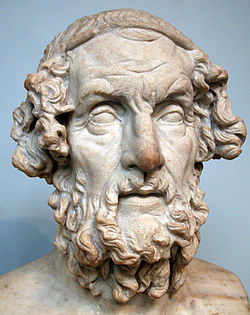
The ancient Greek poet Homer composed the Iliad and the Odyssey, monumental epic poems that shaped Western literature. These works established conventions of epic storytelling, heroic narrative, and dactylic hexameter that influenced poets for millennia.
Image source: Homer
630 BC - 570 BC
% complete
Sappho of Lesbos produced intensely personal lyric poetry exploring love and desire. Though much of her work survives only in fragments, her innovative first-person voice earned her renown as one of the greatest lyric poets of antiquity.
Image source: Sappho
600 BC
% complete
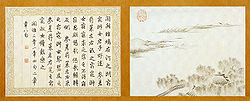
The Classic of Poetry (Shijing), China's oldest existing collection of verse, gathered folk songs, court hymns, and ritual chants. Confucius reportedly edited it, and it became one of the Five Classics central to Chinese education and poetics.
Image source: Classic of Poetry
498 BC - 446 BC
% complete
Pindar composed his celebrated epinician odes celebrating victors at athletic games such as the Olympics. His complex, ornate style set a high standard for choral and ceremonial poetry in classical Greece.
Image source: Pindar
29 BC - 19 BC
% complete
Virgil's Aeneid, an epic poem commissioned during the reign of Augustus, told the story of the Trojan hero Aeneas and the mythical founding of Rome. It became the national epic of Rome and a cornerstone of Latin literature.
Image source: Aeneid
8 AD
% complete
Ovid's Metamorphoses wove together hundreds of myths into a continuous narrative of transformation. Its vivid storytelling profoundly influenced later European literature, from Dante to Shakespeare.
Image source: Metamorphoses
725 - 770
% complete
During the golden age of Chinese culture, Li Bai's romantic exuberance and Du Fu's moral gravity defined the high Tang style. Their regulated verse and quatrains remain models of Chinese poetic achievement.
Image source: Tang poetry
1258 - 1273
% complete
The Persian Sufi poet Rumi began his spiritual masterpiece, the Masnavi, a vast poem of mystical teaching stories. His ecstatic love poetry continues to inspire readers worldwide and shaped Islamic mystical literature.
Image source: Masnavi
1308 - 1321
% complete
Dante Alighieri completed the Divine Comedy, a visionary journey through Hell, Purgatory, and Paradise written in vernacular Tuscan. The epic cemented Italian as a literary language and stands among the greatest achievements of world poetry.
Image source: Divine Comedy
1330 - 1374
% complete
Francesco Petrarch's Canzoniere, a sequence of poems to his idealized love Laura, perfected the Petrarchan sonnet. His model spread across Europe, shaping love poetry for centuries through countless imitators.
Image source: Petrarch
1387 - 1400
% complete
Geoffrey Chaucer crafted The Canterbury Tales, a frame narrative of pilgrims telling stories in Middle English. His blend of humor, realism, and psychological insight helped establish English as a language of serious literature.
Image source: The Canterbury Tales
1609
% complete
William Shakespeare's 154 sonnets were published, exploring love, beauty, time, and mortality with unmatched verbal artistry. The collection remains among the most studied and quoted poetry in the English language.
Image source: Shakespeare's sonnets
1667
% complete
John Milton's Paradise Lost retold the biblical story of humanity's fall in blank verse of sublime grandeur. Written after he lost his sight, the epic is considered the greatest long poem in English.
Image source: Paradise Lost
1689 - 1694
% complete
Japanese poet Matsuo Bashō composed The Narrow Road to the Deep North, a travel diary interlaced with haiku. His work elevated haiku to a major literary art form emphasizing simplicity, nature, and the fleeting moment.
Image source: Oku no Hosomichi
Sep 1798
% complete
William Wordsworth and Samuel Taylor Coleridge published Lyrical Ballads, whose preface declared poetry as 'the spontaneous overflow of powerful feelings.' The volume marked the beginning of English Romanticism and revolutionized poetic subject matter and diction.
Image source: Lyrical Ballads
1812 - 1818
% complete
Byron's sprawling travel poem created the brooding 'Byronic hero,' captivating Europe. Byron became an international celebrity, and his persona influenced literature, fashion, and the very idea of the romantic rebel.
Image source: Childe Harold's Pilgrimage
1819 - 1820
% complete
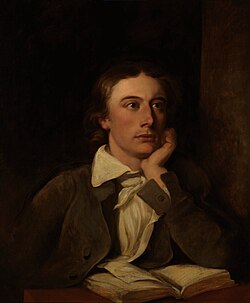
In a single miraculous year, John Keats wrote 'Ode to a Nightingale,' 'Ode on a Grecian Urn,' and other odes before dying at 25. His sensuous imagery and meditations on beauty and mortality made him a central figure of Romanticism.
Image source: John Keats
Jul 4, 1855
% complete
Walt Whitman published the first edition of Leaves of Grass, celebrating democracy, the body, and the American spirit in free verse. He revised and expanded it throughout his life, transforming the possibilities of modern poetry.
Image source: Leaves of Grass
1857
% complete
Charles Baudelaire's Les Fleurs du mal scandalized France with its frank treatment of decadence and urban life while pioneering symbolist aesthetics. It became a fountainhead of modern poetry in French and beyond.
Image source: Les Fleurs du mal
1859 - 1883
% complete
Victor Hugo published La Légende des siècles, a sweeping cycle of poems surveying human history from Eden to the future. The work displayed his mastery of French verse and his grand humanitarian vision.
Image source: La Légende des siècles
1890
% complete
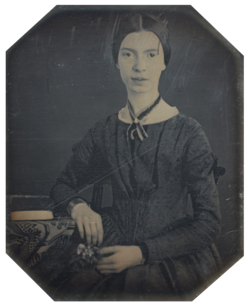
Four years after Emily Dickinson's death, nearly 1,800 of her short, enigmatic poems were first collected and published. Her slant rhymes, dashes, and compressed metaphors later made her recognized as a founder of modern American poetry.
Image source: Emily Dickinson
1857 - 1900
% complete
Poets including Stéphane Mallarmé, Paul Verlaine, and Arthur Rimbaud developed Symbolism, using suggestion, musicality, and imagery to evoke states of mind rather than describe reality. The movement profoundly shaped modernist poetry worldwide.
Image source: Symbolism (arts)
1889 - 1922
% complete
W. B. Yeats led the Irish Literary Revival, drawing on Celtic mythology to forge a distinct national literature. His evolving style, from dreamy symbolism to stark modernity, culminated in Nobel Prize-winning achievement.
1912 - 1917
% complete
Ezra Pound and others launched Imagism, demanding direct treatment of the thing itself, economy of language, and precise imagery. The movement cleared the ground for modernist free verse in English.
Image source: Imagism
1920 - 1935
% complete
Langston Hughes, Countee Cullen, Claude McKay, and Jean Toomer infused poetry with jazz rhythms, Black vernacular, and racial pride. Their work asserted African American identity as central to American literature.
Image source: Harlem Renaissance
Dec 1922
% complete
The Waste Land captured postwar disillusionment in a fragmented collage of voices, languages, and allusions. It became the defining poem of literary modernism and transformed expectations of what poetry could do.
Image source: The Waste Land
Oct 7, 1955
% complete
Allen Ginsberg's debut reading of 'Howl' at San Francisco's Six Gallery ignited the Beat movement. With Jack Kerouac and Lawrence Ferlinghetti, the Beats championed spontaneous expression, counterculture, and oral performance.
Image source: Beat Generation
1959
% complete
Robert Lowell's Life Studies opened private life—mental illness, family, marriage—to poetic scrutiny, founding confessional poetry. Sylvia Plath, Anne Sexton, and W. D. Snodgrass extended its raw intimacy.
Image source: Life Studies
1971
% complete
Chilean poet Pablo Neruda received the Nobel Prize, honoring love sonnets, odes to everyday objects, and politically charged verse that made him one of the most beloved and influential poets of the twentieth century.
Image source: Pablo Neruda
1986
% complete
Marc Smith founded the poetry slam at Chicago's Green Mill Tavern, turning poetry into competitive live performance. Slam and spoken word democratized poetry, bringing diverse new voices to global audiences.
Image source: Poetry slam
Or browse the full history timeline directory, with more than 2,000 topics.
This History of Poetry timeline was generated with the help of AI, using information found on the internet.
We work hard to keep these timelines accurate, but mistakes do get through. If you spot one, email us at [email protected] and we'll fix it for future visitors.
Generate yours with AI or build it from scratch, for free.
Export your timeline, add your own events, edit or remove AI-generated events, and much more
No credit card required.
Cancel anytime.
Cancel anytime.
You can create an unlimited number of timelines with up to 10 events on each one, customize how they look, export them to PDF, PNG, PowerPoint, CSV, and Excel, and share them with a link. Paid plans raise the event limit and add features like spreadsheet imports and collaborators.
Yes. You can cancel your subscription from your account page at any time, and you will not be charged again. Your subscription stays active for the rest of the period you already paid for.
Yes. We will email you a reminder before the annual renewal, and we will also email you a receipt.
Yes. You can email us within 15 days of any payment, and we will issue you a full refund.
Check out our pricing docs or send us an email anytime: [email protected].