-
Use Cases
-
Resources
-
Pricing
Istanbul, formerly known as Byzantium and Constantinople, has served as the capital of the Roman, Byzantine, Latin, and Ottoman Empires. Strategically located between Europe and Asia across the Bosphorus Strait, the city has been a major center of trade, culture, religion, and politics for over 2,500 years, evolving into modern Turkey's largest city and economic hub. More Less
6000 BCE
% complete
Neolithic artifacts uncovered by archeologists at the beginning of the 21st century indicate that Istanbul's historic peninsula was settled as far back as the 6th millennium BCE, making it one of the oldest inhabited areas in the region.
Image source: History of Istanbul
5500 BCE - 3500 BCE
% complete
On the Anatolian side, the earliest known settlement is the Fikirtepe mound from the Copper Age period, with artifacts dating from 5500 to 3500 BCE.
Image source: Kadıköy
660 BC
% complete
Around 660 BC, Greek settlers from the Attic town of Megara colonized the area and established Byzantium on the European side of the Bosphorus, founding the city that would become Istanbul.
Image source: Byzantium
330 CE - 1453
% complete
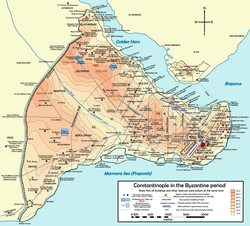
Constantinople functioned as the capital of the Byzantine Empire for more than a thousand years, an era which effectively ended with the fall of Constantinople in 1453.
Image source: Constantinople
401 - 476
% complete
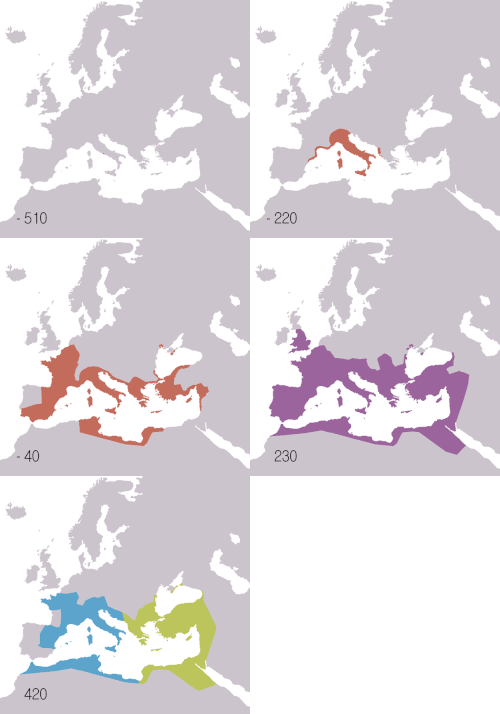
Throughout the fifth century, the Western Roman Empire lost most of its power through a decline in political, economic, and social situations, the last western emperor being deposed by Germanic mercenaries in AD 476; the eastern half, however, was flourishing.
Image source: Fall of the Western Roman Empire
601 - 800
% complete
Alliance with Europe slowly began to break away from the Byzantine Empire between the seventh and eighth centuries, when the Byzantine and Roman churches disagreed on various subjects.
Image source: East–West Schism
801 - 1300
% complete
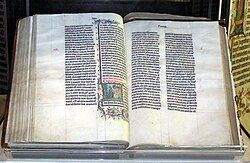
From around the 9th to 13th centuries, Constantinople developed complex relationships with Kievan Rus', an emerging state that later became the largest and most advanced state of that time in Europe.
Image source: Kievan Rus'
1204
% complete
In 1204, western armies captured Constantinople and ransacked the city for treasures. Near this point, Constantinople began to decline in power.
Image source: Sack of Constantinople
1204 - 1261
% complete
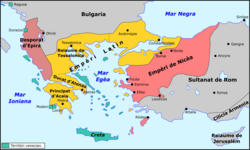
The new Latin Empire at Constantinople lasted until 1261, when the Byzantines under the command of Michael VIII Palaeologus recaptured the city and some outlying territory.
Image source: Latin Empire
1453
% complete
In accordance with Shariah (Muslim Holy Law), Mehmed gave the Byzantine emperor Constantine XI Palaiologos three chances to surrender the city before the final assault.
Image source: Constantine XI Palaiologos
Apr 6, 1453
% complete
Sultan Mehmed II began the siege of Constantinople on 6 April 1453. During the 53-day siege, his cannon tore a huge hole in the Walls of Theodosius II.
Image source: Fall of Constantinople
May 29, 1453
% complete
On the morning of 29 May 1453, Sultan Mehmed II 'the Conqueror' entered Constantinople after a 53-day siege, marking the end of the Byzantine Empire and beginning Ottoman rule over the city.
1455 - 1459
% complete
In the years following the Turkish conquest, the Grand Bazaar (1455) and Topkapı Palace (1459) were erected, establishing the city as the heart of the Ottoman Empire.
Image source: Grand Bazaar, Istanbul
1459
% complete
By 1459, the Sultan dedicated a lot of energy to bringing prosperity to Constantinople, encouraging resettlement and rebuilding following the conquest.
Image source: Mehmed II
1463
% complete
Religious foundations were endowed to fund the building of mosques such as the Fatih Mosque (1463) and their associated schools and public baths, transforming the city's skyline.
Image source: Fatih Mosque, Istanbul
1477
% complete
According to the census of 1477, there were 9,486 houses occupied by Muslims; 3,743 by Greeks; 1,647 by Jews; 267 by Christians from the Crimea, and 31 Gypsies, showing the city's diverse population after the conquest.
1481 - 1800
% complete
As the years passed, the population increased, from about 80,000 at the death of Mehmet, to 300,000 by the 18th century, and 400,000 in 1800.
1500 - 1800
% complete
Until the eighteenth century, living standards were at least equal to most of Europe; urban craftsmen's wages developed on a level similar to southern and central Europe during the sixteenth to eighteenth century.
1517
% complete
After the conquest of Egypt in 1517, and the Sultan's acceptance of the position of Caliph, Constantinople acquired additional importance in Muslim eyes.
Image source: Ottoman–Mamluk War (1516–1517)
1520 - 1566
% complete
Suleiman the Magnificent's reign over the Ottoman Empire from 1520 to 1566 was a period of great artistic and architectural achievements, and the city grew to a population close to 700,000 in the 16th century, once again ranking among the world's most populous cities.
Image source: Suleiman the Magnificent
1914 - 1924
% complete
After the war between Greece and Turkey, the population collapsed, from an estimated 1,125,000 in 1914 to about 500,000 in 1924; but the population steadily grew during the later 20th century, the metropolitan population surpassing 10 million in the year 2000.
Image source: Population exchange between Greece and Turkey
1915
% complete
In 1915, after the Ottoman entry into World War I on the side of the Central Powers, the Allies led by First Lord of the Admiralty Winston Churchill's Royal Navy attempted an operation to capture Constantinople.
Image source: Gallipoli campaign
Nov 13, 1918 - Oct 4, 1923
% complete
On 13 November 1918, the Occupation of Constantinople by Allied forces began, ending on 4 October 1923 with the Treaty of Lausanne.
Image source: Occupation of Istanbul
Oct 29, 1923
% complete
When the Republic of Turkey was founded under Mustafa Kemal Atatürk on 29 October 1923 during the Turkish War of Independence, the capital was moved from Constantinople to Angora, which became Ankara in English.
Image source: Turkey
1928
% complete
The international name Constantinople remained in use until Turkey adopted the Latin alphabet in 1928 and urged other countries to use the city's Turkish name in their languages and their postal service networks.
Image source: Names of Istanbul
1929
% complete
In 1929 Turkish Nationalists advocated for the usage of Istanbul in English instead of Constantinople. Lloyd's agents were informed that telegrams must now be addressed to 'Istanbul' or 'Stamboul', though The Times stated mail could still be delivered to 'Constantinople'.
May 1930
% complete
The United States State Department began using 'Istanbul' in May 1930, cementing the modern name internationally.
Sep 1955
% complete
In September 1955, many ethnic Greek businesses were destroyed during the Istanbul pogrom. After the pogrom, much of the remaining Greek minority also departed.
Image source: Istanbul pogrom
1994 - 1998
% complete
Recep Tayyip Erdoğan, later Prime Minister and President of Turkey, served as mayor of Istanbul from 1994 to 1998.
Image source: Recep Tayyip Erdoğan
Mar 1995
% complete
In March 1995, twenty-three people were killed and hundreds were injured in the incidents called the Gazi Massacre.
2013
% complete
In 2013, Taksim Square was the center of the Gezi Park protests, where protesters raised a wide range of concerns, at the core of which were issues of freedom of the press, expression, assembly, and the government's encroachment on Turkey's secularism.
Image source: Gezi Park protests
Jan 2016
% complete
In January 2016, a suicide bomb attack on Sultanahmet Square, near the famous Blue Mosque, killed 10 people, all of them German tourists.
Image source: January 2016 Istanbul bombing
Jul 15, 2016
% complete
In July 2016, the Turkish coup d'état attempt took place, shaking the country and its largest city.
Image source: 2016 Turkish coup attempt
Dec 2016
% complete
In December 2016, a twin bomb attack on police officers outside the football stadium of top-division team Beşiktaş killed 38 people and injured many more.
Image source: 2016 Beşiktaş bombings
Dec 20, 2016
% complete
On 20 December 2016, the first road tunnel linking Europe and Asia was opened beneath the Bosphorus.
Image source: Eurasia Tunnel
Jan 1, 2017
% complete
On 1 January 2017, 39 people were killed in the New Year's Eve attack on an exclusive nightclub in Istanbul.
Image source: Istanbul nightclub shooting
Oct 2018
% complete
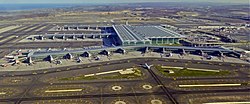
Istanbul's new airport opened in October 2018, commenced passenger services in April 2019, and cargo services in February 2022.
Image source: Istanbul Airport
Jun 2019
% complete
In June 2019, the main Turkish opposition party won the rerun of Istanbul's mayoral election, meaning Republican People's Party (CHP) candidate Ekrem İmamoğlu became new Mayor of Istanbul.
Image source: Ekrem İmamoğlu
Nov 2022
% complete
In November 2022, a street bombing in Istanbul's lively Istiklal Avenue killed six people and wounded over 80.
Image source: 2022 Istanbul bombing
Aug 2023
% complete
As of August 2023, there are more than 530,000 refugees of the Syrian civil war in Istanbul, the highest number of Syrian refugees in any Turkish city.
Image source: Refugees of the Syrian civil war
Mar 2025
% complete
In March 2025, hundreds of thousands of pro-democracy demonstrators gathered in the streets of Istanbul to show support for the city's mayor Ekrem İmamoğlu, the main rival of Turkey's President Recep Tayyip Erdogan.
Or browse the full history timeline directory, with more than 2,000 topics.
This History of Istanbul timeline was generated with the help of AI, using information found on the internet.
We work hard to keep these timelines accurate, but mistakes do get through. If you spot one, email us at [email protected] and we'll fix it for future visitors.
Generate yours with AI or build it from scratch, for free.
Export your timeline, add your own events, edit or remove AI-generated events, and much more
No credit card required.
Cancel anytime.
Cancel anytime.
You can create an unlimited number of timelines with up to 10 events on each one, customize how they look, export them to PDF, PNG, PowerPoint, CSV, and Excel, and share them with a link. Paid plans raise the event limit and add features like spreadsheet imports and collaborators.
Yes. You can cancel your subscription from your account page at any time, and you will not be charged again. Your subscription stays active for the rest of the period you already paid for.
Yes. We will email you a reminder before the annual renewal, and we will also email you a receipt.
Yes. You can email us within 15 days of any payment, and we will issue you a full refund.
Check out our pricing docs or send us an email anytime: [email protected].