-
Use Cases
-
Resources
-
Pricing
1541
% complete
Spanish explorer Francisco Vázquez de Coronado led an expedition north from Mexico in search of the mythical golden cities of Quivira, crossing through present-day Kansas in 1541. He found only Wichita villages, marking the first European contact with the region.
Image source: Francisco Vázquez de Coronado
1682
% complete
René-Robert Cavelier, Sieur de La Salle, claimed the Mississippi River basin for France in 1682, naming it Louisiana. This included lands draining into the Missouri River, placing future Kansas within French claims and opening the era of French fur trading on the plains.
Image source: Louisiana (New France)
1724
% complete
French officer Étienne de Veniard, Sieur de Bourgmont traveled up the Missouri River into Kansas in 1724, establishing Fort Orleans and forging alliances with the Kansa, Osage, and other tribes. His expeditions produced some of the earliest detailed maps of the region.
Image source: Étienne de Veniard, Sieur de Bourgmont
Jul 4, 1804
% complete
The Lewis and Clark expedition camped at sites along the Missouri River in present-day northeastern Kansas during July 1804, including near the mouth of the Kansas River. Their journals documented the landscape and native peoples of the region.
Image source: Lewis and Clark Expedition
1806
% complete
Lieutenant Zebulon Pike led an American expedition across the Great Plains in 1806, traveling through central and western Kansas en route to the Spanish Southwest. He described the seemingly endless grasslands as a desert, influencing early perceptions of the plains.
Image source: Zebulon Pike
Apr 30, 1803
% complete
The United States purchased the Louisiana Territory from France in 1803, transferring control of most of present-day Kansas to America. The acquisition doubled the size of the country and set the stage for westward expansion onto the plains.
Image source: Louisiana Purchase
1821
% complete
William Becknell pioneered the Santa Fe Trail from Independence, Missouri to Santa Fe, New Mexico, cutting directly across Kansas. For decades the trail brought traders, freight wagons, and commerce through the region, with towns like Council Grove serving as key waypoints.
Image source: Santa Fe Trail
May 8, 1827
% complete
Colonel Henry Leavenworth established Cantonment Leavenworth on the Missouri River in 1827 to protect frontier travelers and maintain peace among tribes. It became one of the most important military posts of the American West and remains active today.
Image source: Fort Leavenworth
1830
% complete
Beginning around 1830, emigrant wagons bound for Oregon and California followed trails along the Kansas and Platte river valleys. Staging points in Kansas such as Westport and later towns like Lawrence and Topeka provisioned hundreds of thousands of settlers.
Image source: Oregon Trail
May 28, 1830
% complete
The Indian Removal Act of 1830 initiated the forced relocation of eastern tribes to lands that included much of present-day Kansas. Nations such as the Delaware, Shawnee, Potawatomi, Kickapoo, and others were moved onto reservations in eastern Kansas over the following two decades.
Image source: Indian Removal Act
May 30, 1854
% complete
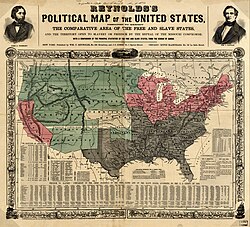
The Kansas-Nebraska Act organized the Kansas Territory and opened settlement, allowing residents to decide the slavery question by popular sovereignty. This repealed the Missouri Compromise line and immediately made Kansas the battleground over slavery's expansion.
Sep 27, 1854
% complete
The New England Emigrant Aid Company helped establish Lawrence in 1854 as a center of free-state settlement. The town became the symbolic heart of the antislavery movement in Kansas and suffered repeated raids before becoming a cultural hub after statehood.
Image source: Lawrence, Kansas
Oct 23, 1855 - Jan 29, 1861
% complete
Rival constitutional conventions produced competing documents: the free-state Topeka Constitution and the pro-slavery Lecompton Constitution. The national debate over admitting Kansas under the fraudulent Lecompton document split the Democratic Party and deepened sectional crisis.
Image source: Lecompton Constitution
Nov 21, 1855 - 1861
% complete
Pro-slavery 'Border Ruffians' from Missouri clashed violently with antislavery Free-Staters, beginning with the Wakarusa War and the sacking of Lawrence in 1856. Guerrilla warfare, including John Brown's Pottawatomie massacre, killed dozens and foreshadowed the Civil War.
Image source: Bleeding Kansas
May 21, 1856
% complete
A pro-slavery militia force of roughly 800 men sacked the free-state stronghold of Lawrence, destroying printing presses and the Free State Hotel. The attack enraged abolitionists and prompted John Brown's retaliatory Pottawatomie massacre days later.
Image source: Sacking of Lawrence
Oct 16, 1859
% complete
After waging guerrilla war against pro-slavery forces in Kansas, John Brown attempted to spark a slave uprising by seizing the federal arsenal at Harpers Ferry, Virginia. Though executed for treason, his Kansas exploits had already made him a legendary figure of the antislavery struggle.
Image source: John Brown's raid on Harpers Ferry
Jan 29, 1861
% complete
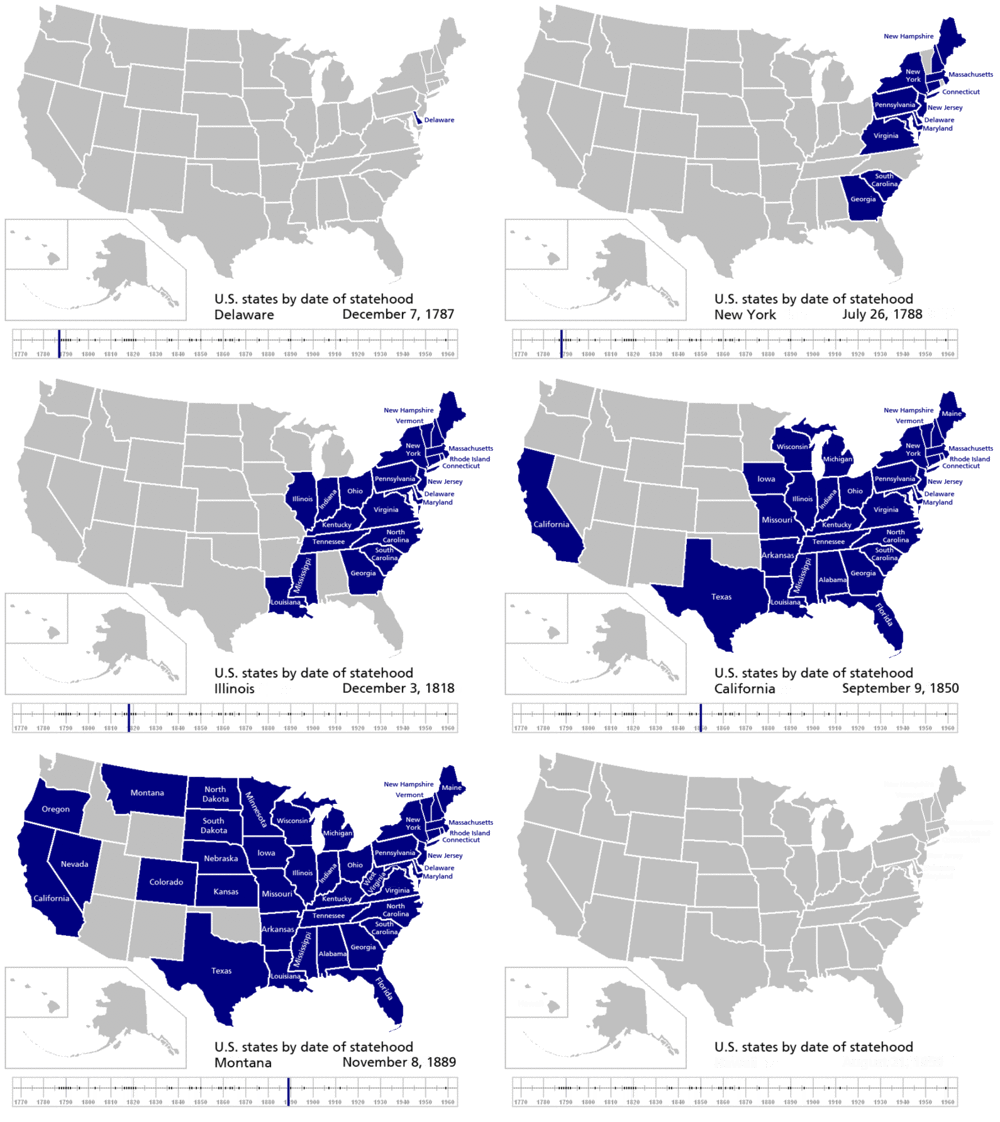
After Southern states began seceding, Congress finally approved Kansas statehood as a free state on January 29, 1861. The Wyandotte Constitution defined its boundaries, and Kansas entered the Union just weeks before the Civil War began.
Image source: Admission to the Union
May 20, 1862
% complete
The Homestead Act offered 160-acre plots to settlers who lived on and improved their land. Combined with railroad land grants, it drove explosive population growth in Kansas after the Civil War, swelling the state's population from about 107,000 in 1860 to nearly 365,000 by 1870.
Image source: Homestead Acts
Aug 21, 1863
% complete
Confederate guerrilla William Quantrill led about 400 raiders in a dawn attack on Lawrence, killing roughly 200 men and boys and burning much of the town. The massacre prompted Union forces to depopulate four Missouri border counties in retaliation.
Image source: Lawrence Massacre
Sep 1865 - 1872
% complete
Railroads transformed Kansas in the late 1860s and early 1870s, with lines pushing westward from the Missouri River. Rail access opened markets for wheat and cattle, spawned new towns every few miles, and cemented cities like Atchison and Topeka as commercial centers.
Image source: Atchison, Topeka and Santa Fe Railway
1867 - 1885
% complete
Cowboys drove millions of Texas longhorns up the Chisholm Trail to railheads at Abilene, Wichita, Dodge City, and Ellsworth, where they were shipped east by rail. The cattle trade made Kansas cowtowns famous for lawlessness and gave rise to figures like Wyatt Earp and Bat Masterson.
Image source: Chisholm Trail
1874
% complete
In summer 1874, enormous swarms of Rocky Mountain locusts descended on Kansas, devouring crops and even wooden handles and clothing. The devastation bankrupted many homesteaders, prompting aid campaigns and causing some discouraged farmers to abandon their claims.
Image source: Rocky Mountain locust
1874
% complete
Russian Mennonite immigrants fleeing persecution settled in central Kansas in 1874, bringing Turkey Red hard winter wheat seeds suited to the climate. Their introduction revolutionized Kansas agriculture, laying the foundation for the state to become the nation's leading wheat producer.
Image source: Wheat production in the United States
1879
% complete
Thousands of African Americans known as Exodusters fled the post-Reconstruction South for Kansas in 1879, inspired by promises of land and freedom. Benjamin 'Pap' Singleton promoted the migration, and all-black settlements like Nicodemus were founded in western Kansas.
Image source: Exodusters
1890
% complete
Falling crop prices, debt, drought, and railroad monopolies fueled the People's Party in Kansas. Populist Mary Elizabeth Lease famously urged farmers to 'raise less corn and more hell,' and the movement briefly won control of the legislature, presaging the national Progressive era.
Image source: Populism in the United States
Jul 24, 1897
% complete
Born in Atchison, Kansas, Amelia Earhart became the first woman to fly solo across the Atlantic in 1932 and a worldwide symbol of aviation courage. Her mysterious disappearance over the Pacific in 1937 only deepened her legend as Kansas's most celebrated aviator.
Image source: Amelia Earhart
1900
% complete
Temperance activist Carry Nation began attacking Kansas saloons with her hatchet in 1900, claiming divine inspiration. Her dramatic barroom smashings made national headlines and drew attention to the prohibition cause, which Kansas had embraced constitutionally since 1880.
Image source: Carrie Nation
1934 - 1940
% complete
Severe drought combined with decades of intensive plowing turned the High Plains to dust. Black Sunday dust storms in April 1935 buried western Kansas farms in topsoil, forcing many families to abandon their land and prompting federal soil conservation programs.
Image source: Dust Bowl
May 17, 1954
% complete
The Supreme Court's landmark ruling declared school segregation unconstitutional, overturning 'separate but equal.' The case originated in Topeka, where Oliver Brown challenged the city's segregated elementary schools on behalf of his daughter Linda, making Kansas central to the civil rights movement.
Or browse the full history timeline directory, with more than 2,000 topics.
This History of Kansas timeline was generated with the help of AI, using information found on the internet.
We work hard to keep these timelines accurate, but mistakes do get through. If you spot one, email us at [email protected] and we'll fix it for future visitors.
Generate yours with AI or build it from scratch, for free.
Export your timeline, add your own events, edit or remove AI-generated events, and much more
No credit card required.
Cancel anytime.
Cancel anytime.
You can create an unlimited number of timelines with up to 10 events on each one, customize how they look, export them to PDF, PNG, PowerPoint, CSV, and Excel, and share them with a link. Paid plans raise the event limit and add features like spreadsheet imports and collaborators.
Yes. You can cancel your subscription from your account page at any time, and you will not be charged again. Your subscription stays active for the rest of the period you already paid for.
Yes. We will email you a reminder before the annual renewal, and we will also email you a receipt.
Yes. You can email us within 15 days of any payment, and we will issue you a full refund.
Check out our pricing docs or send us an email anytime: [email protected].