-
Use Cases
-
Resources
-
Pricing
Kentucky's history spans thousands of years, beginning with Indigenous peoples who inhabited the region long before European exploration. The area became part of colonial claims and was explored by figures like Daniel Boone in the 1770s. Kentucky entered the Union as the 15th state in 1792 and later played a significant border-state role during the American Civil War. Today, it is known for horse racing, bourbon, and bluegrass. More Less
1000 - 1500
% complete
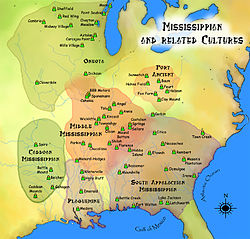
Between roughly 1000 and 1500 AD, the Mississippian culture built complex societies with platform mounds and agricultural communities along the Ohio and Mississippi river valleys, including sites like Wickliffe Mounds in western Kentucky.
Image source: Mississippian culture
1600
% complete
By the 17th century, the region that would become Kentucky was used primarily as a hunting ground by Shawnee in the north, Cherokee in the south, and other tribes including the Chickasaw. No single tribe permanently dominated the area, leading later settlers to call it the 'dark and bloody ground.'
Image source: History of Kentucky
1671
% complete
French explorers and fur traders became among the first Europeans to travel through what is now Kentucky in the late 17th century, navigating the Ohio River and establishing trade relationships with Native American tribes in the region.
Image source: Ohio River
Apr 13, 1750
% complete
Physician and explorer Thomas Walker led an expedition through the Appalachian Mountains, passing through the Cumberland Gap into present-day southeastern Kentucky, opening the way for future westward expansion beyond the Alleghenies.
May 1767
% complete
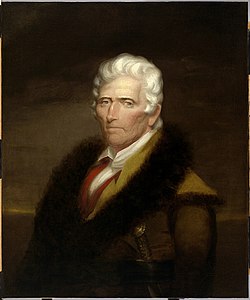
Frontiersman Daniel Boone began exploring Kentucky in 1767, and after two years of expeditions he helped blaze a path that would make the region accessible to thousands of American settlers moving west over the Appalachian Mountains.
Image source: Daniel Boone
Mar 1775
% complete
Daniel Boone cut the Wilderness Road through the Cumberland Gap, making Kentucky accessible to wagon traffic, and established Fort Boonesborough on the Kentucky River, one of the earliest permanent English settlements west of the Appalachians.
Image source: Wilderness Road
Mar 17, 1775
% complete
Richard Henderson's Transylvania Company negotiated the Treaty of Sycamore Shoals with the Cherokee, acquiring a vast tract of land in central Kentucky and eastern Tennessee. The purchase was later invalidated by Virginia and North Carolina, but it spurred settlement.
Dec 31, 1776
% complete
The Virginia General Assembly organized the western territory beyond the mountains as Kentucky County, formally incorporating the frontier settlements into the Commonwealth of Virginia during the Revolutionary War.
Image source: Kentucky County, Virginia
1778 - 1779
% complete
Virginia militia leader George Rogers Clark launched a daring campaign against British forts at Kaskaskia and Vincennes, securing the Illinois country and helping protect Kentucky settlements from British-backed Native raids.
Image source: George Rogers Clark
Sep 7, 1778 - Sep 18, 1778
% complete
British-allied forces under Shawnee leader Blackfish besieged Fort Boonesborough for eleven days but failed to capture it, marking one of the most significant engagements of the American Revolution in the West.
Image source: Siege of Boonesborough
Aug 19, 1782
% complete
A force of British-allied Native Americans routed Kentucky militiamen at Blue Licks ten months after the surrender at Yorktown, inflicting heavy casualties in one of the last battles of the Revolutionary War.
Image source: Battle of Blue Licks
1784 - 1792
% complete
Separatist conventions held in Danville beginning in 1784 pushed for Kentucky's independence from Virginia. After nearly a decade of negotiation, Virginia agreed to terms allowing the district to enter the Union as a separate state.
Jun 1, 1792
% complete
Kentucky was admitted to the Union on June 1, 1792, becoming the fifteenth state and the first state west of the Appalachian Mountains. Isaac Shelby was elected its first governor.
1794
% complete
Western farmers, including many Kentuckians who depended on whiskey production to market their grain, sympathized with Pennsylvania rebels resisting the federal excise tax. The crisis shaped Kentucky politics for decades until the tax's repeal in 1803.
Image source: Whiskey Rebellion
Jun 3, 1808
% complete
Future Confederate President Jefferson Davis was born in Christian County, now Todd County, Kentucky. Remarkably, both the Civil War-era presidents, Davis and Lincoln, were born in Kentucky within a year of each other.
Image source: Jefferson Davis
Feb 12, 1809
% complete
Abraham Lincoln was born in a one-room log cabin on Sinking Spring Farm near Hodgenville, Kentucky. His family moved to Indiana when he was seven, but his Kentucky origins remain central to the state's heritage.
Image source: Abraham Lincoln Birthplace National Historical Park
1820
% complete
Kentucky Senator Henry Clay, known as 'The Great Compromiser,' brokered the Missouri Compromise of 1820, admitting Missouri as a slave state and Maine as a free state while restricting slavery north of latitude 36°30'.
Image source: Missouri Compromise
Feb 18, 1820
% complete
Kentucky and Tennessee agreed to accept the Walker line as their common border, resolving a long-running dispute over surveying errors that had left parts of southern Kentucky claimed by both states.
Image source: Line Walker: The Prelude
1830
% complete
Situated at the Falls of the Ohio, Louisville grew rapidly as cargo had to be portaged around the rapids. By the 1830s it was one of America's busiest inland ports, fueling Kentucky's economic growth.
Image source: Louisville, Kentucky
1845
% complete
Emancipationist Cassius Marcellus Clay founded the True American newspaper in Lexington in 1845, advocating gradual emancipation amid fierce opposition from pro-slavery Kentuckians.
Image source: Cassius Marcellus Clay
May 20, 1861
% complete
Governor Beriah Magoffin proclaimed Kentucky neutral between the Union and Confederacy, hoping to spare the border state invasion. The fragile neutrality collapsed by September 1861 when Confederate forces entered Columbus and Union troops occupied Paducah.
Nov 20, 1861
% complete
Pro-Confederate delegates met at Russellville and formed a shadow government that sought admission to the Confederacy, which admitted Kentucky as a star on the Confederate flag in December 1861 despite never controlling most of the state.
Image source: Confederate government of Kentucky
Jan 19, 1862
% complete
Union forces defeated Confederate troops at Mill Springs in south-central Kentucky, killing General Felix Zollicoffer and breaking the Confederate defensive line, an important early Union victory in the Western Theater.
Image source: Battle of Mill Springs
Oct 8, 1862
% complete
The largest Civil War battle fought in Kentucky saw Confederate General Braxton Bragg attack Union positions at Perryville before withdrawing to Tennessee, ending the Confederacy's major offensive to claim the state.
Image source: Battle of Perryville
1865
% complete
Kentucky, a loyal slaveholding state exempted from the Emancipation Proclamation, retained slavery until the Thirteenth Amendment took effect in December 1865, freeing tens of thousands of enslaved people in the state.
Image source: Thirteenth Amendment to the United States Constitution
1870
% complete
Following the Civil War, Kentucky emerged as the nation's leading tobacco producer. The development of burley tobacco in the 1860s and 70s transformed central Kentucky agriculture and made cities like Louisville key tobacco markets.
Image source: Burley (tobacco)
May 17, 1875
% complete
Meriwether Lewis Clark Jr. staged the first Kentucky Derby at Churchill Downs in Louisville, won by Aristides before some 10,000 spectators. The race grew into America's most famous horse race, 'The Most Exciting Two Minutes in Sports.'
Image source: Kentucky Derby
1904 - 1909
% complete
Farmers in the Black Patch region formed the Planters' Protective Association and violent vigilantes known as Night Riders destroyed warehouses and crops in protest of low prices set by big tobacco companies, forcing reforms in tobacco marketing.
Image source: Black Patch Tobacco Wars
1936
% complete
The United States Bullion Depository opened at Fort Knox, Kentucky, storing much of the nation's gold reserves. The heavily fortified facility made Fort Knox synonymous with security and national wealth.
Image source: United States Bullion Depository
Jan 1937 - Feb 1937
% complete
Record rainfall swelled the Ohio River, flooding about 70 percent of Louisville and displacing hundreds of thousands across the Ohio Valley. The disaster prompted massive federal flood control projects, including levees and flood walls.
Image source: Ohio River flood of 1937
Jul 1, 1941
% complete
Mammoth Cave, the world's longest known cave system, was established as a national park in south-central Kentucky, protecting over 400 miles of explored passages and becoming a UNESCO World Heritage Site in 1981.
Image source: Mammoth Cave National Park
1950
% complete
Founded in 1855 as the South's first interracial college, Berea was forced to segregate by Kentucky's Day Law of 1904. After the Supreme Court struck down segregation laws in 1950, Berea immediately re-integrated, resuming its mission of educating Black students.
Image source: Berea College
1981
% complete
Chevrolet moved Corvette production to Bowling Green, Kentucky, making the city the sole home of the iconic American sports car and anchoring Kentucky's growing automotive manufacturing sector.
1986 - 1988
% complete
Construction of Toyota's Georgetown plant began in 1986 and production started in 1988, creating thousands of jobs and establishing Kentucky as a hub for automobile manufacturing alongside Ford and GM facilities.
Image source: Toyota Motor Manufacturing Kentucky
1996
% complete
Rick Pitino's Kentucky Wildcats captured the NCAA title in 1996, adding to the program's record total of eight championships and cementing basketball as a defining passion of the Commonwealth.
Image source: 1995–96 Kentucky Wildcats men's basketball team
Sep 25, 2010 - Oct 10, 2010
% complete
The Alltech FEI World Equestrian Games came to the Kentucky Horse Park in Lexington, marking the first time the prestigious global equestrian championship was held outside Europe and drawing competitors from dozens of nations.
Jun 3, 2016
% complete
Louisville-born boxing champion Muhammad Ali died at age 74. A memorial procession through his hometown drew enormous crowds, celebrating the life of the three-time heavyweight champion, civil rights icon, and humanitarian.
Image source: Muhammad Ali
Or browse the full history timeline directory, with more than 2,000 topics.
This History of Kentucky timeline was generated with the help of AI, using information found on the internet.
We work hard to keep these timelines accurate, but mistakes do get through. If you spot one, email us at [email protected] and we'll fix it for future visitors.
Generate yours with AI or build it from scratch, for free.
Export your timeline, add your own events, edit or remove AI-generated events, and much more
No credit card required.
Cancel anytime.
Cancel anytime.
You can create an unlimited number of timelines with up to 10 events on each one, customize how they look, export them to PDF, PNG, PowerPoint, CSV, and Excel, and share them with a link. Paid plans raise the event limit and add features like spreadsheet imports and collaborators.
Yes. You can cancel your subscription from your account page at any time, and you will not be charged again. Your subscription stays active for the rest of the period you already paid for.
Yes. We will email you a reminder before the annual renewal, and we will also email you a receipt.
Yes. You can email us within 15 days of any payment, and we will issue you a full refund.
Check out our pricing docs or send us an email anytime: [email protected].