-
Use Cases
-
Resources
-
Pricing
Minnesota's history spans thousands of years, beginning with Indigenous peoples such as the Dakota and Ojibwe. European exploration in the 17th century brought French fur traders, followed by American settlement in the 1800s. Minnesota became the 32nd U.S. state on May 11, 1858, and grew into a major center for agriculture, lumber, milling, and industry, later becoming known for its progressive politics and diverse economy. More Less
1000 BCE
% complete
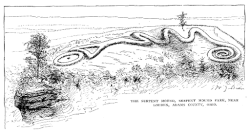
During the Woodland period, indigenous peoples in Minnesota developed pottery, burial mounds, and increasingly complex societies, adapting to the region's forests, prairies, and lakes.
Image source: Woodland period
1600
% complete
By the 17th century, the Dakota (Eastern Sioux) had long occupied southern and central Minnesota, living in villages along the Minnesota and Mississippi rivers and relying on wild rice, hunting, and agriculture.
Image source: Dakota people
1700
% complete
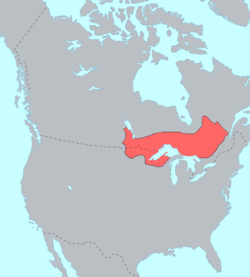
The Anishinaabe (Ojibwe) migrated westward from the Great Lakes into northern Minnesota during the 17th and 18th centuries, eventually becoming the region's dominant indigenous nation through their access to French trade goods.
Image source: Ojibwe
1659
% complete
French fur traders Pierre-Esprit Radisson and Médard des Groseilliers became among the first Europeans known to have traveled through Minnesota, opening the region to the lucrative fur trade.
Image source: Pierre-Esprit Radisson
1679
% complete
French explorer Daniel Greysolon, Sieur du Lhut, traveled deep into Minnesota, meeting Dakota leaders near present-day Duluth and strengthening French claims and alliances in the upper Midwest.
1763
% complete
After France ceded its claims east of the Mississippi to Britain following the Seven Years' War, British and American fur companies competed intensely for control over Minnesota's rich beaver grounds.
Image source: North American fur trade
Dec 20, 1803
% complete
The United States acquired lands west of the Mississippi River from France through the Louisiana Purchase, placing portions of future Minnesota within American territory for the first time.
Image source: Louisiana Purchase
1805
% complete
Lieutenant Zebulon Pike led an expedition up the Mississippi River into Minnesota, acquiring land at the river confluence that would later become the site of Fort Snelling.
Image source: Pike Expedition
1819
% complete
The US Army began building Fort Snelling at the junction of the Mississippi and Minnesota rivers, establishing a military presence that anchored settlement and commerce in the region.
Image source: Fort Snelling
Sep 29, 1837
% complete
The Dakota ceded all their lands east of the Mississippi River to the United States, opening vast pine forests in eastern Minnesota to logging and accelerating American settlement.
Image source: Hunkpapa
Mar 3, 1849
% complete
Congress created the Minnesota Territory, stretching far westward beyond today's state boundaries, with Saint Paul designated as the territorial capital.
Image source: Minnesota Territory
1851
% complete
Through the Treaties of Mendota and Traverse des Sioux, the Dakota ceded enormous tracts of southern and western Minnesota, triggering a massive wave of settlers, speculators, and land offices.
Image source: Treaty of Traverse des Sioux
May 11, 1858
% complete
Minnesota was admitted to the Union as the 32nd state on May 11, 1858, with a population booming due to immigration from New England, Germany, Scandinavia, and elsewhere.
Image source: Minnesota
Aug 17, 1862 - Sep 26, 1862
% complete
Frustrated by broken treaty payments and starvation, Dakota warriors launched attacks across southern Minnesota, resulting in hundreds of deaths before US forces suppressed the uprising.
Dec 26, 1862
% complete
Thirty-eight Dakota men were hanged in Mankato by order of President Lincoln, the largest one-day mass execution in American history, followed by the forced removal of the Dakota from Minnesota.
Image source: Dakota War of 1862
1880
% complete
Companies like Pillsbury and Washburn-Crosby (later General Mills) made Minneapolis the world's flour milling capital, powered by St. Anthony Falls and driving the city's explosive growth.
Image source: Mill City Museum
1892
% complete
Discovery and development of rich iron ore deposits on the Mesabi Range transformed northeastern Minnesota into the nation's leading iron-producing region, fueling America's steel industry.
Image source: Mesabi Range
Sep 1, 1894
% complete
A catastrophic wildfire swept through the lumber town of Hinckley, killing more than 400 people and destroying the town, one of the deadliest fires in American history.
Image source: Great Hinckley Fire
Jan 2, 1905
% complete
Cass Gilbert's grand Beaux-Arts design for the new Minnesota State Capitol was completed in Saint Paul, featuring one of the world's largest unsupported marble domes.
Image source: Minnesota State Capitol
Oct 12, 1918
% complete
Wildfires fueled by dry conditions and railroad sparks destroyed the town of Cloquet and surrounding areas, killing more than 450 people and displacing thousands.
Image source: Cloquet Fire
1920 - 1929
% complete
Falling crop prices after World War I sparked agrarian unrest, giving rise to the powerful Minnesota Farmer-Labor Party, which challenged both major political parties throughout the decade.
Image source: Minnesota Farmer–Labor Party
Nov 4, 1930
% complete
Farmer-Labor leader Floyd B. Olson won the governorship, championing progressive reforms such as unemployment relief and public works during the Great Depression.
Image source: Floyd B. Olson
Jul 1, 1934 - Aug 21, 1934
% complete
The 1934 Teamsters strike paralyzed trucking in Minneapolis and featured violent confrontations with police; its success helped galvanize industrial unionism nationwide.
Image source: Minneapolis general strike of 1934
1948
% complete
Minneapolis mayor Hubert Humphrey delivered a landmark civil rights speech at the Democratic National Convention and later merged the Democratic and Farmer-Labor parties, reshaping state politics.
Image source: Hubert Humphrey
1956
% complete
As high-grade iron ore dwindled, taconite pellet plants opened on the Mesabi Range, preserving Minnesota's mining economy and supporting Iron Range communities through the late 20th century.
Image source: Taconite
Apr 3, 1975
% complete
Voyageurs National Park was authorized along Minnesota's Canadian border, protecting interconnected waterways celebrated for their history as routes of the historic fur trade.
Image source: Voyageurs National Park
Apr 3, 1982
% complete
The Hubert H. Humphrey Metrodome opened in downtown Minneapolis, housing the Twins, Vikings, and Gophers football for decades and hosting World Series games in 1987 and 1991.
Image source: Hubert H. Humphrey Metrodome
Oct 31, 1991 - Nov 3, 1991
% complete
A record-breaking early-season storm dumped up to three feet of snow across parts of Minnesota, becoming one of the most memorable weather events in state history.
Image source: 1991 Halloween blizzard
Aug 1, 2007
% complete
The Interstate 35W bridge over the Mississippi River collapsed during rush hour, killing 13 people and prompting nationwide scrutiny of aging infrastructure.
Image source: I-35W Mississippi River bridge
Or browse the full history timeline directory, with more than 2,000 topics.
This History of Minnesota timeline was generated with the help of AI, using information found on the internet.
We work hard to keep these timelines accurate, but mistakes do get through. If you spot one, email us at [email protected] and we'll fix it for future visitors.
Generate yours with AI or build it from scratch, for free.
Export your timeline, add your own events, edit or remove AI-generated events, and much more
No credit card required.
Cancel anytime.
Cancel anytime.
You can create an unlimited number of timelines with up to 10 events on each one, customize how they look, export them to PDF, PNG, PowerPoint, CSV, and Excel, and share them with a link. Paid plans raise the event limit and add features like spreadsheet imports and collaborators.
Yes. You can cancel your subscription from your account page at any time, and you will not be charged again. Your subscription stays active for the rest of the period you already paid for.
Yes. We will email you a reminder before the annual renewal, and we will also email you a receipt.
Yes. You can email us within 15 days of any payment, and we will issue you a full refund.
Check out our pricing docs or send us an email anytime: [email protected].