-
Use Cases
-
Resources
-
Pricing
The history of Missouri spans thousands of years, beginning with sophisticated Native American cultures such as the Mississippian mound builders. European exploration began with the French in the late 1600s, and the region became part of the Louisiana Purchase in 1803. Missouri joined the Union as the 24th state in 1821 under the Missouri Compromise and later served as a contested border state during the Civil War. Today, Missouri is known for its role as the Gateway to the West and its rich cultural and economic heritage. More Less
1300
% complete
The Osage people became the dominant Indigenous nation in much of what is now Missouri, controlling trade and hunting grounds across the Ozarks and plains for centuries before European arrival.
Image source: Osage Nation
Jun 17, 1673
% complete
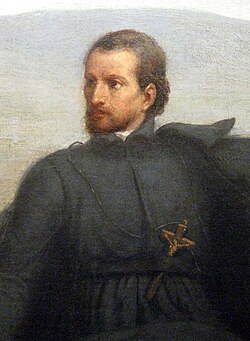
French explorers Jacques Marquette and Louis Joliet descended the Mississippi River, passing through what is now Missouri and opening the region to French claims and future colonization.
Image source: Jacques Marquette
1682
% complete
René-Robert Cavelier, Sieur de La Salle claimed the entire Mississippi Valley, including present-day Missouri, for France, naming it Louisiana in honor of King Louis XIV.
Image source: René-Robert Cavelier, Sieur de La Salle
1735
% complete
French colonists founded Ste. Geneviève on the west bank of the Mississippi River, making it one of the earliest permanent European settlements in Missouri, known for agriculture and lead mining.
Image source: Ste. Genevieve, Missouri
1762
% complete
In the Treaty of Fontainebleau, France ceded Louisiana, including Missouri, to Spain. Spanish rule brought new governance but left the French-speaking population largely intact.
Image source: Louisiana (New Spain)

Feb 15, 1764
% complete
Pierre Laclede and Auguste Chouteau established St. Louis as a fur trading post. The city quickly grew into a hub of commerce and became known as the 'Gateway to the West.'
Image source: History of St. Louis
Apr 30, 1803
% complete
The United States purchased Louisiana from France, doubling its size and bringing Missouri under American control. This set the stage for westward expansion and eventual statehood.
Image source: Louisiana Purchase
May 14, 1804 - Sep 23, 1806
% complete
Meriwether Lewis and William Clark launched their famous expedition to the Pacific from Camp Dubois near St. Louis, cementing the city's role as the launching point for Western exploration.
Image source: Lewis and Clark Expedition
Dec 16, 1811 - Feb 7, 1812
% complete
A series of powerful earthquakes centered near New Madrid, Missouri, ranks among the largest in U.S. history. The quakes were felt across much of the eastern United States and temporarily reversed parts of the Mississippi River's flow.
Image source: 1811–1812 New Madrid earthquakes
Jun 4, 1812
% complete
Congress organized the Missouri Territory after Louisiana achieved statehood, establishing a territorial government that would guide the region toward becoming a state.
Image source: Missouri Territory
Mar 6, 1820
% complete
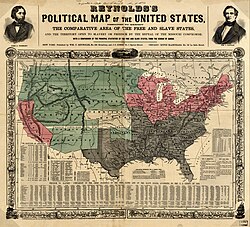
Congress admitted Missouri as a slave state while admitting Maine as a free state and prohibiting slavery north of the 36°30′ line, temporarily easing sectional tensions over slavery's expansion.
Image source: Missouri Compromise
Aug 10, 1821
% complete
Missouri officially entered the Union as the 24th state, with its capital eventually settled at Jefferson City. It was the first state entirely west of the Mississippi River.
Image source: Missouri
Sep 1, 1821
% complete
William Becknell pioneered the Santa Fe Trail from Franklin, Missouri, to New Mexico, establishing lucrative trade routes that made Missouri towns key commercial gateways to the Southwest.
Image source: Santa Fe Trail
1831
% complete
Members of the Church of Jesus Christ of Latter-day Saints established settlements in western Missouri, which they considered a promised land, leading to years of conflict with other settlers.
Image source: 1838 Mormon War
Oct 27, 1838
% complete
Governor Lilburn Boggs issued an executive order calling for Mormons to be driven from Missouri or exterminated following escalating violence in the Mormon War, forcing thousands to flee to Illinois.
Image source: Mormon Extermination Order
1849
% complete
A devastating cholera epidemic killed thousands in St. Louis, roughly ten percent of the city's population, prompting major public health reforms and infrastructure improvements.
Image source: History of cholera
May 17, 1849 - May 18, 1849
% complete
A fire aboard the steamboat White Cloud spread to the St. Louis waterfront, destroying dozens of buildings and steamboats and leading to stricter fire codes in the growing city.
Image source: St. Louis Fire of 1849
Jul 4, 1874
% complete
The Eads Bridge, designed by James B. Eads, opened in St. Louis as the first bridge over the Mississippi River using steel construction, revolutionizing rail transport and engineering standards.
Image source: Eads Bridge
Apr 3, 1882
% complete
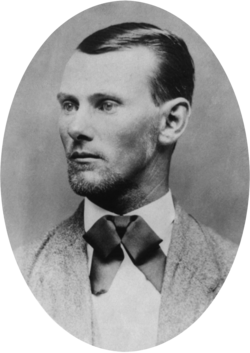
Robert Ford shot and killed outlaw Jesse James in his home in St. Joseph, Missouri, ending the era of the most infamous outlaw of the post-Civil War frontier.
Image source: Jesse James
Apr 30, 1904 - Dec 1, 1904
% complete
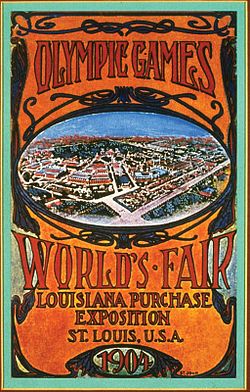
The Louisiana Purchase Exposition showcased St. Louis as a world-class city, drawing millions of visitors and popularizing foods like the ice cream cone and iced tea while celebrating American progress.
Image source: Louisiana Purchase Exposition
Jul 1, 1904 - Nov 23, 1904
% complete
St. Louis hosted the third modern Olympic Games, the first held in the United States, alongside the World's Fair. The games featured marathon events marred by extreme heat and unusual circumstances.
Image source: 1904 Summer Olympics
May 20, 1927 - May 21, 1927
% complete
Charles Lindbergh completed the first solo nonstop transatlantic flight in an aircraft named in honor of his St. Louis backers, making him a global hero and boosting aviation enthusiasm nationwide.
Image source: Spirit of St. Louis
Oct 28, 1965
% complete
Eero Saarinen's iconic Gateway Arch was completed in St. Louis as a monument to westward expansion, becoming the tallest arch in the world and the defining symbol of Missouri.
Image source: Gateway Arch
Jan 11, 1970
% complete
The Kansas City Chiefs defeated the Minnesota Vikings in Super Bowl IV, bringing Missouri its first major professional sports championship and cementing the city's NFL legacy.
Image source: Super Bowl IV
Jul 17, 1981
% complete
Suspended hotel skywalks collapsed during a dance event at the Hyatt Regency in Kansas City, killing 114 people in one of the deadliest structural failures in U.S. history and transforming engineering ethics standards.
Image source: Hyatt Regency walkway collapse
May 30, 1854 - 1861
% complete
The act opened Kansas to popular sovereignty, igniting violent clashes between pro-slavery Missourians known as 'Border Ruffians' and antislavery settlers along the Missouri-Kansas border.
Image source: Bleeding Kansas
Mar 6, 1857
% complete
Dred Scott, who had sued for his freedom in St. Louis courts after living in free territories, lost at the U.S. Supreme Court, which ruled African Americans were not citizens and intensified national divisions over slavery.
Image source: Dred Scott v. Sandford
May 10, 1861
% complete
Union troops captured a pro-secession state militia camp in St. Louis; ensuing gunfire into crowds killed civilians and hardened Missouri's divisions, helping keep the state under Union control.
Image source: East St. Louis massacre
Aug 10, 1861
% complete
Confederate and Union forces clashed near Springfield in the first major Civil War battle west of the Mississippi. Union General Nathaniel Lyon was killed, but the battle secured Missouri for the Union despite Confederate tactical success.
Image source: Battle of Wilson's Creek
Aug 25, 1863
% complete
Following Quantrill's raid on Lawrence, Kansas, Union Brigadier General Thomas Ewing ordered the forced evacuation of residents in four border counties, causing widespread destruction and suffering.
Image source: General Order No. 11 (1863)
Jul 4, 1865
% complete
Missouri adopted the Drake Constitution, imposing loyalty oaths, disenfranchising former Confederates, and expanding public education, reflecting Radical Republican control during Reconstruction.
Image source: Constitution of Missouri
Feb 13, 1866 - 1876
% complete
Former Confederate guerrillas Jesse James and the Younger brothers launched bank robberies beginning with the Liberty, Missouri bank, becoming legendary outlaws of the American frontier.
Image source: James–Younger Gang
Or browse the full history timeline directory, with more than 2,000 topics.
This History of Missouri timeline was generated with the help of AI, using information found on the internet.
We work hard to keep these timelines accurate, but mistakes do get through. If you spot one, email us at [email protected] and we'll fix it for future visitors.
Generate yours with AI or build it from scratch, for free.
Export your timeline, add your own events, edit or remove AI-generated events, and much more
No credit card required.
Cancel anytime.
Cancel anytime.
You can create an unlimited number of timelines with up to 10 events on each one, customize how they look, export them to PDF, PNG, PowerPoint, CSV, and Excel, and share them with a link. Paid plans raise the event limit and add features like spreadsheet imports and collaborators.
Yes. You can cancel your subscription from your account page at any time, and you will not be charged again. Your subscription stays active for the rest of the period you already paid for.
Yes. We will email you a reminder before the annual renewal, and we will also email you a receipt.
Yes. You can email us within 15 days of any payment, and we will issue you a full refund.
Check out our pricing docs or send us an email anytime: [email protected].