-
Use Cases
-
Resources
-
Pricing
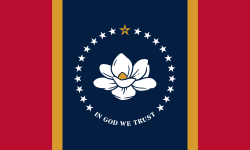
The history of Mississippi spans thousands of years, beginning with sophisticated Native American cultures like the Mississippian civilization. European exploration began with Hernando de Soto in 1540, followed by French colonization in the late 1600s. Mississippi became the 20th U.S. state in 1817, grew wealthy from cotton and slavery, seceded during the Civil War, endured Reconstruction, and later became a central battleground of the Civil Rights Movement before evolving into the modern American South. More Less
800 AD - 1600 AD
% complete
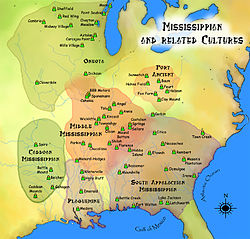
The Mississippian culture built complex societies with large platform mounds, intensive agriculture, and extensive trade networks centered along the Mississippi River. The Emerald Mound and Winterville sites are among the era's notable remnants in Mississippi.
Image source: Mississippian culture
1540
% complete
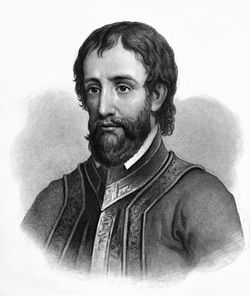
Spanish explorer Hernando de Soto led an expedition through the Southeast, crossing into present-day Mississippi in 1540. His expedition brought European diseases that devastated Indigenous populations and provided early European accounts of the region.
Image source: Hernando de Soto
Apr 9, 1682
% complete
French explorer René-Robert Cavelier de La Salle descended the Mississippi River to its mouth and claimed the entire river valley, including present-day Mississippi, for France, naming the territory Louisiana.
Image source: René-Robert Cavelier, Sieur de La Salle
1699
% complete
Pierre Le Moyne d'Iberville established Fort Maurepas near present-day Ocean Springs on Biloxi Bay in 1699, marking the first permanent European settlement in what is now Mississippi and founding French colonial presence on the Gulf Coast.
Image source: Fort Maurepas
1716
% complete
The French established Fort Rosalie at the site of modern Natchez in 1716. The settlement grew around trade with the Natchez people but tensions culminated in the Natchez Revolt of 1729, which nearly destroyed the colony.
Image source: Natchez, Mississippi
Feb 10, 1763
% complete
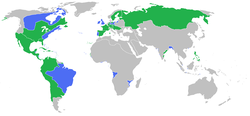
Following the Seven Years' War, France ceded its territories east of the Mississippi River, including most of present-day Mississippi, to Great Britain under the Treaty of Paris, beginning the British colonial period.
Image source: Treaty of Paris (1763)
1779
% complete
Spanish forces under Bernardo de Gálvez captured British holdings along the Gulf Coast during the American Revolutionary War, bringing the Natchez District and southern Mississippi under Spanish control until the late 1790s.
Image source: West Florida
1793
% complete
Eli Whitney's invention of the cotton gin made short-staple cotton profitable, fueling an explosive demand for cotton land and enslaved labor that would define Mississippi's antebellum economy and society.
Image source: Cotton gin
Apr 7, 1798
% complete
The United States Congress created the Mississippi Territory in 1798 following disputes with Spain over boundary lands, establishing territorial governance at Natchez and opening the region to American expansion.
Image source: Mississippi Territory
1800
% complete
The Natchez Trace, an ancient trail running from Natchez to Nashville, became a vital return route for boatmen and traders in the early 1800s, linking Mississippi commerce with the rest of the young nation before steamboats reduced its importance.
Image source: Natchez Trace
Nov 16, 1805
% complete
The Choctaw Nation ceded over four million acres of land in southern Mississippi to the United States through the Treaty of Mount Dexter, opening vast tracts to American settlers and accelerating territorial growth.
Image source: Treaty of Mount Dexter
Dec 10, 1817
% complete
Mississippi was admitted to the Union as the 20th state on December 10, 1817, with its capital at Washington before moving to Jackson in 1822. Cotton planters dominated the new state's politics and economy.
Image source: Mississippi
1821
% complete
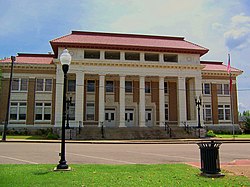
Jackson was founded in 1821 at the site of LeFleur's Bluff and designated Mississippi's capital, named in honor of General Andrew Jackson. It became the political center of the rapidly growing cotton state.
Image source: Jackson, Mississippi
1830 - 1860
% complete
By mid-century, Mississippi was the nation's premier cotton producer, with enslaved African Americans comprising more than half the population. Wealthy planters built grand mansions in Natchez and across the fertile Delta and Black Belt regions.
Image source: History of Mississippi
Sep 27, 1830
% complete
Under this treaty, the Choctaw Nation surrendered roughly eleven million acres in central Mississippi, becoming one of the largest Indian land cessions. Most Choctaw were removed west, though some remained, becoming the Mississippi Band of Choctaw Indians.
Image source: Treaty of Dancing Rabbit Creek
1831 - 1838
% complete
Thousands of Choctaw and Chickasaw people were forced from their Mississippi homeland and relocated westward to Indian Territory under federal removal policies, suffering immense hardship and death along the way.
Image source: Trail of Tears
1832
% complete
The Chickasaws ceded their remaining north Mississippi lands in 1832 through a series of treaties, triggering a frenzied land rush and the rapid establishment of towns like Holly Springs and Oxford in the new counties.
Image source: Pontotoc, Mississippi
Jan 9, 1861
% complete
On January 9, 1861, Mississippi became the second state to secede from the United States, declaring its departure driven largely by the defense of slavery, and soon joined the Confederate States of America.
Image source: Secession in the United States
May 18, 1863 - Jul 4, 1863
% complete
Union General Ulysses S. Grant's forty-seven-day siege of Vicksburg ended with the city's surrender on July 4, 1863, giving the Union control of the Mississippi River and splitting the Confederacy in two—a decisive turning point of the Civil War.
Image source: Siege of Vicksburg
Feb 14, 1864
% complete
Union General William T. Sherman led a destructive raid from Vicksburg to Meridian in February 1864, burning railroads, warehouses, and public buildings, crippling the Confederate war effort in central Mississippi.
Feb 23, 1870
% complete
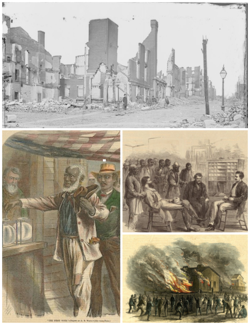
After meeting Reconstruction requirements, including ratifying the Fifteenth Amendment, Mississippi was readmitted to the Union in February 1870. The period saw African Americans gain political power, with figures like Hiram Revels and Blanche K. Bruce serving in the U.S. Senate.
Image source: Reconstruction era
Feb 25, 1870
% complete
Hiram Rhodes Revels of Mississippi became the first African American to serve in the United States Senate when he took his seat in February 1870, a landmark moment of Reconstruction-era political progress.
Image source: Hiram R. Revels
1890
% complete
The 1890 constitution imposed poll taxes, literacy tests, and other devices designed to strip voting rights from African Americans, effectively ending their political participation and serving as a model for Jim Crow disenfranchisement across the South.
Image source: Constitution of Mississippi
1907 - 1920
% complete
The arrival of the boll weevil devastated Mississippi's cotton economy in the early twentieth century, forcing agricultural diversification, driving sharecroppers off the land, and accelerating migration to cities and the North.
Image source: Boll weevil
1927
% complete
The catastrophic 1927 flood swamped much of the Mississippi Delta, displacing hundreds of thousands of people and prompting major federal flood-control legislation that reshaped the river's management nationwide.
Image source: Great Mississippi Flood of 1927
Feb 7, 1995
% complete
In 1995, Mississippi formally ratified the Thirteenth Amendment abolishing slavery—130 years after it had become part of the U.S. Constitution—finally completing paperwork overlooked since Reconstruction.
Image source: Thirteenth Amendment to the United States Constitution
Aug 29, 2005
% complete
Hurricane Katrina slammed into the Mississippi Gulf Coast with record storm surges up to 28 feet, destroying communities such as Biloxi, Gulfport, and Bay St. Louis, killing dozens and causing billions of dollars in damage.
Image source: Hurricane Katrina
Dec 9, 2017
% complete
The Museum of Mississippi History and the Mississippi Civil Rights Museum opened together in Jackson as the nation's first state-sponsored civil rights museum, chronicling the state's struggle for racial justice from slavery to the present.
Image source: Mississippi Civil Rights Museum
1916 - 1970
% complete
Millions of African Americans left Mississippi seeking better economic opportunities and escape from segregation and violence, relocating to Chicago, Detroit, and other Northern cities, profoundly reshaping both Mississippi and urban America.
Image source: Great Migration (African American)
1954
% complete
Founded in Indianola, Mississippi, shortly after the Brown v. Board of Education decision, the White Citizens' Council used economic retaliation, propaganda, and political pressure to resist school desegregation and suppress Black civil rights activism statewide.
Image source: Citizens' Councils
Aug 28, 1955
% complete
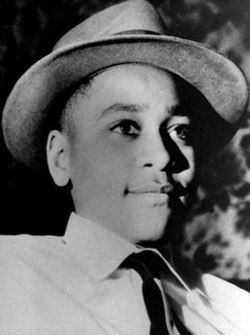
Fourteen-year-old Emmett Till was abducted and murdered near Money, Mississippi, after allegedly offending a white woman. His mother's decision to hold an open-casket funeral and publish photographs shocked the nation and energized the emerging civil rights movement.
Image source: Emmett Till
Oct 1, 1962
% complete
James Meredith became the first African American student admitted to the University of Mississippi after a violent riot by segregationists left two people dead. Federal troops were deployed to enforce his enrollment, marking a milestone in school desegregation.
Image source: Ole Miss riot of 1962
Jun 12, 1963
% complete
NAACP field secretary Medgar Evers was shot and killed outside his Jackson home by white supremacist Byron De La Beckwith. His assassination drew national outrage; Beckwith was finally convicted decades later in 1994.
Image source: Medgar Evers
Jun 1964 - Aug 1964
% complete
Hundreds of volunteers joined Mississippi activists in Freedom Summer to register Black voters and establish Freedom Schools. The murders of three workers—James Chaney, Andrew Goodman, and Michael Schwerner—by Klansmen drew national attention to Mississippi's violent resistance.
Image source: Freedom Summer
Aug 1964
% complete
The interracial Mississippi Freedom Democratic Party traveled to the 1964 Democratic National Convention in Atlantic City to challenge the all-white official delegation, exposing disenfranchisement to a national audience and advancing party reform.
Image source: Mississippi Freedom Democratic Party
Aug 6, 1965
% complete
The Voting Rights Act outlawed discriminatory literacy tests and authorized federal oversight of elections in states like Mississippi, enabling hundreds of thousands of Black Mississippians to register and vote for the first time.
Image source: Voting Rights Act of 1965
Or browse the full history timeline directory, with more than 2,000 topics.
This History of Mississippi timeline was generated with the help of AI, using information found on the internet.
We work hard to keep these timelines accurate, but mistakes do get through. If you spot one, email us at [email protected] and we'll fix it for future visitors.
Generate yours with AI or build it from scratch, for free.
Export your timeline, add your own events, edit or remove AI-generated events, and much more
No credit card required.
Cancel anytime.
Cancel anytime.
You can create an unlimited number of timelines with up to 10 events on each one, customize how they look, export them to PDF, PNG, PowerPoint, CSV, and Excel, and share them with a link. Paid plans raise the event limit and add features like spreadsheet imports and collaborators.
Yes. You can cancel your subscription from your account page at any time, and you will not be charged again. Your subscription stays active for the rest of the period you already paid for.
Yes. We will email you a reminder before the annual renewal, and we will also email you a receipt.
Yes. You can email us within 15 days of any payment, and we will issue you a full refund.
Check out our pricing docs or send us an email anytime: [email protected].