-
Use Cases
-
Resources
-
Pricing
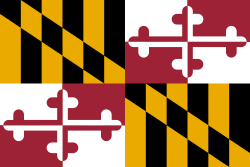
Maryland's history spans from its founding in 1632 as a proprietary English colony granted to Cecil Calvert, Lord Baltimore, as a haven for Catholics, through its role as one of the thirteen original colonies, its pivotal position during the American Revolution and the Civil War, to its growth into a diverse modern state known for its Chesapeake Bay culture and proximity to the nation's capital. More Less
Jun 2, 1608
% complete
English explorer Captain John Smith sailed up the Chesapeake Bay, mapping its shores and documenting the Indigenous peoples of the region. His detailed maps and accounts later proved invaluable to English colonizers planning settlements in the area that would become Maryland.
Image source: Chesapeake Bay
Jun 20, 1632
% complete
King Charles I of England granted a proprietary charter to Cecilius Calvert, 2nd Baron Baltimore, establishing the Province of Maryland. The charter gave the Calvert family nearly feudal powers over the colony and named it in honor of Queen Henrietta Maria.
Image source: Maryland Toleration Act
Mar 25, 1634
% complete
The ships Ark and Dove arrived with about 140 colonists who founded St. Mary's City on the Potomac River, the first permanent English settlement in Maryland. The settlers purchased land from the Yaocomico people and established the colony's first capital.
Image source: St. Mary's City, Maryland
Apr 21, 1649
% complete
The Maryland General Assembly passed the Toleration Act, granting freedom of worship to all Trinitarian Christians. It was one of the earliest laws promoting religious tolerance in colonial America, reflecting founder Cecil Calvert's vision of a haven for persecuted Catholics.
Mar 25, 1655
% complete
Puritan forces from Providence defeated Lord Baltimore's Catholic-aligned supporters in the only battle of the English Civil War fought in North America. The victory temporarily ended Calvert rule over Maryland until the monarchy was restored in England.
Image source: Battle of the Severn
1694
% complete
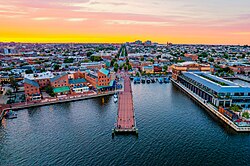
The colonial capital was moved from St. Mary's City to Anne Arundel's Towne, renamed Annapolis after Princess Anne. Its central location and deep harbor made it a growing hub of commerce and political life in the colony.
Image source: Annapolis, Maryland
1700 - 1770
% complete
Throughout the early 18th century, tobacco plantations dominated Maryland's economy, driving demand for enslaved African labor. The plantation system shaped the colony's social hierarchy, wealth distribution, and legal codes governing bondage.
Image source: History of slavery in Maryland
1729
% complete
The town of Baltimore was laid out on the Patapsco River and quickly grew into a flourishing port. By the late colonial period it rivaled Philadelphia and New York as a center of shipping, flour milling, and trade.
Image source: Baltimore
1763 - Oct 1767
% complete
Surveyors Charles Mason and Jeremiah Dixon resolved the long-running border dispute between the Penn and Calvert families by drawing the boundary between Pennsylvania and Maryland. The line later became symbolic of the division between North and South.
Image source: Mason–Dixon line
1765
% complete
Marylanders vigorously resisted Britain's Stamp Act, with merchants signing non-importation agreements and protesters burning effigies of stamp distributors. The resistance helped unite the colonies against British taxation policies.
Image source: Stamp Act 1765
Oct 19, 1774
% complete
Annapolitans forced the owner of the brig Peggy Stewart to burn his own ship and cargo of tea in retaliation for paying the hated British tea tax. The dramatic protest demonstrated revolutionary fervor in Maryland.
Image source: Peggy Stewart (ship)
Aug 27, 1776
% complete
At the Battle of Long Island, a contingent of Maryland soldiers under Lord Stirling made repeated desperate charges against British lines to cover the American retreat. Their sacrifice earned them the enduring title of 'Maryland's 400 Heroes.'
Image source: Maryland 400
Nov 25, 1781
% complete
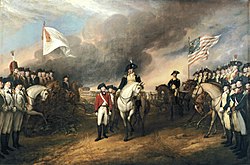
After the decisive American victory at Yorktown, captured British standards were ceremonially presented at the State House in Annapolis, which briefly served as the national capital where the Treaty of Paris was ratified in 1784.
Image source: Siege of Yorktown
Dec 23, 1783
% complete
General George Washington famously resigned his commission as commander-in-chief of the Continental Army before the Continental Congress meeting in the Maryland State House in Annapolis, a defining act of republican virtue.
Image source: George Washington's resignation as commander-in-chief
Apr 28, 1788
% complete
Maryland became the seventh state to ratify the U.S. Constitution, providing crucial momentum toward adoption of the new federal government. Delegates voted overwhelmingly in favor at the state convention in Annapolis.
Image source: Maryland
Jul 16, 1790
% complete
Maryland ceded land along the Potomac River to form the new federal District of Columbia, including the port towns of Georgetown and Alexandria. The Compromise of 1790 placed the nation's capital on Maryland soil.
Image source: District of Columbia retrocession
1796
% complete
Baltimore was officially incorporated as a city, cementing its rapid rise as one of America's most important ports. Shipbuilding, flour milling, and international trade fueled explosive growth through the early 19th century.
Sep 13, 1814 - Sep 14, 1814
% complete
British warships subjected Fort McHenry to a 25-hour bombardment in an attempt to take Baltimore. The fort's successful defense inspired Francis Scott Key to write 'Defence of Fort M'Henry,' later adopted as 'The Star-Spangled Banner.'
Image source: Fort McHenry
May 22, 1830
% complete
The Baltimore and Ohio Railroad began regular passenger service between Baltimore and Ellicott's Mills, launching America's railroad era. The B&O became a model for rail transportation across the young nation.
Image source: Baltimore and Ohio Railroad
1876
% complete
Founded with a record $7 million bequest from financier Johns Hopkins, the university pioneered the German research university model in America. Johns Hopkins Hospital opened in 1889 and revolutionized American medical education.
Image source: Johns Hopkins University
Feb 7, 1904
% complete
A catastrophic fire destroyed over 1,500 buildings in Baltimore's business district, one of the worst urban fires in American history. The disaster prompted modernized building codes and improved fire-fighting standards nationwide.
Image source: Great Baltimore Fire
Jul 2, 1908
% complete
Born in segregated Baltimore, Thurgood Marshall rose from local roots to become the NAACP's chief counsel, winning Brown v. Board of Education, and ultimately serving as the first African American justice on the U.S. Supreme Court.
Image source: Thurgood Marshall
Jul 30, 1952
% complete
The Chesapeake Bay Bridge linked Maryland's Western and Eastern Shores for the first time, transforming travel and tourism. A parallel span opened in 1973 to accommodate ever-growing traffic across the bay.
Image source: Chesapeake Bay Bridge
Nov 5, 1968
% complete
Former Maryland Governor Spiro Agnew won election as Vice President alongside Richard Nixon. His tenure ended in scandal when he resigned in October 1973 after pleading no contest to corruption charges stemming partly from his time as Baltimore County executive.
Image source: Spiro Agnew
Nov 4, 1986
% complete
Barbara Mikulski, a former Baltimore social worker and congresswoman, won election to the U.S. Senate. She served five terms, becoming the longest-serving female senator in history and a champion of women in politics.
Image source: Barbara Mikulski
Apr 24, 1990
% complete
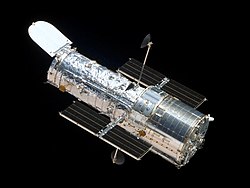
NASA's Hubble Space Telescope was launched into orbit, with science operations run from the Space Telescope Science Institute in Baltimore. The telescope revolutionized astronomy and anchored Maryland's role in space science research.
Image source: Hubble Space Telescope
Jan 18, 2023
% complete
Wes Moore took office as Maryland's 63rd governor, becoming the state's first African American governor. A decorated Army veteran and author, he campaigned on economic mobility, education, and public safety reforms.
Image source: Wes Moore
Sep 3, 1838
% complete
Frederick Douglass escaped from enslavement in Baltimore aboard a train heading north, eventually becoming the nation's foremost abolitionist orator and writer. His experiences in Maryland's shipyards shaped his powerful testimony against slavery.
Image source: Frederick Douglass
1861 - 1865
% complete
Federal authorities declared martial law in parts of Maryland, arresting suspected Confederate sympathizers, including Baltimore mayor George William Brown. The occupation secured the capital's approaches but curtailed civil rights during the war.
Image source: Maryland in the American Civil War
Apr 19, 1861
% complete
A pro-Confederate mob attacked Union troops marching through Baltimore, leaving the first combat fatalities of the Civil War. The riot highlighted Maryland's divided loyalties between North and South.
Image source: Baltimore riot of 1861
Sep 17, 1862
% complete
Union forces under George McClellan clashed with Robert E. Lee's Army of Northern Virginia near Sharpsburg, Maryland. With roughly 23,000 casualties, Antietam halted Lee's invasion and enabled Lincoln to issue the preliminary Emancipation Proclamation.
Image source: Battle of Antietam
Jul 9, 1864
% complete
Confederate General Jubal Early defeated a smaller Union force under Lew Wallace near Frederick, Maryland. Though a tactical defeat, the Union delay allowed reinforcements to reach Washington, D.C., saving the capital from capture.
Image source: Battle of Monocacy
Oct 12, 1864
% complete
Maryland voters narrowly approved a new constitution that abolished slavery in the state, more than a year before the Thirteenth Amendment. The vote followed fierce campaigning by emancipation advocates and Union soldiers.
Jul 1963 - 1967
% complete
The Cambridge movement, led by Gloria Richardson, staged protests against segregation on Maryland's Eastern Shore, drawing national attention. Violent clashes and the arrival of the National Guard made Cambridge a flashpoint of the civil rights era.
Or browse the full history timeline directory, with more than 2,000 topics.
This History of Maryland timeline was generated with the help of AI, using information found on the internet.
We work hard to keep these timelines accurate, but mistakes do get through. If you spot one, email us at [email protected] and we'll fix it for future visitors.
Generate yours with AI or build it from scratch, for free.
Export your timeline, add your own events, edit or remove AI-generated events, and much more
No credit card required.
Cancel anytime.
Cancel anytime.
You can create an unlimited number of timelines with up to 10 events on each one, customize how they look, export them to PDF, PNG, PowerPoint, CSV, and Excel, and share them with a link. Paid plans raise the event limit and add features like spreadsheet imports and collaborators.
Yes. You can cancel your subscription from your account page at any time, and you will not be charged again. Your subscription stays active for the rest of the period you already paid for.
Yes. We will email you a reminder before the annual renewal, and we will also email you a receipt.
Yes. You can email us within 15 days of any payment, and we will issue you a full refund.
Check out our pricing docs or send us an email anytime: [email protected].