-
Use Cases
-
Resources
-
Pricing
Massachusetts played a central role in American history. It was the site of the Pilgrims' landing at Plymouth Rock in 1620 and the Massachusetts Bay Colony, founded by Puritans in 1630. The colony became a hotbed of revolutionary activity, witnessing the Boston Massacre, the Boston Tea Party, and the first battles of the American Revolution at Lexington and Concord. In the 19th century, Massachusetts led industrialization and abolitionist movements. Today, it remains a national hub for education, technology, and healthcare. More Less
Dec 1620
% complete
The Pilgrims aboard the Mayflower landed at Plymouth Rock and established Plymouth Colony, one of the earliest successful English settlements in North America. They drafted the Mayflower Compact, an early framework of self-government, and with the help of the Wampanoag people, survived their first harsh years.
Image source: Plymouth Colony
1630
% complete
Puritan colonists led by John Winthrop arrived and founded the Massachusetts Bay Colony, with Boston as its capital. The colony grew rapidly under a theocratic government of Puritan leaders who sought to build a 'city upon a hill' as a model Christian community.
Image source: Massachusetts Bay Colony
Apr 23, 1635
% complete
Boston Latin School was established as the first public school in British North America, reflecting the Puritans' emphasis on education and literacy so citizens could read the Bible. It remains in operation today as the oldest public school in the United States.
Image source: Boston Latin School
1636
% complete
The Massachusetts General Court voted to establish Harvard College in Newtowne (later Cambridge), making it the oldest institution of higher learning in the United States. It was named for benefactor John Harvard and trained many colonial ministers and leaders.
Image source: Harvard University
Jul 1636 - Sep 1638
% complete
The Pequot War between New England colonists and their Native allies and the Pequot tribe culminated in the destruction of the Pequot at the Mystic massacre. The war reshaped the balance of power in southern New England and opened land for further English settlement.
Image source: Pequot War
Jun 1675 - Aug 1676
% complete
Metacom (King Philip), leader of the Wampanoag, led a coalition against expanding English settlements in one of the bloodiest wars per capita in American history. The war ended in colonial victory, drastically reducing Native American presence and influence in southern New England.
Image source: King Philip's War
Oct 7, 1691
% complete
The charter issued by William III merged the Massachusetts Bay Colony, Plymouth Colony, and other territories into the royal Province of Massachusetts Bay, establishing a new governmental structure that would govern the region until the American Revolution.
Image source: Province of Massachusetts Bay
Feb 1692 - May 1693
% complete
In Salem Village, mass hysteria over alleged witchcraft led to the trial of more than 150 people, with twenty executed and several others dying in jail. The trials became a lasting cautionary tale about religious extremism, false accusations, and judicial injustice.
Image source: Salem witch trials
Mar 5, 1770
% complete
British soldiers fired into a crowd of colonists on King Street in Boston, killing five civilians. Propagandists like Paul Revere used the incident to inflame anti-British sentiment, and it became a symbol of tyranny that galvanized revolutionary feeling.
Image source: Boston Massacre
Dec 16, 1773
% complete
Colonists disguised as Mohawk Indians boarded three ships in Boston Harbor and dumped 342 chests of tea into the water to protest taxation without representation. Britain retaliated with the punitive Coercive Acts, pushing the colonies closer to open rebellion.
Image source: Boston Tea Party
Apr 19, 1775
% complete
British troops marched to seize colonial military supplies at Concord, but were confronted at Lexington and then forced back to Boston by militia in the 'shot heard round the world.' The battles marked the outbreak of the American Revolutionary War.
Image source: Battles of Lexington and Concord
Jun 17, 1775
% complete
During the Siege of Boston, colonial forces fortified Breed's Hill in Charlestown and repelled two British assaults before retreating. Though a British victory, the heavy losses proved colonial troops could stand against the professional British army.
Image source: Battle of Bunker Hill
Mar 4, 1776 - Mar 17, 1776
% complete
George Washington's Continental Army fortification of Dorchester Heights forced the British to evacuate Boston, ending an eleven-month siege. The victory secured Massachusetts for the patriot cause and drove British forces out of New England for the rest of the war.
Image source: Siege of Boston
Jun 15, 1780
% complete
Drafted largely by John Adams, the Massachusetts Constitution was ratified and became the world's oldest functioning written constitution in continuous effect. Its structure of separation of powers and strong declaration of rights influenced the United States Constitution.
Image source: Constitution of Massachusetts
Aug 1786 - Feb 1787
% complete
Indebted farmers led by Daniel Shays rose up against economic injustices and aggressive tax collection, attacking courthouses and the federal arsenal at Springfield. The uprising exposed weaknesses of the Articles of Confederation and spurred calls for a stronger federal constitution.
Image source: Shays' Rebellion
Feb 6, 1788
% complete
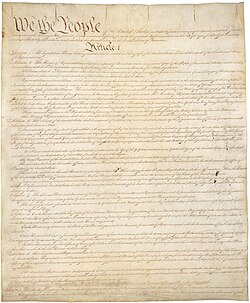
Massachusetts became the sixth state to ratify the U.S. Constitution after a contentious convention in which John Hancock and Samuel Adams swung support by backing recommended amendments. This ratification helped secure the document's adoption nationally.
Image source: Constitution of the United States
1803
% complete
The Middlesex Canal linked the Merrimack River at Lowell with the Charles River in Boston, becoming a major engineering feat and artery of commerce. It enabled timber and agricultural goods to flow into Boston, fueling the city's early economic growth.
Image source: Middlesex Canal
1813
% complete
Francis Cabot Lowell's Boston Manufacturing Company pioneered the integrated textile factory system, combining spinning and weaving under one roof powered by water. This 'Waltham-Lowell system' launched the American Industrial Revolution and transformed New England's economy.
Image source: Boston Manufacturing Company
1821
% complete
Lowell was developed as a purpose-built mill town along the Merrimack River, drawing thousands of young women—'mill girls'—from rural farms into factory work. It became America's model industrial city and a center of early labor activism.
Image source: Lowell, Massachusetts
Jan 1, 1831 - Dec 29, 1865
% complete
Garrison began publishing his abolitionist newspaper in Boston, demanding the immediate end of slavery. The paper made Boston a hub of the abolitionist movement and helped shape national debate leading up to the Civil War.
Image source: The Liberator (newspaper)
1837
% complete
Sarah Grimké delivered her famous letters and lectures on gender equality from Massachusetts platforms, helping launch organized feminism. Her advocacy connected abolitionism with women's rights and inspired generations of reformers in the state.
Image source: Sarah Moore Grimké
May 24, 1854 - Jun 2, 1854
% complete
Escaped slave Anthony Burns was arrested in Boston under the Fugitive Slave Act, prompting violent protests and a failed rescue attempt before federal troops escorted him back to slavery. The case radicalized many Northerners against slavery and strengthened the Republican movement.
Image source: Anthony Burns
Mar 10, 1876
% complete
While working in Boston, Alexander Graham Bell transmitted the first intelligible telephone message: 'Mr. Watson, come here, I want to see you.' The invention revolutionized global communication and helped make Massachusetts a center of technological innovation.
Image source: Alexander Graham Bell
Feb 1863
% complete
One of the first official African American regiments in the Union Army was raised in Massachusetts, commanded by Colonel Robert Gould Shaw. Its heroic assault on Fort Wagner became legendary, advancing both Black enlistment and the cause of emancipation.
Image source: 54th Massachusetts Infantry Regiment
Nov 9, 1872 - Nov 10, 1872
% complete
A massive conflagration swept through Boston's commercial district, destroying hundreds of buildings and causing enormous property damage. The disaster prompted reforms in building codes and fire prevention that shaped the modern cityscape.
Image source: Great Boston Fire of 1872
Apr 10, 1896
% complete
The revival of the Olympic Games in Athens featured the marathon event inspired by Greek legend; its popularity soon echoed in Massachusetts, which had already begun hosting its own annual marathon in 1897, cementing the state's athletic legacy.
Image source: Spyridon Louis
Apr 19, 1897
% complete
Inspired by the 1896 Olympics, the Boston Athletic Association hosted the first Boston Marathon, the oldest continuously run annual marathon in the world. The race grew into a beloved civic tradition and premier international sporting event.
Image source: Boston Marathon
Jan 15, 1919
% complete
A giant storage tank burst, releasing a wave of molasses through the North End that killed 21 people and injured dozens more. The disaster led to stricter engineering regulations and corporate accountability standards in Massachusetts and beyond.
Image source: Great Molasses Flood
Nov 28, 1942
% complete
A deadly nightclub fire in Boston claimed 492 lives, making it the deadliest nightclub fire in history. The tragedy revolutionized burn treatment, emergency medicine practices, and public safety codes across the nation.
Image source: Cocoanut Grove fire
Nov 8, 1960
% complete
Massachusetts Senator John F. Kennedy narrowly defeated Richard Nixon to become the 35th President and the first Catholic to hold the office. His presidency brought national prominence to Massachusetts politics and inspired a generation of public servants.
Image source: John F. Kennedy
Jun 21, 1974 - 1988
% complete
Federal Judge Arthur Garrity ruled Boston's schools were unconstitutionally segregated and ordered busing to achieve integration. The decision sparked protests and violence but ultimately reshaped the city's educational landscape and race relations.
Image source: Desegregation busing
1991 - 2007
% complete
The Central Artery/Tunnel Project relocated Boston's elevated highway underground and built the Ted Williams Tunnel, one of the most expensive public works projects in U.S. history. Despite cost overruns, it dramatically reshaped the city's infrastructure and landscape.
Image source: Big Dig
Nov 18, 2003
% complete
The Massachusetts Supreme Judicial Court ruled in Goodridge v. Department of Public Health that banning same-sex marriage violated the state constitution, making Massachusetts the first U.S. state to legalize same-sex marriage beginning May 2004.
Image source: Goodridge v. Department of Public Health
Apr 12, 2006
% complete
Governor Mitt Romney signed landmark legislation mandating near-universal health insurance coverage in Massachusetts. The law served as a model for the federal Affordable Care Act and significantly reduced the state's uninsured rate.
Nov 6, 2012
% complete
Harvard law professor and consumer advocate Elizabeth Warren defeated incumbent Scott Brown to become Massachusetts' first female U.S. Senator. Her election reinforced the state's progressive political identity and gave her a national platform in the Democratic Party.
Image source: Elizabeth Warren
Or browse the full history timeline directory, with more than 2,000 topics.
This History of Massachusetts timeline was generated with the help of AI, using information found on the internet.
We work hard to keep these timelines accurate, but mistakes do get through. If you spot one, email us at [email protected] and we'll fix it for future visitors.
Generate yours with AI or build it from scratch, for free.
Export your timeline, add your own events, edit or remove AI-generated events, and much more
No credit card required.
Cancel anytime.
Cancel anytime.
You can create an unlimited number of timelines with up to 10 events on each one, customize how they look, export them to PDF, PNG, PowerPoint, CSV, and Excel, and share them with a link. Paid plans raise the event limit and add features like spreadsheet imports and collaborators.
Yes. You can cancel your subscription from your account page at any time, and you will not be charged again. Your subscription stays active for the rest of the period you already paid for.
Yes. We will email you a reminder before the annual renewal, and we will also email you a receipt.
Yes. You can email us within 15 days of any payment, and we will issue you a full refund.
Check out our pricing docs or send us an email anytime: [email protected].