-
Use Cases
-
Resources
-
Pricing
Maine's history spans thousands of years, beginning with the Wabanaki peoples, followed by French and English colonization, its role in colonial wars, and eventual separation from Massachusetts to become the 23rd U.S. state in 1820. The state later developed major industries in shipbuilding, lumber, fishing, and paper manufacturing. More Less
3000 BC
% complete
The ancestors of the Abenaki, Maliseet, Mi'kmaq, Passamaquoddy, and Penobscot peoples established seasonal and permanent settlements throughout Maine. They developed fishing, farming, hunting, and trade networks along the state's rivers and coast, forming part of the broader Wabanaki Confederacy.
Image source: Wabanaki Confederacy
Jun 1497
% complete
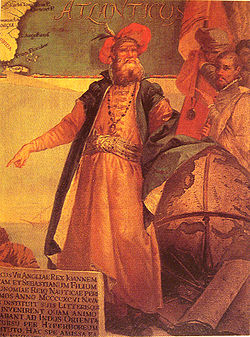
Italian explorer John Cabot, sailing under the English flag, likely became the first European to sight or land on the coast of Maine during his voyage to North America. His expedition opened the region to European fishing fleets in subsequent decades.
Image source: John Cabot
1524
% complete
Portuguese navigator Estêvão Gomes mapped much of the New England coast, including Maine, while searching for a northwest passage for Spain. His detailed charts encouraged later French and English interest in the region's fisheries and furs.
Image source: Estêvão Gomes
1604
% complete
French explorer Samuel de Champlain surveyed the Maine coastline, including Mount Desert Island and the Penobscot Bay area, as part of his efforts to establish New France. His voyages produced some of the earliest accurate maps of the Maine coast.
Image source: Samuel de Champlain
Aug 1607
% complete
The Popham Colony, established by English colonists at the mouth of the Kennebec River, was one of the earliest English settlement attempts in North America. Harsh winter conditions, internal disputes, and the death of its leader led to its abandonment within about a year.
Image source: Popham Colony
1608
% complete
Colonists at the Popham Colony constructed the Virginia of Sagadahoc, the first ocean-going vessel built by English settlers in North America. The ship carried surviving colonists back to England when the colony was abandoned.
1623
% complete
English settlers established the first lasting settlement in Maine at Kittery, near the Piscataqua River. The town grew into a center of shipbuilding and lumber production and remains Maine's oldest incorporated town.
Image source: Kittery, Maine
1639
% complete
King Charles I granted Ferdinando Gorges a royal patent making him proprietor of the Province of Maine. Gorges organized colonial government in the region before it was absorbed by the Massachusetts Bay Colony in the 1650s.
Image source: Province of Maine
1652 - 1658
% complete
The Massachusetts Bay Colony extended its jurisdiction over Maine's settlements between roughly 1652 and 1658, incorporating towns such as Kittery and York. Maine remained under Massachusetts control until it achieved statehood nearly two centuries later.
Image source: Maine
1675 - 1678
% complete
During King Philip's War, Wabanaki forces allied with other tribes attacked English settlements across Maine, destroying many frontier towns. The conflict began decades of intermittent warfare that repeatedly devastated Maine's colonial population.
Image source: King Philip's War
Mar 1697
% complete
Hannah Duston was taken captive from Haverhill, Massachusetts, and transported up the Merrimack toward Maine territory. Her escape and killing of her captors made her one of colonial America's most famous figures, celebrated in countless 19th-century accounts.
Image source: Hannah Duston
1702 - 1713
% complete
French and Wabanaki forces launched repeated attacks on English settlements in Maine during Queen Anne's War, including the raid on Wells in 1692's aftermath era and the destruction of Deerfield-linked supply lines. The war ended with the Treaty of Utrecht, shifting control but leaving frontier tensions unresolved.
Image source: Queen Anne's War
1722 - Dec 1725
% complete
Dummer's War saw fighting between New England settlers and Wabanaki tribes across Maine. It concluded with negotiations in Georgetown, Maine, which temporarily eased frontier violence but failed to resolve underlying disputes over land and sovereignty.
Image source: Dummer's War
Jun 1775
% complete
Maine patriots in Machias captured the British schooner Margaretta in the first naval engagement of the American Revolution. The victory demonstrated early colonial resistance and made Machias a symbol of revolutionary defiance.
Image source: Battle of Machias
Oct 18, 1775
% complete
Royal Navy ships bombarded and burned Falmouth, present-day Portland, destroying hundreds of buildings. The destruction enraged Americans and helped galvanize support for independence throughout the colonies.
Image source: Burning of Falmouth
Jul 1779 - Aug 1779
% complete
The largest American naval expedition of the Revolutionary War attempted to dislodge British forces at Castine but ended in catastrophic defeat. American ships were scuttled up the Penobscot River, and the disaster bankrupted the Massachusetts war effort.
Image source: Penobscot Expedition
1780
% complete
Massachusetts formally organized Maine as its District of Maine after adopting its state constitution. Residents increasingly agitated for separation over the following decades, citing distance from Boston and distinct economic interests.
Image source: History of Maine
1820 - 1821
% complete
Bath merchant William King led Maine's campaign for statehood and became its first governor. He guided the new state through its formative year before resigning to accept an appointment as a federal commissioner.
Image source: William King (Maine governor)
Mar 15, 1820
% complete
Maine achieved statehood as part of the Missouri Compromise, entering the Union as a free state to balance Missouri's admission as a slave state. Portland native William King became Maine's first governor, and Augusta served as capital.
Image source: Missouri Compromise
1851
% complete
Under temperance advocate Mayor Neal Dow, Maine enacted the nation's first statewide prohibition law, known as the Maine Law. The legislation inspired prohibition movements across the United States and internationally.
Image source: Neal Dow
Jul 2, 1863
% complete
Maine professor Joshua Lawrence Chamberlain commanded the 20th Maine Infantry in the defense of Little Round Top at Gettysburg. His famous bayonet charge helped secure the Union flank and earned him the Medal of Honor.
Image source: Joshua Chamberlain
Jul 4, 1866
% complete
A devastating fire swept through Portland on Independence Day, destroying around 1,500 buildings and leaving thousands homeless. The city rebuilt rapidly with brick construction, reshaping its downtown architecture.
Image source: 1866 great fire of Portland, Maine
1876 - 1884
% complete
Maine statesman James G. Blaine served as Speaker of the House, Secretary of State, and was the Republican presidential nominee in 1884. His career made Maine a significant voice in national politics during Reconstruction and the Gilded Age.
Image source: James G. Blaine
1912
% complete
Leon Leonwood Bean founded L.L.Bean in Freeport after inventing the Maine Hunting Shoe. The company grew into an iconic outdoor retailer whose flagship store became a major tourist destination operating around the clock.
Image source: L.L.Bean
Jul 8, 1916
% complete
Sieur de Monts National Monument, created on Mount Desert Island through efforts led by George B. Dorr and Charles Eliot, became Lafayette National Park in 1919 and Acadia National Park in 1929. It was the first national park east of the Mississippi River.
Image source: Acadia National Park
1929 - 1939
% complete
The Great Depression devastated Maine's textile, paper, and fishing industries, causing widespread unemployment in mill towns like Lewiston and Biddeford. Federal programs and gradual industrial shifts slowly restored economic stability.
Image source: Great Depression in the United States
1955 - 1980
% complete
Rumford native Edmund Muskie served two terms as Maine governor before becoming a US Senator and running mate in 1968. He championed environmental protection laws, including the Clean Air Act, shaping modern American environmental policy.
Image source: Edmund Muskie
1980
% complete
Through the landmark Maine Indian Claims Settlement Act, the Passamaquoddy and Penobscot nations secured federal recognition, monetary compensation, and trust land rights, resolving long-standing land claims and restoring tribal self-determination.
Image source: Indian Land Claims Settlements
Jan 1995 - Jan 2003
% complete
Angus King won the Maine governorship as an independent candidate, one of few independents to lead a US state. He emphasized education reform, laptop initiatives for students, and bipartisan governance before later serving as a US Senator.
Image source: Angus King
Nov 5, 1996
% complete
Susan Collins won election to the US Senate in 1996, becoming the first woman elected to represent Maine in that body. She has since become one of the nation's longest-serving senators, known for her moderate positions and record-breaking voting streak.
Image source: Susan Collins
Or browse the full history timeline directory, with more than 2,000 topics.
This History of Maine timeline was generated with the help of AI, using information found on the internet.
We work hard to keep these timelines accurate, but mistakes do get through. If you spot one, email us at [email protected] and we'll fix it for future visitors.
Generate yours with AI or build it from scratch, for free.
Export your timeline, add your own events, edit or remove AI-generated events, and much more
No credit card required.
Cancel anytime.
Cancel anytime.
You can create an unlimited number of timelines with up to 10 events on each one, customize how they look, export them to PDF, PNG, PowerPoint, CSV, and Excel, and share them with a link. Paid plans raise the event limit and add features like spreadsheet imports and collaborators.
Yes. You can cancel your subscription from your account page at any time, and you will not be charged again. Your subscription stays active for the rest of the period you already paid for.
Yes. We will email you a reminder before the annual renewal, and we will also email you a receipt.
Yes. You can email us within 15 days of any payment, and we will issue you a full refund.
Check out our pricing docs or send us an email anytime: [email protected].