-
Use Cases
-
Resources
-
Pricing
1250 BCE
Writing developed in Ancient China around 1250 BCE, creating the basis for a long literary tradition expressed through Chinese characters.
Image source: History of writing
200 BCE - 800 CE
Classical Sanskrit literature flourished from the Maurya through Gupta periods, spanning approximately the second century BCE to the eighth century CE.
Image source: Sanskrit literature
100 CE
The Puranas are generally regarded as among the earliest philosophical writings in Indian history, although Sanskrit linguistic works existed earlier.
Image source: Puranas
250 CE
The Seven Sages of the Bamboo Grove were influential poets in the Wei dynasty who addressed political and philosophical concerns directly in their poetry.
Image source: Seven Sages of the Bamboo Grove
700 CE
Japanese literature began to diverge from Chinese literature around the eighth century, establishing a distinctive written tradition.
700 CE - 799 CE
Eighth-century fudoki were records written primarily in Chinese that documented historical and mythological stories about Japanese regions.
700 CE - 799 CE
The Man'yōshū became the oldest collection of Japanese poetry, compiling waka from the fifth through eighth centuries using Chinese characters through Man'yōgana.
800 CE - 899 CE
Kakawin Ramayana, the oldest surviving kakawin, was composed in Java during the ninth century as a localization of the Sanskrit Bhaṭṭikāvya.
800 CE
Chinese poetry diverged into contrasting schools in the early ninth century, including poets emphasizing unusual subjects and poets such as Bai Juyi and Yuan Zhen favoring simplicity.
Image source: Chinese poetry
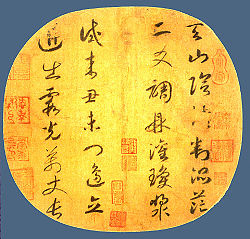
868 CE
A dated copy of the Diamond Sutra, printed in 868 in China, is the oldest known dated printed book.
Image source: Diamond Sutra
900 CE - 999 CE
Utsubo Monogatari and Ochikubo Monogatari were tenth-century Japanese prose works portraying aristocratic life; Utsubo is sometimes considered the first full-length novel.
905 CE
The Kokin Wakashū was compiled by imperial command as a major collection of ninth-century Japanese waka poetry.
1000 CE - 1099 CE
The Tale of Genji became the next major Japanese prose work after earlier monogatari, and was written during the eleventh century.
Image source: The Tale of Genji
1000 CE - 1099 CE
The Kathasaritsagara, dating to the eleventh century, represents later Sanskrit literature as Sanskrit declined and Middle Indic vernaculars gained importance.
1084 CE
During the Song dynasty, the Zizhi Tongjian was compiled into 294 volumes containing about three million written Chinese characters.
Image source: Zizhi Tongjian
1088 CE
Shen Kuo's Dream Pool Essays, completed in 1088, assembled extensive scientific writing, including the oldest description of the magnetized compass.
Image source: Dream Pool Essays
1100 CE - 1199 CE
Konjaku Monogatarishū was compiled in the twelfth century and assembled roughly one thousand stories from Japan, China, and India.
1200 CE - 1299 CE
Japanese literature became increasingly accessible beyond the aristocracy in the thirteenth century, often through religious narration such as The Tale of the Heike.
1300 CE - 1499 CE
In the fourteenth and fifteenth centuries, professional writers produced renga poetry and noh and kyōgen drama under the patronage of courts, temples, and local lords.
1500 CE - 1599 CE
Printing became prominent in China during the Ming dynasty in the beginning of the sixteenth century, supporting the spread of literary works.
Image source: Chinese literature
1600 CE - 1699 CE
Korean vernacular fiction developed at the beginning of the seventeenth century through works such as Hŏ Kyun's Hong Gildong jeon.
1919 CE
Chinese literature broke from classical tradition and literary restrictions with the New Literature Movement in 1919, including works by Hu Shih, Lu Xun, and Guo Moruo.
1100 BCE - 300 BCE
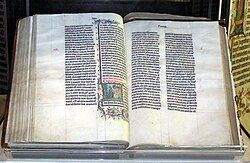
The books that constitute the Hebrew Bible developed over roughly a millennium, with the oldest texts originating around the eleventh or tenth centuries BCE.
Image source: Hebrew Bible
650 BCE
Writing emerged independently in Mesoamerica around 650 BCE, contributing another major center to the global history of written expression.
600 BCE
Ancient Greek plays originated from chorus performances in Athens during the sixth century BCE, developing as traditions honoring Dionysus.
Image source: Theatre of ancient Greece
300 BCE
The Old Testament was compiled and edited over centuries, with many scholars placing the solidification of the Hebrew canon around the third century BCE.
Image source: Development of the Hebrew Bible canon
1 CE - 100 CE
Historical writing in the early Roman Empire included Lucan's Pharsalia, concerning Caesar's civil war, and Tacitus's Annals, recording first-century events.
700 CE - 1200 CE
Liturgical Jewish poetry flourished in Hebrew in Palestine during the seventh and eighth centuries, followed by major religious and secular poets in Spain, Provence, and Italy.
731 CE
Bede's Historia ecclesiastica gentis Anglorum continued the faith-based historical tradition associated with Eusebius and became a major work of early medieval historiography.
1048 CE - 1122 CE
The Rubáiyát is a collection of poems attributed to Omar Khayyám, the Persian mathematician and astronomer who lived from 1048 to 1122.
Image source: Rubaiyat of Omar Khayyam
1095 CE
The First Crusade, beginning in 1095, influenced medieval literature and contributed to the production of religious and historical narratives.
Image source: First Crusade
1200 CE - 1299 CE
During the thirteenth century, religious literature proliferated in languages other than Latin, making it accessible to people without a Latin education.
Image source: Medieval literature
1250 CE - 1274 CE
Thomas Aquinas used Aristotelian influence to turn theology into a systematic intellectual discipline as Aristotle's works returned to Europe in the thirteenth century.
Image source: Thomas Aquinas
1321 CE
Dante Alighieri completed the Divine Comedy around 1321. The poem reflects medieval Western Christian ideas of the afterlife and helped establish Tuscan as standard Italian.
Image source: Divine Comedy
1351 CE
Giovanni Boccaccio's The Decameron was published in 1351 and influenced European literature for centuries.
Image source: The Decameron
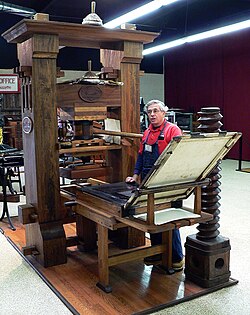
1450 CE
The invention of the printing press in the mid-fifteenth century revolutionized European literature by enabling texts to circulate more widely.
Image source: Printing press
1500 CE - 1799 CE
From the sixteenth through eighteenth centuries, Commedia dell'arte performers improvised in the streets of Italy and France.
Image source: Commedia dell'arte
1500 CE - 1699 CE
The novel originated in the early modern period and grew substantially in popularity during the following century, becoming a central literary form.
Image source: Novel
1532 CE - 1564 CE
François Rabelais wrote Gargantua and Pantagruel in five parts throughout the mid-sixteenth century.
Image source: Gargantua and Pantagruel
1590 CE - 1616 CE
William Shakespeare was a famed playwright of the late sixteenth and early seventeenth centuries and is widely recognized as the greatest author in the English language.
Image source: William Shakespeare
1600 CE - 1699 CE
Metaphysical poetry developed in the seventeenth century, led by John Donne and known especially for intellectually intricate love poems.
Image source: Metaphysical poets
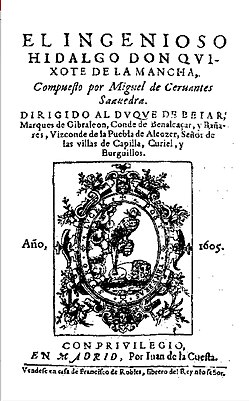
1605 CE - 1615 CE
Miguel de Cervantes published Don Quixote in the early seventeenth century; it is recognized as an early novel.
Image source: Don Quixote
1700 CE - 1799 CE
The eighteenth-century Enlightenment produced influential authors including Voltaire, Jean-Jacques Rousseau, Immanuel Kant, and Adam Smith.
Image source: Age of Enlightenment
1750 CE - 1799 CE
The second half of the eighteenth century saw the beginnings of Romanticism, associated in part with Johann Wolfgang von Goethe.
Image source: Romanticism
1769 CE
The History of Emily Montague, published in 1769, was the first Canadian novel.
1800 CE - 1899 CE
In the later nineteenth century, Romanticism was countered by Realism and Naturalism, literary movements emphasizing social conditions and observable life.
1900 CE - 1940 CE
Modernist literature was written roughly from 1900 to 1940 and experimented with new forms, perspectives, and literary techniques.
Image source: Literary modernism
1945 CE
Contemporary literature is defined as literature written after the end of World War II in 1945.
1945 CE - 1980 CE
Postmodern literature was written roughly from 1945 to 1980 and developed distinctive approaches to narrative, language, and literary conventions.
Image source: Postmodern literature
1965 CE
The Nebula Award was established in 1965, reflecting the development of independent institutions and critical recognition for genres often neglected by mainstream literary criticism.
Image source: Nebula Award
Or browse the full history timeline directory, with more than 2,500 topics.
This History of Literature timeline was generated with the help of AI, using information found on the internet.
We work hard to keep these timelines accurate, but mistakes do get through. If you spot one, email us at [email protected] and we'll fix it for future visitors.
Generate yours with AI or build it from scratch, for free.
Export your timeline, add your own events, edit or remove AI-generated events, and much more
No credit card required.
Cancel anytime.
Cancel anytime.
You can create an unlimited number of timelines with up to 10 events on each one, customize how they look, export them to PDF, PNG, PowerPoint, CSV, and Excel, and share them with a link. Paid plans raise the event limit and add features like spreadsheet imports and collaborators.
Yes. You can cancel your subscription from your account page at any time, and you will not be charged again. Your subscription stays active for the rest of the period you already paid for.
Yes. We will email you a reminder before the annual renewal, and we will also email you a receipt.
Yes. You can email us within 15 days of any payment, and we will issue you a full refund.
Check out our pricing docs or send us an email anytime: [email protected].