-
Use Cases
-
Resources
-
Pricing
Malaria is a mosquito-borne infectious disease caused by Plasmodium parasites that has afflicted humanity for thousands of years. Its history spans ancient references in Chinese and Greek texts, the discovery of quinine from cinchona bark, the 19th-century identification of the parasite by Charles Laveran and mosquito transmission by Ronald Ross, the development of antimalarial drugs like chloroquine in the 20th century, and modern efforts including insecticide-treated nets, artemisinin-based therapies, and the first malaria vaccine approved in 2021. More Less
2700 BC - 1700 BC
% completado
The Ancient Greek historian Herodotus wrote that the builders of the Egyptian pyramids (c. 2700-1700 BC) were given large amounts of garlic, probably to protect them against malaria.
Image source: History of malaria
2613 BC
% completado
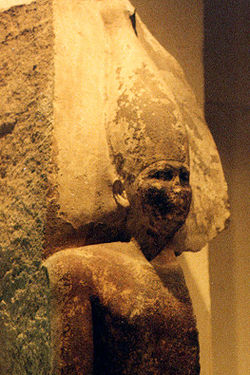
The Pharaoh Sneferu, founder of the Fourth dynasty of Egypt, who reigned from around 2613-2589 BC, used bed-nets as protection against mosquitoes.
Image source: Sneferu
400 BC
% completado
Malaria became widely recognized in ancient Greece by the 4th century BC and is implicated in the decline of many city-state populations.
000200 BC
% completado
The three major types of inherited genetic resistance (sickle-cell disease, thalassaemias, and glucose-6-phosphate dehydrogenase deficiency) were present in the Mediterranean world by the time of the Roman Empire, about 2000 years ago.
450 AD
% completado
An epidemic of Roman fever during the 5th century AD may have contributed to the fall of the Roman Empire.
1500
% completado
The coastal plains of southern Italy fell from international prominence when malaria expanded in the 16th century.
1500
% completado
European settlers and West African slaves could have brought other strains of malaria to the Americas in the 16th century.
350 AD
% completado
Qing-hao was first recommended for acute intermittent fever episodes by Ge Hong as an effective medication in the 4th-century Chinese manuscript Zhou hou bei ji fang, usually translated as "Emergency Prescriptions kept in one's Sleeve".
Image source: Artemisia annua
1600
% completado
Jesuit Brother Agostino Salumbrino (1561-1642), who lived in Lima and was an apothecary by training, observed the Quechua using the bark of the cinchona tree to treat fever.
Image source: Cinchona
1632
% completado
Jesuit Bernabé de Cobo (1582-1657), who explored Mexico and Peru, is credited with taking cinchona bark to Europe. He brought the bark from Lima to Spain, and then to Rome and other parts of Italy, in 1632.
1712
% completado
Francesco Torti wrote in 1712 that only "intermittent fever" was amenable to the fever tree bark.
1820
% completado
French chemist Pierre Joseph Pelletier and French pharmacist Joseph Bienaimé Caventou separated in 1820 the alkaloids cinchonine and quinine from powdered fever tree bark, allowing for standardized doses of active ingredients. Prior to this, the bark was dried, ground and mixed into liquid (commonly wine) for drinking. By the end of the 19th century, the Dutch had established a world monopoly over quinine supply.
Image source: Pierre Joseph Pelletier
1834
% completado
In 1834, in British Guiana, a German physician, Carl Warburg, invented an antipyretic medicine: 'Warburg's Tincture'. It was officially adopted by the Austrian Empire in 1847.
1876
% completado
In 1876, methylene blue was synthesized by German chemist Heinrich Caro. In 1891, Paul Guttmann and Paul Ehrlich noted that methylene blue had a high affinity for some tissues and had a slight antimalarial property.
Image source: Methylene blue
1917 - 1950
% completado
In the early 20th century, before antibiotics, patients with tertiary syphilis were intentionally infected with malaria to induce fever; this was called malariotherapy. In 1917, Viennese psychiatrist Julius Wagner-Jauregg began treating neurosyphilitics with induced Plasmodium vivax malaria. Therapeutic malaria opened up a wide field of chemotherapeutic research and was practiced until 1950. He won the 1927 Nobel Prize for this work.
Image source: Julius Wagner-Jauregg
1918
% completado
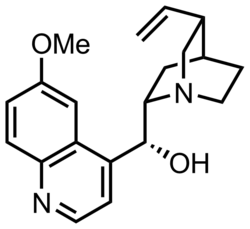
Quinine wouldn't be successfully synthesized until 1918, ending dependence on natural cinchona bark for the production of the drug.
Image source: Quinine
1934 - Mar 1946
% completado
Resochin (7-chloro-4-(4-(diethylamino)-1-methylbutylamino)quinoline) and a similar compound Sontochin (3-methyl Resochin) were synthesized in 1934. In March 1946, the drug was officially named Chloroquine.
Image source: Chloroquine
1948
% completado
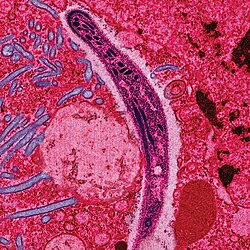
The discovery in 1948 of Plasmodium berghei in wild rodents in the Congo, and later other rodent species that could infect laboratory rats, transformed malaria drug development.
Image source: Plasmodium berghei
May 23, 1967 - 1971
% completado
Their work was known as Project 523, named after the date it was announced – 23 May 1967. The team investigated more than 2000 Chinese herb preparations and by 1971 had made 380 extracts from 200 herbs.
Image source: Project 523
1972
% completado
Artemisinin was isolated by pharmacologist Tu Youyou (Nobel Prize in Physiology or Medicine, 2015). The first successful trials of artemisinin were in 1979. Its derivatives, artesunate and artemether, have been used in clinics since 1987 for treating drug-resistant and drug-sensitive malaria, especially cerebral malaria.
Image source: Tu Youyou
1985 - 1992
% completado
In 1985, Zhou Yiqing and his team combined artemether and lumefantrine into a single tablet, which was registered as a medicine in China in 1992.
1717
% completado
In 1717, the dark pigmentation of a postmortem spleen and brain was published by the epidemiologist Giovanni Maria Lancisi in his malaria textbook De noxiis paludum effluviis eorumque remediis.
Image source: Giovanni Maria Lancisi
1848
% completado
In 1848, German anatomist Johann Heinrich Meckel recorded black-brown pigment granules in the blood and spleen of a patient who had died in a mental hospital.
1880
% completado
The causal relationship of pigment to the parasite was established in 1880, when French physician Charles Louis Alphonse Laveran, working in the military hospital of Constantine, Algeria, observed pigmented parasites inside the red blood cells of people with malaria. The discovery remained controversial until the development of the oil immersion lens in 1884 and superior staining methods in 1890-1891. Laveran was awarded the 1907 Nobel Prize in Physiology or Medicine for his work on protozoa causing diseases.
Image source: Charles Louis Alphonse Laveran
1880
% completado
Paul Ehrlich in 1880 described the use of "neutral" dyes—mixtures of acidic and basic dyes—for the differentiation of cells in peripheral blood smears.
Image source: Paul Ehrlich
1885 - 1890
% completado
In 1885, Ettore Marchiafava, Angelo Celli and Camillo Golgi studied the reproduction cycles in human blood (Golgi cycles). In 1886 Golgi described morphological differences still used to distinguish Plasmodium vivax and Plasmodium malariae. Sakharov in 1889 and Marchiafava & Celli in 1890 independently identified Plasmodium falciparum as a distinct species. In 1892, Marchiafava and Bignami proved the multiple forms seen by Laveran were from a single species.
Image source: Camillo Golgi
1886 - 1896
% completado
Dutch physician Pieter Pel first proposed a tissue stage of the malaria parasite in 1886, presaging its discovery by over 50 years. This suggestion was reiterated in 1893 when Golgi suggested the parasites might have an undiscovered tissue phase in endothelial cells, supported again by Pel in 1896.
Image source: Apicomplexan life cycle
1891
% completado
In 1891, Ernst Malachowski and Dmitri Leonidovich Romanowsky independently developed techniques using a mixture of Eosin Y and modified methylene blue (methylene azure) that produced a shade of purple unattributable to either component.
Image source: Romanowsky stain
Aug 20, 1897
% completado
Britain's Sir Ronald Ross, an army surgeon working in Secunderabad, India, proved in 1897 that malaria is transmitted by mosquitoes, an event now commemorated by World Mosquito Day. He reported this to the British Medical Association in Edinburgh in 1898. Grassi, Bignami, Bastianelli and Marchiafava announced at the Accademia dei Lincei on Dec 4, 1898 that a healthy man contracted tertian malaria after being bitten by an experimentally infected Anopheles claviger. In 1898-1899 they observed the complete transmission cycle.
Image source: Ronald Ross
1908
% completado
The existence of asexually-reproducing avian malaria parasites in cells of the internal organs was first demonstrated by Henrique de Beaurepaire Aragão in 1908. Huff and Bloom demonstrated exoerythrocytic stages of avian malaria in 1935, and Garnham described exoerythrocytic schizogony in Hepatocystis kochi in 1947.
Image source: Plasmodium
1976
% completado
The first successful continuous malaria culture was established in 1976 by William Trager and James B. Jensen, enabling laboratory study of Plasmodium falciparum.
Image source: William Trager
1982
% completado
In 1982, Krotoski et al reported identification of P. vivax hypnozoites in liver tissue, confirming decades-old speculation about dormant tissue forms of malaria parasites responsible for relapses.
2018 - 2021
% completado
Between 2018 and 2021, it was reported that vast numbers of non-circulating, non-hypnozoite parasites occur unobtrusively in tissues of P. vivax, supporting a paradigm-shifting viewpoint about recurrent infections that has prevailed since 2011.
Image source: Plasmodium vivax
1874
% completado
The Austrian chemist Othmar Zeidler is credited with the first synthesis of DDT (DichloroDiphenylTrichloroethane) in 1874.
Image source: DDT
1896
% completado
An early effort at malaria prevention occurred in 1896 in Massachusetts, part of growing mosquito control efforts following anecdotal reports and the discovery in 1881 that mosquitoes vectored yellow fever.
1930 - 1940
% completado
Efforts to control malaria suffered a major setback in 1930 when entomologist Raymond Corbett Shannon discovered imported disease-bearing Anopheles gambiae mosquitoes living in Brazil. In 1938, their introduction caused the greatest epidemic of malaria ever seen in the New World. Eradication from northeast Brazil was achieved in 1940 using Paris green on breeding places and pyrethrum spray-killing of adults.
Image source: Anopheles gambiae
1939
% completado
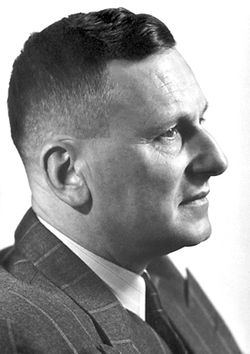
The insecticidal properties of DDT were identified in 1939 by chemist Paul Hermann Müller of Geigy Pharmaceutical. For his discovery of DDT as a contact poison against several arthropods, he was awarded the 1948 Nobel Prize in Physiology or Medicine. Samples of the chemical were acquired by the United States, Britain and Germany in the fall of 1942.
Image source: Paul Hermann Müller
1944
% completado
The first field test in which residual DDT was applied to the interior surfaces of all habitations and outbuildings was carried out in central Italy in the spring of 1944.
1946 - 1951
% completado
In Sardinia, the second largest island in the Mediterranean, between 1946 and 1951, the Rockefeller Foundation conducted a large-scale experiment to test the feasibility of the strategy of "species eradication" of an endemic malaria vector.
1947 - 1952
% completado
Malaria was effectively eliminated in the United States by the use of DDT in the National Malaria Eradication Program (1947-52).
Image source: National Malaria Eradication Program
1953
% completado
In 1953, the World Health Organization launched an antimalarial program in parts of Liberia as a pilot project to determine the feasibility of malaria eradication in tropical Africa.
Image source: World Health Organization
1955
% completado
The concept of eradication prevailed in 1955 at the Eighth World Health Assembly: DDT was adopted as a primary tool in the fight against malaria.
Image source: Malaria
1962 - 1972
% completado
Discussion opened in 1962 with Silent Spring, written by American biologist Rachel Carson, which launched the environmental movement in the West. DDT was banned for agricultural uses in the US in 1972, though never for non-agricultural uses such as malaria control.
Image source: Silent Spring
2000
% completado
In the 21st century, Giemsa microscopy and rapid diagnostic tests (RDTs) became the two preferred diagnostic techniques for malaria.
Image source: Diagnosis of malaria
2000
% completado
At the close of the 20th century, malaria remained endemic in more than 100 countries throughout the tropical and subtropical zones, including large areas of Central and South America, Hispaniola, Africa, the Middle East, the Indian subcontinent, Southeast Asia, and Oceania.
2008
% completado
In 2008, Nicholas White predicted that improved agricultural practices, selection of high-yielding hybrids, microbial production, and the development of synthetic peroxides would lower artemisinin prices.
Image source: Artemisinin
2026
% completado
TheHill.com reported that there is a resurgence in malaria infections throughout the world in 2026, highlighting ongoing challenges despite decades of control efforts.
Or browse the full history timeline directory, with more than 2,000 topics.
This History of Malaria timeline was generated with the help of AI, using information found on the internet.
We work hard to keep these timelines accurate, but mistakes do get through. If you spot one, email us at [email protected] and we'll fix it for future visitors.
Generate yours with AI or build it from scratch, for free.
Export your timeline, add your own events, edit or remove AI-generated events, and much more
No credit card required.
Cancel anytime.
Cancel anytime.
You can create an unlimited number of timelines with up to 10 events on each one, customize how they look, export them to PDF, PNG, PowerPoint, CSV, and Excel, and share them with a link. Paid plans raise the event limit and add features like spreadsheet imports and collaborators.
Yes. You can cancel your subscription from your account page at any time, and you will not be charged again. Your subscription stays active for the rest of the period you already paid for.
Yes. We will email you a reminder before the annual renewal, and we will also email you a receipt.
Yes. You can email us within 15 days of any payment, and we will issue you a full refund.
Check out our pricing docs or send us an email anytime: [email protected].