
-
Use Cases
-
Resources
-
Pricing
The history of physical therapy traces the development of therapeutic exercise, massage, and movement-based treatments from ancient civilizations through the formalization of physiotherapy in the late 19th century, its rapid growth during the World Wars for rehabilitating injured soldiers, and its evolution into today's evidence-based, doctorate-level healthcare profession. More Less
1569
% complete
In the book "De Arte Gymnastica" (The Art of Gymnastics, published in 1569), the Italian physician Hieronymus Mercurialis (1530–1606) introduced the term "medical gymnastics," highlighting one of the meanings of "gymnastics" as a dedicated rehabilitative tool for disabled subjects of any age.
Image source: Girolamo Mercuriale
1608 - 1679
% complete
The Italian physiologist and mathematician Alfonso Borelli (1608–1679) achieved significant scientific results in the field of animal and human biomechanics, laying scientific groundwork that would later inform the study of movement disorders and rehabilitation.
Image source: Giovanni Alfonso Borelli
1680
% complete
Borelli's tractate "De Motu Animalium" (On the Movement of Animals), published in 1680, just after his death, provided a practical framework for understanding disordered and pathological movement patterns in ill and disabled people, a foundational concept for physical therapy.
1700 - 1742
% complete
In the 18th century, the French physician Nicolas Andry de Bois-Regard (1658–1742) established a solid link between the health of the musculoskeletal apparatus and physical exercise, helping pave the way for the systematic use of exercise in medicine and rehabilitation.
Image source: Nicolas Andry
1741
% complete
In his book "Traité d'orthopédie" (Treatise on Orthopaedics, 1741), Nicolas Andry de Bois-Regard introduced the new term "orthopaedics", establishing a vocabulary that would profoundly shape the fields of musculoskeletal medicine and physical therapy.
Image source: Orthopedic surgery
1796
% complete
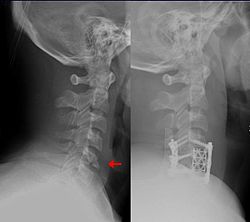
After the development of orthopedics in the eighteenth century, machines like the Gymnasticon were developed to treat gout and similar diseases by systematic exercise of the joints, similar to later developments in physical therapy.
Image source: Gymnasticon
1813
% complete
The earliest documented origins of actual physical therapy as a professional group date back to Per Henrik Ling, the "Father of Swedish Gymnastics," who founded the Royal Central Institute of Gymnastics (RCIG) in 1813 for joint manipulation and exercise.
Image source: Pehr Henrik Ling
1813
% complete
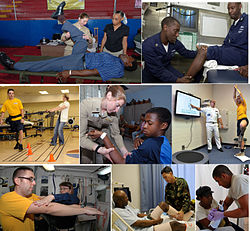
Since the profession's inception with Per Henrik Ling's work on joint manipulation and exercise, spinal manipulative therapy has been a major component of the practice of physical therapy, remaining central to the field throughout its history.
Image source: Physical therapy
1887
% complete
In 1887, PTs were given official registration by Sweden's National Board of Health and Welfare, an early milestone in the formal professional recognition of physical therapy as a regulated healthcare occupation.
1894
% complete
In 1894, four nurses in Great Britain formed the Chartered Society of Physiotherapy, one of the earliest professional associations for physical therapists and a key step in organizing the profession internationally.
Image source: Chartered Society of Physiotherapy
1913
% complete
The School of Physiotherapy at the University of Otago in New Zealand opened in 1913, becoming one of the earliest formal training institutions for physical therapists outside Europe and helping spread the profession worldwide.
Image source: University of Otago
1914
% complete
The United States' 1914 Reed College in Portland, Oregon graduated "reconstruction aides," marking the beginning of formal physical therapy education in America and providing practitioners desperately needed during wartime.
Image source: Reed College
1916
% complete
These treatments were further applied and promoted during the polio outbreak of 1916, when large numbers of survivors required rehabilitative care, dramatically expanding the visibility and demand for physical therapy services.
Image source: History of polio
1918
% complete
In 1918 the term "Reconstruction Aide" was used to refer to individuals practicing physical therapy, giving practitioners in the United States an official occupational title during and after the First World War era.
1951
% complete
The international confederation of physical therapy organizations was founded in 1951, uniting national associations around shared standards and advocacy; it has operated under the brand name World Physiotherapy since 2020.
1974
% complete
A key moment of specialization occurred in 1974, with the Orthopaedic Section of the APTA being formed for those physical therapists specializing in orthopedics, reflecting the growing clinical depth of the profession.
2020
% complete
The international confederation founded in 1951 began operating under the brand name World Physiotherapy in 2020, modernizing its identity as the global representative body for the profession.
2007
% complete
Beginning in 2007, this competitive physiotherapy program accepts only 16 physiotherapists annually, illustrating the highly selective nature of some advanced training pathways within the profession.
Image source: Physical therapy education
2012
% complete
The last Canadian university to follow suit was the University of Manitoba, which transitioned to the MPT program in 2012, making the MPT credential the new standard entry to practice across Canada.
Image source: University of Manitoba
2013
% complete
A study from 2013 states that 56.4% of physical therapists were globally satisfied with their jobs, offering insight into workforce morale across the profession during this period.
2014
% complete
Up until 2014, the Swedish word for a physical therapist was sjukgymnast, or someone involved in gymnastics for those who are ill, but the title was then changed to fysioterapeut (physiotherapist), the word used in the other Scandinavian countries.
2015
% complete
O-Net reported that in 2015, PTAs in the United States earned a median wage of $55,170 annually or $26.52 hourly, while aides/techs earned a median wage of $25,120 annually or $12.08 hourly.
Image source: Physical therapy
2016
% complete
Post-doctoral residency and fellowship education prevalence is increasing steadily, with 219 residency and 42 fellowship programs accredited in 2016, reflecting growing specialization beyond entry-level education.
Mar 2018
% complete
In the United States, the interstate compact, enacted in March 2018, allows patients to participate in telehealth appointments with medical practices located in different states, expanding access to physical therapy through digital health.
Dec 2022
% complete
As of December 2022, there were 396 accredited two-year (associate degree) programs for physical therapist assistants in the United States of America, sustaining the pipeline of support personnel for the profession.
2024
% complete
According to the United States Department of Labor's Bureau of Labor Statistics, there were approximately 267,200 physical therapists employed in the United States in 2024, earning an average of $101,020 per year ($48.57 per hour), with 11% growth projected by 2034.
Image source: Bureau of Labor Statistics
2025
% complete
According to CAPTE, as of 2025 there are 39,448 students currently enrolled in 322 accredited PT programs in the United States, while 10,077 PTA students are enrolled in 390 PTA programs nationwide.
Or browse the full history timeline directory, with more than 2,000 topics.
This History of Physical Therapy timeline was generated with the help of AI, using information found on the internet.
We work hard to keep these timelines accurate, but mistakes do get through. If you spot one, email us at [email protected] and we'll fix it for future visitors.
Generate yours with AI or build it from scratch, for free.
Export your timeline, add your own events, edit or remove AI-generated events, and much more
No credit card required.
Cancel anytime.
Cancel anytime.
You can create an unlimited number of timelines with up to 10 events on each one, customize how they look, export them to PDF, PNG, PowerPoint, CSV, and Excel, and share them with a link. Paid plans raise the event limit and add features like spreadsheet imports and collaborators.
Yes. You can cancel your subscription from your account page at any time, and you will not be charged again. Your subscription stays active for the rest of the period you already paid for.
Yes. We will email you a reminder before the annual renewal, and we will also email you a receipt.
Yes. You can email us within 15 days of any payment, and we will issue you a full refund.
Check out our pricing docs or send us an email anytime: [email protected].