-
Use Cases
-
Resources
-
Pricing
Mexico City, originally founded as the Aztec capital Tenochtitlán in 1325 on an island in Lake Texcoco, became the center of the Mexica Empire before falling to Spanish conquistador Hernán Cortés in 1521. Rebuilt as the capital of New Spain, it served as the political and cultural heart of colonial Mexico. After Mexico gained independence in 1821, the city became the nation's capital and has since grown into a sprawling metropolis of over 20 million people, blending pre-Hispanic ruins, colonial architecture, and modern urban life. More Less
1325
% complete
The Mexica people founded the city of Tenochtitlan on an island in Lake Texcoco, guided by a prophecy of an eagle perched on a cactus. The city would grow into the capital of the Aztec Empire and one of the largest cities in the pre-Columbian Americas.
Image source: Tenochtitlan
1390
% complete
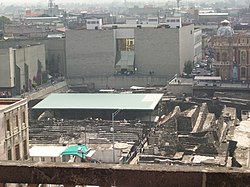
The Aztecs began construction of the Templo Mayor, the great twin-temple pyramid dedicated to the gods Huitzilopochtli and Tlaloc. It became the religious heart of Tenochtitlan and was expanded many times over the following centuries.
Image source: Templo Mayor
1428 - 1440
% complete
Under King Itzcoatl, Tenochtitlan allied with Texcoco and Tlacopan to form the Aztec Triple Alliance. This alliance defeated the Tepanecs of Azcapotzalco and established Tenochtitlan as the dominant power in central Mexico.
Image source: Aztec Empire
1502 - 1520
% complete
Moctezuma II ruled the Aztec Empire at its height, expanding its territory and transforming Tenochtitlan into a magnificent metropolis with canals, causeways, aqueducts, and grand marketplaces that amazed later Spanish visitors.
Image source: Moctezuma II
Nov 1519
% complete
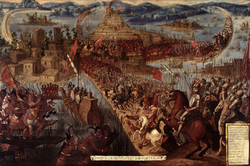
Spanish conquistador Hernán Cortés entered Tenochtitlan and was received by Moctezuma II. The Spaniards were astonished by the city's size and sophistication, but tensions soon escalated between the visitors and their hosts.
Image source: Fall of Tenochtitlan
Jun 1520
% complete
Moctezuma II died while in Spanish custody during rising unrest in the city. His death, whether from Spanish hands or stones thrown by his own people, marked a turning point leading to open warfare between the Aztecs and the conquistadors.
Jun 30, 1520
% complete
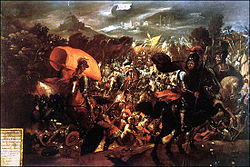
On the 'Night of Sorrows,' Cortés and his forces fled Tenochtitlan under cover of darkness after fierce fighting with the Aztecs. Hundreds of Spaniards and thousands of indigenous allies died retreating across the city's causeways.
Image source: La Noche Triste
May 26, 1521 - Aug 13, 1521
% complete
Cortés laid siege to Tenochtitlan for months, cutting off freshwater and food supplies. After brutal urban combat and devastating smallpox epidemics, the last Aztec emperor Cuauhtémoc surrendered, ending the Aztec Empire.
1524
% complete
The Spanish rebuilt the conquered Aztec capital as Mexico City, using stones from destroyed temples to construct colonial buildings and churches. It became the capital of the Viceroyalty of New Spain.
Image source: Mexico City
1535
% complete
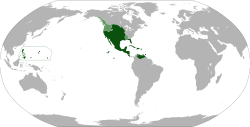
Spain formally established the Viceroyalty of New Spain with Antonio de Mendoza as its first viceroy. Mexico City served as the political, economic, and cultural center of Spanish rule in North America for nearly three centuries.
Image source: New Spain
1573
% complete
Work began on the Mexico City Metropolitan Cathedral atop the site of the former Aztec sacred precinct. Built over nearly 250 years, it remains one of the most important colonial-era religious structures in the Americas.
Image source: Mexico City Metropolitan Cathedral
1607 - 1789
% complete
Over nearly two centuries, colonial authorities undertook one of the era's largest engineering projects to drain the lakes surrounding Mexico City through tunnels and canals, permanently altering the valley's hydrology.
1629 - 1634
% complete
A catastrophic flood submerged much of Mexico City for years, as the city was built on the bed of drained Lake Texcoco. The disaster prompted massive drainage projects and reshaped the city's relationship with its surrounding lakes.
Sep 16, 1810
% complete
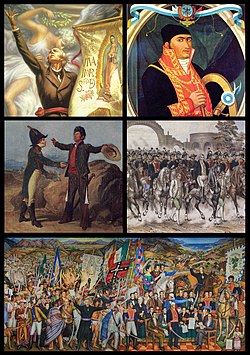
Father Miguel Hidalgo's cry for independence in Dolores ignited an eleven-year war against Spanish rule. Though the uprising began far from the capital, it set in motion events that would end colonial control of Mexico City.
Image source: Mexican War of Independence
Sep 27, 1821
% complete
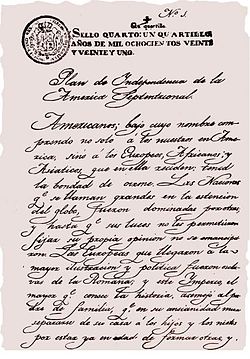
Agustín de Iturbide's Army of the Three Guarantees triumphantly entered Mexico City, securing Mexican independence from Spain. The capital became the seat of the newly independent nation.
Image source: Plan of Iguala
May 19, 1822
% complete
Agustín de Iturbide was proclaimed Emperor Agustín I in Mexico City. The short-lived empire collapsed within a year when Iturbide abdicated amid republican opposition.
Image source: First Mexican Empire
Oct 4, 1824
% complete
Mexico adopted its first federal constitution, establishing the United Mexican States. Mexico City was designated the Federal District, the seat of national government but not a full state itself.
Image source: 1824 Constitution of Mexico
1838 - 1839
% complete
France blockaded and bombarded Veracruz over unpaid claims, including those of a French pastry chef whose shop had been damaged. French forces intervened, and Mexico agreed to pay damages, briefly humiliating the young republic.
Image source: Pastry War
Aug 20, 1847
% complete
American forces defeated Mexican defenders, including the San Patricio Battalion, at Churubusco just south of Mexico City. The victory opened the road to the capital for the invading U.S. army.
Image source: Battle of Churubusco
Sep 14, 1847
% complete
U.S. troops under General Winfield Scott stormed the gates of Chapultepec and occupied Mexico City. The teenage cadets known as the Niños Héroes died defending Chapultepec Castle and became national martyrs.
Image source: Battle for Mexico City
Feb 2, 1848
% complete
Signed at the Villa of Guadalupe near Mexico City, the treaty ended the Mexican-American War. Mexico ceded vast northern territories to the United States in exchange for $15 million.
Image source: Treaty of Guadalupe Hidalgo
1863 - 1867
% complete
French troops occupied Mexico City and installed Maximilian I as emperor of the Second Mexican Empire. Republican forces under Benito Juárez resisted until Maximilian was captured and executed in 1867, restoring the republic.
Image source: Second Mexican Empire
Jul 15, 1867
% complete
Benito Juárez returned to Mexico City after the fall of the empire and restored republican government. He launched reforms modernizing the capital's infrastructure, education, and public administration.
Image source: Restored Republic
1876 - 1910
% complete
During the long dictatorship of Porfirio Díaz, Mexico City was transformed with grand boulevards modeled on Paris, electric lighting, tramways, sewer systems, and monumental architecture, though inequality deepened dramatically.
Image source: Porfiriato
Sep 1910
% complete
Mexico City hosted lavish celebrations marking 100 years of independence, unveiling monuments such as the Column of Independence. The festivities masked growing social unrest that soon erupted into revolution.
Image source: Mexican War of Independence
Feb 9, 1913 - Feb 19, 1913
% complete
During ten days of artillery bombardment and street fighting in Mexico City, General Victoriano Huerta conspired to overthrow President Francisco I. Madero. Madero was assassinated days later, plunging Mexico deeper into revolution.
Image source: Ten Tragic Days
Aug 1914
% complete
Revolutionary forces under Venustiano Carranza and Álvaro Obregón entered Mexico City, toppling Huerta's regime. The capital changed hands among revolutionary factions as the civil war continued.
Image source: Mexican Revolution
Feb 5, 1917
% complete
Mexico adopted a new constitution in Querétaro that enshrined land reform, labor rights, and secular education. It became the governing framework for post-revolutionary Mexico City and the nation.
Image source: Constitution of Mexico
1952
% complete
The new University City campus opened south of the historic center, becoming the main campus of the National Autonomous University of Mexico. Its murals and modernist architecture earned UNESCO World Heritage status in 2007.
Image source: Ciudad Universitaria, Mexico City
Oct 12, 1968 - Oct 27, 1968
% complete
Mexico City became the first Latin American city to host the Olympic Games. The games featured iconic moments like Tommie Smith and John Carlos' raised-fist salute, occurring just weeks after the Tlatelolco massacre of student protesters.
Image source: 1968 Summer Olympics
Sep 19, 1985
% complete
A magnitude 8.0 earthquake devastated Mexico City, destroying thousands of buildings and killing thousands of people. The disaster exposed corruption in building codes and spurred powerful grassroots civic movements.
Image source: 1985 Mexico City earthquake
Mar 1, 2011
% complete
Billionaire Carlos Slim opened the Museo Soumaya, a striking silver-clad museum housing his vast art collection including works by Rodin and European masters, adding a major cultural landmark to the Polanco district.
Image source: Museo Soumaya
Jan 2016
% complete
A constitutional reform transformed the Federal District into Ciudad de México, granting it state-like status with its own constitution and elected government, ending its special status as a federally administered district.
Jul 1, 2018
% complete
Claudia Sheinbaum won election as Head of Government of Mexico City, becoming the first woman to lead the capital. Her administration focused on public transit expansion, sustainability, and security reforms.
Image source: Claudia Sheinbaum
Or browse the full history timeline directory, with more than 2,000 topics.
This History of Mexico City timeline was generated with the help of AI, using information found on the internet.
We work hard to keep these timelines accurate, but mistakes do get through. If you spot one, email us at [email protected] and we'll fix it for future visitors.
Generate yours with AI or build it from scratch, for free.
Export your timeline, add your own events, edit or remove AI-generated events, and much more
No credit card required.
Cancel anytime.
Cancel anytime.
You can create an unlimited number of timelines with up to 10 events on each one, customize how they look, export them to PDF, PNG, PowerPoint, CSV, and Excel, and share them with a link. Paid plans raise the event limit and add features like spreadsheet imports and collaborators.
Yes. You can cancel your subscription from your account page at any time, and you will not be charged again. Your subscription stays active for the rest of the period you already paid for.
Yes. We will email you a reminder before the annual renewal, and we will also email you a receipt.
Yes. You can email us within 15 days of any payment, and we will issue you a full refund.
Check out our pricing docs or send us an email anytime: [email protected].