-
Use Cases
-
Resources
-
Pricing
Salt Lake City was founded in 1847 by Brigham Young and the Mormon pioneers, who settled the arid Salt Lake Valley and built an irrigation-based agricultural society. It grew rapidly as the center of the Latter-day Saint community, became the capital of Utah Territory in 1856 and of the state in 1896, developed major mining and railroad industries, and hosted the 2002 Winter Olympics. Today it is Utah's largest city and a hub of culture, technology, and outdoor recreation. More Less
1776
% complete
Father Silvestre Vélez de Escalante, a Spanish Franciscan missionary, is considered the first European explorer in the area in 1776, but only came as far north as Utah Valley (Provo), some 60 miles south of the Salt Lake City area.
Image source: Domínguez–Escalante expedition
1824
% complete
Jim Bridger became the first US visitor to see the Salt Lake area, exploring the region decades before Mormon settlers would establish a city there.
Image source: Jim Bridger
1843 - 1845
% complete
Frémont surveyed the Great Salt Lake and the Salt Lake Valley in 1843 and 1845, providing valuable maps and reports that encouraged later settlement of the region.
Image source: John C. Frémont
Aug 12, 1846
% complete
A group of travelers spent weeks traversing difficult terrain and brush, cutting a road through the Wasatch Mountains and coming through Emigration Canyon into the Salt Lake Valley on August 12, 1846.
Jul 24, 1847
% complete
On July 24, 1847, 143 men, three women, and two children founded Great Salt Lake City several miles to the east of the Great Salt Lake, nestled in the northernmost reaches of the Salt Lake Valley.
Image source: History of Salt Lake City
1847
% complete
Settlers buried thirty-six Native Americans in one grave after an outbreak of measles occurred during the winter of 1847, a tragic consequence of contact between settlers and indigenous peoples.
1857
% complete
In 1857, when the Mormon practice of polygamy came to national awareness, President James Buchanan responded to public outcry by sending an army of 2,500 soldiers, called the Utah Expedition, to investigate the LDS Church and install a non-LDS governor to replace Brigham Young.
Image source: Utah War
Apr 12, 1858
% complete
Brigham Young eventually surrendered to federal control when the new territorial governor, Alfred Cumming, arrived in Salt Lake City on April 12, 1858.
Image source: Alfred Cumming (governor)
1862
% complete
In order to secure the road to California during the Civil War, more troops arrived under the command of Colonel Patrick Edward Connor in 1862.
Image source: Patrick Edward Connor
1866
% complete
In 1866, Thomas Coleman, a Black Mormon man, was murdered, and his body was left on Capitol Hill with an anti-miscegenation warning attached to his body.
1883
% complete
In 1883, Sam Joe Harvey, another Black man, was lynched for allegedly shooting a police officer, and his body was dragged down State Street.
1848
% complete
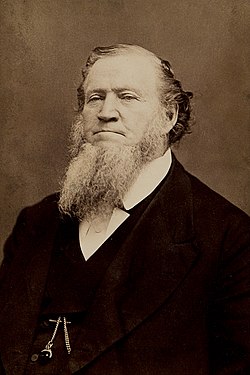
Brigham Young originally governed both the territory and church through a High Council which enacted the original municipal orders in 1848.
Image source: Brigham Young
1850
% complete
Congress organized Utah Territory out of the proposed 'State of Deseret' in 1850, formalizing federal governance over the region settled by Mormon pioneers.
Image source: Utah Territory
Jan 9, 1851
% complete
On January 9, 1851, 'an ordinance having been passed by the General Assembly of the State of Deseret' formally incorporated the municipality as 'Great Salt Lake City.'
1855
% complete
In 1855 Congress directed the President of the United States to appoint a surveyor general for Utah Territory, and to cause that the lands of that territory should be surveyed preparatory to bringing them on the market.
1856
% complete
Originally, Fillmore, Utah was the territorial capital, but in 1856 it was moved to Salt Lake City, where it has stayed ever since.
Image source: Fillmore, Utah
1857
% complete
Because of numerous conflicts between the surveyor and the territorial government, the first surveyor general abandoned his post in 1857.
1857 - 1868
% complete
Conflict between the federal and territorial governments kept the land survey issue on hold until 1868, and in the meantime large sections of the territory were transferred to neighboring territories and states.
1868
% complete
Again in 1868, Congress directed the President to appoint a surveyor general in the Utah Territory, to establish a land office in Salt Lake City, and to extend the federal land laws over the same.
Mar 9, 1869
% complete
The land office opened on March 9, 1869, extending federal land laws over the Utah Territory and enabling settlement claims on surveyed lands.
1863
% complete
In 1863 some of Colonel Connor's troops discovered rich veins of gold and silver in the Wasatch Mountains, sparking mining activity that would shape the region's economy.
Image source: Wasatch Range
1868
% complete
In 1868 Brigham Young founded the Zion's Co-operative Mercantile Institution (ZCMI) as a way to ward off dependency on outside goods and arguably to hinder ex-LDS retailers.
Image source: ZCMI
1869
% complete
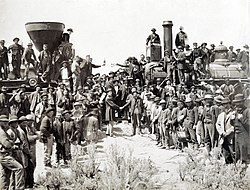
The world started to come to Salt Lake City in 1869 with the completion of the First Transcontinental Railroad in the United States at Promontory Summit, north of the city.
Image source: First transcontinental railroad
1870
% complete
By 1870, Salt Lake had been linked to the First Transcontinental Railroad via the Utah Central Rail Road, connecting the city directly to national markets.
1907
% complete
In 1907, Salt Lake City was home to Industrial Workers of the World Industrial Union No., reflecting the growth of labor organizing in the American West.
Image source: Industrial Workers of the World
1932
% complete
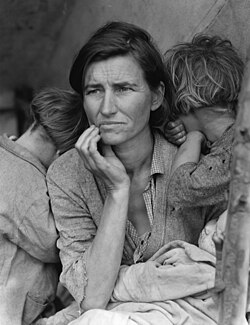
The annual per capita income in 1932 was $276, half of what it was in 1929, $537 annually, illustrating the devastating economic impact of the Great Depression on Salt Lake City residents.
Image source: Great Depression in the United States
1999
% complete
After 132 years in business, ZCMI was sold to the May Department Stores Company in 1999, ending one of America's oldest department store chains as an independent company.
1999
% complete
Remaining ZCMI stores, including one in downtown Salt Lake City, were converted into Meier & Frank stores, although the historic facade still reads '1868 ZCMI 1999'.
Image source: Meier & Frank
1874
% complete
City government was dominated by the People's Party, and a dramatic example occurred in 1874 when city police were arrested by US Marshals, who took control of the national election being held in Salt Lake City.
1890
% complete
Consequentially, the non-LDS Liberal Party took control of city government in the 1890 election, ending the dominance of the LDS-backed People's Party.
Image source: Liberal Party (Utah)
Jan 4, 1896
% complete
The city became Utah's state capital on January 4, 1896, when Utah entered the union upon President Grover Cleveland's decree after the LDS Church agreed to ban polygamy in 1890.
Image source: Utah
1911
% complete
The city adopted a non-partisan city council in 1911, reshaping how municipal politics operated in Salt Lake City.
Image source: Salt Lake City
1995
% complete
Salt Lake tried again throughout the decades until 1995, when the International Olympic Committee announced Salt Lake City as the site of the 2002 Winter Olympics.
Image source: 2002 Winter Olympics
Apr 1999
% complete
In April 1999, the Salt Lake City council voted 5 to 2 along LDS membership lines to sell to the LDS Church the segment of Main Street that lay between Temple Square and the LDS Church office buildings for $8.1 million.
Image source: Main Street (Greater Salt Lake City)
2002
% complete
After the Utah District Court ruled against the ACLU in its challenge to the Main Street sale, they were vindicated by the 10th Circuit Court in the fall of 2002.
Image source: American Civil Liberties Union
Feb 2002
% complete
Much change occurred in the Wasatch Front due to the 2002 Winter Olympics, bringing infrastructure improvements and international attention to Salt Lake City.
Feb 8, 2002
% complete
The 2002 games opened with the 1980 US hockey team lighting the torch and President George W. Bush presiding over the ceremonies, marking a memorable start to the Winter Olympics.
Image source: Miracle on Ice
Feb 24, 2002
% complete
The 2002 games ended with a dazzling closing ceremony, including bands such as Bon Jovi and Kiss (who shared the stage with figure skater Katarina Witt).
2003
% complete
Some suppose Mayor Rocky Anderson's compromise was an effort to strengthen his 2003 re-election campaign among Latter-day Saints and west side residents.
Image source: Rocky Anderson
Or browse the full history timeline directory, with more than 2,000 topics.
This History of Salt Lake City timeline was generated with the help of AI, using information found on the internet.
We work hard to keep these timelines accurate, but mistakes do get through. If you spot one, email us at [email protected] and we'll fix it for future visitors.
Generate yours with AI or build it from scratch, for free.
Export your timeline, add your own events, edit or remove AI-generated events, and much more
No credit card required.
Cancel anytime.
Cancel anytime.
You can create an unlimited number of timelines with up to 10 events on each one, customize how they look, export them to PDF, PNG, PowerPoint, CSV, and Excel, and share them with a link. Paid plans raise the event limit and add features like spreadsheet imports and collaborators.
Yes. You can cancel your subscription from your account page at any time, and you will not be charged again. Your subscription stays active for the rest of the period you already paid for.
Yes. We will email you a reminder before the annual renewal, and we will also email you a receipt.
Yes. You can email us within 15 days of any payment, and we will issue you a full refund.
Check out our pricing docs or send us an email anytime: [email protected].