-
Use Cases
-
Resources
-
Pricing
Nairobi, the capital and largest city of Kenya, began in 1899 as a railway supply depot on the Uganda Railway line. It grew rapidly under British colonial administration, became the capital of British East Africa in 1907, and developed into a major commercial center. Nairobi played a central role during the Mau Mau Uprising of the 1950s and became the capital of independent Kenya in 1963. Today it is a thriving metropolis known as the 'Green City in the Sun,' hosting international organizations such as the UN Environment Programme. More Less
1894
% complete
In 1894, the British began construction of the Uganda Railway from the coastal port of Mombasa inland toward Lake Victoria. The railway's progress would soon give rise to a new settlement that would become Nairobi.
Image source: Uganda Railway
1898
% complete
In 1898, an engineer was commissioned to design the first town layout for the railway depot, establishing the early urban plan around which Nairobi would develop.
1899
% complete
The earliest account of Nairobi's history dates back to 1899, when a railway depot was built in a brackish African swamp occupied by pastoralist Maasai people, the sedentary Akamba people, and the agriculturalist Kikuyu people, all of whom were displaced by the colonialists.
1899
% complete
A British railroad camp and supply depot for the Uganda Railway was built in the Maasai area in 1899, forming the nucleus of what would grow into the city of Nairobi.
May 30, 1899
% complete
The railway arrived at Nairobi on 30 May 1899, and soon Nairobi replaced Machakos as the headquarters of the provincial administration for the Ukamba province, cementing its importance in the colony.
1902 - 1910
% complete
Between 1902 and 1910, the town's population rose from 5,000 to 16,000 and grew around administration and tourism, initially in the form of big game hunting.
1905
% complete
By 1905, Nairobi was a humming commercial center and replaced Mombasa as the capital of British East Africa, reflecting its growing economic and administrative importance.
1907
% complete
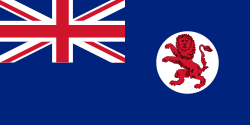
In 1907, Nairobi replaced Mombasa as the capital of the East Africa Protectorate, confirming its status as the political heart of British territory in the region.
Image source: East Africa Protectorate
1919
% complete
In 1919, Nairobi was declared to be a municipality by the British, granting the rapidly growing town formal municipal governance under colonial administration.
Image source: Nairobi
1921
% complete
In 1921, Nairobi had 24,000 residents, of whom roughly 12,000 were native Africans, illustrating the town's rapid growth and its diverse, stratified population.
Image source: History of Nairobi
1946
% complete
Because the area around Nairobi continued to be a popular attraction for British big game hunters, Britain established the Nairobi National Park in 1946, the first national park in East Africa, to protect the animals.
Image source: Nairobi National Park
1915
% complete
In 1915, the British passed laws restricting the ownership of land to whites, dispossessing African communities and deepening grievances that would fuel later anti-colonial movements.
Image source: White Highlands
1921
% complete
In 1921, Harry Thuku founded the Young Kikuyu Association and began organizing protests as Kenyans became more open about their grievances against British colonial rule.
Image source: Harry Thuku
Mar 14, 1922
% complete
On 14 March 1922, Harry Thuku was arrested by colonial authorities, an event that sparked protests in Nairobi and galvanized early Kenyan nationalism.
May 1950
% complete
In the spring of 1950, the East African Trades Union Congress led a nine-day general strike in Nairobi, demonstrating growing labor militancy and anti-colonial sentiment in the city.
1952 - 1960
% complete
British land policies led to the Mau Mau Uprising in the 1950s, and the subsequent Lancaster House Conferences initiated a transition toward Kenyan independence in 1963.
Image source: Mau Mau rebellion
1963
% complete
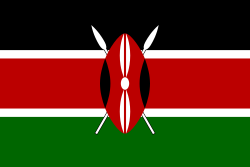
Pressure exerted from the local people on the British resulted in Kenyan independence in 1963, with Nairobi as the capital of the new republic.
Image source: Kenya
1972
% complete
In 1972, the World Bank approved more than US$29 million (US$111.8 million in 2013 dollars) for expansion of Nairobi Airport, including new passenger and cargo terminals, taxiways, roads, and supporting infrastructure.
Sep 1973
% complete
In September 1973, the Kenyatta International Conference Centre was opened to the public, becoming an iconic skyline landmark and a major venue for international conferences in Nairobi.
Image source: Kenyatta International Convention Centre
Nov 1975 - Dec 1975
% complete
In 1975, Nairobi was the host city of the 5th Assembly of the World Council of Churches, highlighting the city's emerging role as an international conference destination.
Image source: World Council of Churches
Mar 14, 1978
% complete
On 14 March 1978, construction of the terminal building was completed on the other side of the airport's single runway, and it was opened by President Jomo Kenyatta less than five months before his death.
Image source: Jomo Kenyatta International Airport
1983
% complete
The Giraffe Centre, an animal sanctuary on the southwestern outskirts of Nairobi dedicated to the conservation of the endangered Rothschild's giraffe, was opened in 1983.
Image source: Giraffe Centre
2008
% complete
As of 2008, Nairobi National Park remained unique in that it is the only game reserve bordering on a capital city in the world, offering wildlife viewing just outside the metropolis.
2009 - 2011
% complete
The Thika Superhighway mega-project in Kenya started in 2009 and ended in 2011, transforming one of Nairobi's busiest transport corridors into a modern multi-lane highway.
Nov 2012
% complete
In November 2012, President Mwai Kibaki officially opened the KES 31 billion Thika Superhighway, a flagship infrastructure project designed to ease traffic congestion in and around Nairobi.
Image source: Thika Road
May 2017
% complete
In May 2017, President Uhuru Kenyatta inaugurated the Standard Gauge Railway, which connects Nairobi to Mombasa and marked a major modernization of Kenya's rail transport.
Image source: Kenya Standard Gauge Railway
2021
% complete
In 2021, the Green Park Bus Terminal began operations as part of efforts to improve public transport in Nairobi by decongesting the central business district.
2022
% complete
The Nairobi Expressway, completed in 2022, was developed to reduce traffic congestion along Mombasa Road, providing a modern elevated toll road through the city.
Image source: Nairobi Expressway
Aug 7, 1998
% complete
The United States Embassy, then located in downtown Nairobi, was bombed on 7 August 1998 by Al-Qaeda and the Egyptian Islamic Jihad, as part of a series of simultaneous U.S. embassy bombings, killing hundreds of people.
Image source: 1998 United States embassy bombings
Dec 2007 - Feb 2008
% complete
Following the disputed Kenyan presidential election of 2007, serious violence broke out in Nairobi and across Kenya, leaving many dead and displaced before a power-sharing agreement restored calm.
Image source: 2007–2008 Kenyan crisis
Oct 2011
% complete
In October 2011, a memorial statue was unveiled in Nairobi in memory of Tom Mboya, a former Kenyan independence politician and assassination victim, honoring his contributions to the nation.
Image source: Tom Mboya
Aug 2020
% complete
In August 2020, Nairobi County Assembly Speaker Beatrice Elachi resigned, adding to a period of political turbulence in the governance of Nairobi County.
Image source: Beatrice Elachi
Dec 2020
% complete
In December 2020, recently elected Nairobi County Assembly Speaker Benson Mutura was sworn in as acting Nairobi Governor four days after previous Governor Mike Sonko was impeached and removed from office.
Image source: Mike Sonko
Or browse the full history timeline directory, with more than 2,000 topics.
This History of Nairobi timeline was generated with the help of AI, using information found on the internet.
We work hard to keep these timelines accurate, but mistakes do get through. If you spot one, email us at [email protected] and we'll fix it for future visitors.
Generate yours with AI or build it from scratch, for free.
Export your timeline, add your own events, edit or remove AI-generated events, and much more
No credit card required.
Cancel anytime.
Cancel anytime.
You can create an unlimited number of timelines with up to 10 events on each one, customize how they look, export them to PDF, PNG, PowerPoint, CSV, and Excel, and share them with a link. Paid plans raise the event limit and add features like spreadsheet imports and collaborators.
Yes. You can cancel your subscription from your account page at any time, and you will not be charged again. Your subscription stays active for the rest of the period you already paid for.
Yes. We will email you a reminder before the annual renewal, and we will also email you a receipt.
Yes. You can email us within 15 days of any payment, and we will issue you a full refund.
Check out our pricing docs or send us an email anytime: [email protected].