-
Use Cases
-
Resources
-
Pricing
The history of Vancouver spans thousands of years, beginning with the Musqueam, Squamish, and Tsleil-Waututh peoples who inhabited the region long before European contact. The modern city was established in 1886 around a sawmill settlement called Gastown, named after 'Gassy' Jack Deighton. Vancouver grew rapidly as the western terminus of the Canadian Pacific Railway and a major Pacific port. Key moments include the Great Fire of 1886, the 1971 Gastown riots, Expo 86, the 2010 Winter Olympics, and ongoing urban development that shaped Vancouver into one of Canada's most multicultural and livable cities. More Less
1791
% complete
Spanish Captain José María Narváez became the first European to explore the Strait of Georgia in 1791, marking the beginning of European contact with the area that would later become Vancouver.
Image source: José María Narváez
1792
% complete
In 1792, British naval Captain George Vancouver met the Spanish expedition of Dionisio Alcalá Galiano and Cayetano Valdés y Flores off Point Grey, and together they further explored the Strait of Georgia. The Tsleil-Waututh were said to be settled on Burrard Inlet at the time of his arrival.
Image source: George Vancouver
1808
% complete
Simon Fraser was the first European to reach the area overland, descending the river which now bears his name in 1808.
Image source: Simon Fraser (explorer)
1859
% complete
Robert Burnaby and Moberly camped and prospected for coal in what is now Coal Harbour in the summer of 1859.
Image source: Coal Harbour
1862
% complete
The first non-Indigenous settlement within the city limits of Vancouver was built around 1862 at McCleery's Farm, in the vicinity of what is now the Southlands area. Despite the influx of Europeans during the Fraser Gold Rush of 1858–59, settlement on Burrard Inlet remained almost unknown until this time.
Image source: History of Vancouver
1863
% complete
The first sawmill began operating in 1863 at Moodyville, a planned settlement built by American lumber entrepreneur Sewell "Sue" Moody on the north shore of Burrard Inlet.
Image source: North Vancouver (city)
1865
% complete
The first export of lumber took place in 1865; this lumber was shipped to Australia, establishing the region's timber trade.
1867
% complete
A former river pilot, John "Jack" Deighton, set up a small saloon on the beach about a mile west of the sawmill in 1867 where mill property and its "dry" policies ended. The settlement around it became known as Gastown after him.
Image source: John Deighton
1867
% complete
In 1867, Stamp's Mill, the first sawmill on the south shore of Burrard Inlet located in the Squamish village of K'emk'emeláy, began producing lumber at what is now the foot of Dunlevy Avenue in Vancouver.
Image source: Gastown
1870
% complete
In 1870, the colonial government of British Columbia sent a surveyor to lay out an official townsite named Granville, in honour of the British Colonial Secretary Lord Granville, though it was still popularly known as Gastown.
1886 - 1911
% complete
Vancouver's population grew explosively: 1,000 in 1886, 14,000 by 1891, 26,000 by 1901, and 120,000 by 1911.
May 1887
% complete
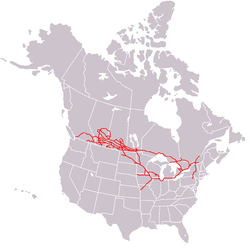
The first regular transcontinental train from Montreal arrived at a temporary terminus at Port Moody in July 1886, and service to Vancouver itself began in May 1887, connecting the young city to the rest of Canada.
Image source: Canadian Pacific Railway
1914
% complete
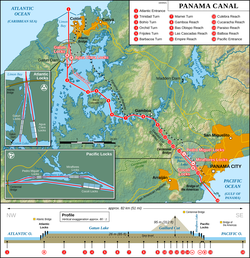
With the opening of the Panama Canal in 1914, Vancouver's seaport was able to compete with major international ports for global trade because it was positioned as an alternative route to Europe.
Image source: Panama Canal
1923
% complete
With its completion in 1923, Ballantyne Pier was the most technologically advanced port in the British Empire.
Image source: Ballantyne Pier
1925
% complete
Auto traffic to North Vancouver was facilitated with the construction of the first Second Narrows Bridge in 1925.
Image source: Ironworkers Memorial Second Narrows Crossing
1938
% complete
The completion of the Lion's Gate Bridge in 1938 across the First Narrows provided another key connection between Vancouver and the North Shore.
Image source: Lions Gate Bridge
1958
% complete
The last vestiges of the BC Electric Railway's streetcar and interurban rail system were dismantled in 1958; many urban lines were replaced by trolley bus routes of the Vancouver trolley bus system, which opened in 1948.
Image source: Trolley buses in Vancouver
1959
% complete
The giant Tsawwassen Ferry Terminal was built in 1959 for passenger and vehicle ferry service to southern Vancouver Island, and the nearby Roberts Bank Superport coal terminal was finished in the late sixties.
Image source: Tsawwassen ferry terminal
1960
% complete
While the Second Narrows Bridge and Lions' Gate Bridge had provided connections to the North Shore since 1925 and 1938, the Ironworkers Memorial Second Narrows Crossing followed in 1960.
1964
% complete
Another major bridge across the Fraser River, the Port Mann Bridge to Surrey, opened in 1964.
Image source: Port Mann Bridge
1975
% complete
The continuing growth of the airport on Sea Island resulted in the construction of another bridge across the Fraser River, the Arthur Laing Bridge, which opened to traffic in 1975.
Image source: Arthur Laing Bridge
1979
% complete
As Pacific Central Station replaced Waterfront Station as the main railway station in 1979, the latter was transformed into the terminal of SeaBus and the future SkyTrain, which opened six years later.
Image source: Pacific Central Station
Apr 6, 1886
% complete
Under its new name, the city was incorporated on April 6, 1886. The first act of the new City Council was to request that the 1,000-acre military reserve be handed over for use as a park, which became Stanley Park.
1907
% complete
The most overt expression of anti-immigrant sentiment came in the 1907 riots organized by the Asiatic Exclusion League, a group formed under organized labour and inspired by its counterpart in San Francisco.
Image source: Asiatic Exclusion League
1908
% complete
Starting in 1908, a growing population of Indians, primarily Sikhs from Punjab, were required to abide by restrictive immigration laws despite being subjects of the British Empire.
Image source: Komagata Maru incident
1908
% complete
Point Grey was incorporated in 1908, and Shaughnessy Heights would later be developed exclusively for the "richest and most prominent citizens", who were required to spend a minimum of CA$6,000 on homes conforming to specific style requirements.
Image source: West Point Grey
1911
% complete
In 1911, Vancouver expanded with the amalgamation of the Hastings Townsite, originally called New Brighton.
1913
% complete
Residents of the nearby Squamish village of Sen̓áḵw were forcibly evicted as part of Vancouver's expansion in 1913.
Image source: Sen̓áḵw
1914
% complete
The 1914 Komagata Maru incident culminated years of exclusionary policy: most of the 376 immigrants aboard, mostly from Punjab, were not permitted to disembark because they had not complied with immigration laws requiring continuous passage from their home country.
1923
% complete
In 1923, Warren Harding became the first US president to set foot in Canada during his visit through Vancouver. A monument to Harding designed by Charles Marega was unveiled in Stanley Park in 1925.
Image source: Warren G. Harding
1929
% complete
Patterns of economic segregation were secured when Point Grey and South Vancouver were amalgamated with Vancouver in 1929. William Harold Malkin was the first mayor of the new city, having defeated amalgamation champion Louis Denison Taylor in the 1928 civic election.
1935
% complete
Vancouver was the launching pad for Communist Party of Canada–led unemployed protests throughout the decade, culminating in the relief camp strike and the On-to-Ottawa Trek in 1935. Communist agitators also led the 1935 waterfront strike and organized a large proportion of the Mackenzie–Papineau Battalion to fight fascism in the Spanish Civil War.
Image source: On-to-Ottawa Trek
1942
% complete
In 1942, a few months after Japan attacked Pearl Harbor, Japanese Canadians were interned from the West Coast. Due to fear of bombing and poison gas attacks, a blackout was imposed on the coast and schoolchildren were issued gas masks.
Image source: Internment of Japanese Canadians
1967
% complete
In 1967, the Greater Vancouver Regional District was incorporated to coordinate regional planning and services across municipalities.
Image source: Metro Vancouver Regional District
1971
% complete
Greenpeace, one of the leading international environmental organizations, was founded in Vancouver in 1971.
Image source: Greenpeace
1971
% complete
The conflict between hippies and Vancouver mayor Tom Campbell culminated in the Gastown riots of 1971. Opposition to Campbell coalesced in The Electors' Action Movement (TEAM), which won majority control of city council in the 1972 municipal election.
2022
% complete
In 2022, Vancouver elected its first Chinese-Canadian mayor, Ken Sim, reflecting the city's diverse population.
Image source: Ken Sim
1908
% complete
A provincial university was formally called into being by the British Columbia University Act of 1908, although its location was not yet specified. An earlier act had passed in 1890, but disagreements arose over whether to build on Vancouver Island or the mainland.
1910
% complete
Originally titled McGill University College of British Columbia, associated with McGill University in Montreal, it was selected in 1910 to be constructed at Point Grey, though the outbreak of World War I delayed construction.
1915
% complete
The now-independent University of British Columbia began operations in 1915, becoming the province's flagship university.
Image source: University of British Columbia
1936
% complete
Vancouver was the site of major celebrations in 1936 to bolster civic spirit during the Great Depression and to celebrate Vancouver's Jubilee. The next major civic celebration was the 1939 Royal visit of the King and Queen, which marked the end of the depression and the likelihood of another world war.
Dec 1953
% complete
CBUT, the oldest television station in Western Canada, first went on the air in December 1953.
Image source: CBUT-DT
1964
% complete
Two new universities were established: the British Columbia Institute of Technology in 1964 and Simon Fraser University in 1965; both have satellite campuses in Vancouver. SFU enriched the city's cultural life alongside the Queen Elizabeth Theatre, established in 1959.
Image source: Simon Fraser University
1983
% complete
Canada's first domed stadium, BC Place Stadium, opened in 1983, becoming home to major sports and entertainment events in the city.
Image source: BC Place
1995
% complete
General Motors Place (now Rogers Arena) opened in 1995 as the new home of the Vancouver Canucks, whose Stanley Cup runs caused riots in 1994 and in 2011.
Image source: Rogers Arena
1991 - 1996
% complete
From 1991 to 1996, about 30,000 Hong Kongers emigrated every year to Canada, comprising over half of all Hong Kong emigration and about 20% of all immigrants to Canada. The great majority settled in Toronto and Vancouver areas. Since 1997 there has been a steady influx of Chinese from China, Singapore, and other Chinese diaspora locales.
Image source: Chinese Canadians in British Columbia
2003
% complete
Vancouver was awarded the hosting rights of the 2010 Winter Olympics and Paralympics in 2003, with some events held in Richmond, West Vancouver, Whistler, and the University of British Columbia campus.
Image source: 2010 Winter Olympics
2011
% complete
Average housing prices doubled between 2011 and 2016 and continued rising, peaking at $2,847,000 in 2024 before declining to $2,555,000 in February 2026. Rentals doubled from an average of $950/month in 2011 to $1,875/month in 2025, while homelessness rose from 1,602 persons in 2012 to 2,715 in 2025.
Image source: Economy of Vancouver
Or browse the full history timeline directory, with more than 2,000 topics.
This History of Vancouver timeline was generated with the help of AI, using information found on the internet.
We work hard to keep these timelines accurate, but mistakes do get through. If you spot one, email us at [email protected] and we'll fix it for future visitors.
Generate yours with AI or build it from scratch, for free.
Export your timeline, add your own events, edit or remove AI-generated events, and much more
No credit card required.
Cancel anytime.
Cancel anytime.
You can create an unlimited number of timelines with up to 10 events on each one, customize how they look, export them to PDF, PNG, PowerPoint, CSV, and Excel, and share them with a link. Paid plans raise the event limit and add features like spreadsheet imports and collaborators.
Yes. You can cancel your subscription from your account page at any time, and you will not be charged again. Your subscription stays active for the rest of the period you already paid for.
Yes. We will email you a reminder before the annual renewal, and we will also email you a receipt.
Yes. You can email us within 15 days of any payment, and we will issue you a full refund.
Check out our pricing docs or send us an email anytime: [email protected].