-
Use Cases
-
Resources
-
Pricing
The history of pediatrics traces the evolution of child healthcare from ancient civilizations, where early physicians like Hippocrates and Galen addressed childhood diseases, through the medieval Islamic world's pioneering hospitals, to the formal establishment of pediatrics as an independent medical specialty in the 1800s with figures like Abraham Jacobi in America. The field advanced rapidly in the 20th century with vaccines, antibiotics, neonatal care, and a focus on preventive medicine and child development. More Less
600 BCE
% complete
The Sushruta Samhita, an ayurvedic text composed during the sixth century BCE in ancient India, contains information about pediatrics, making it one of the earliest known works to address the medical care of children.
Image source: Sushruta Samhita
400 BCE
% complete
The earliest mentions of child-specific medical problems appear in the Hippocratic Corpus, published in the fifth century B.C., including the famous Sacred Disease. These texts laid early groundwork for the medical study of children's illnesses.
Image source: Hippocratic Corpus
1 AD - 400 AD
% complete
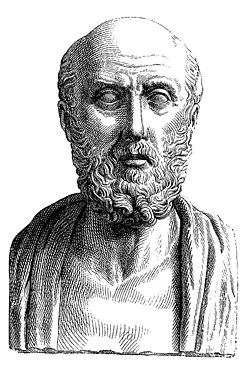
From the first to fourth centuries A.D., Greek philosophers and physicians Celsus, Soranus of Ephesus, Aretaeus, Galen, and Oribasius discussed specific illnesses affecting children in their works, such as rashes, epilepsy, and meningitis.
Image source: Galen
150 AD
% complete
A second century AD manuscript by the Greek physician and gynecologist Soranus of Ephesus dealt with neonatal pediatrics, providing early guidance on the care of newborn infants.
Image source: Soranus of Ephesus
1429
% complete
Heinrich von Louffenburg (1391–1460) wrote Versehung des Leibs in 1429, though it was not published until 1491. It later formed one of the four Pediatric Incunabula, the great early treatises on children's physiology and pathology.
Image source: Pediatrics
1472
% complete
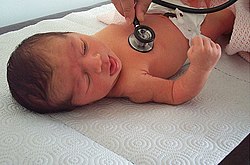
Libellus [Opusculum] de aegritudinibus et remediis infantium ('Little Book on Children's Diseases and Treatment'), by the Italian pediatrician Paolo Bagellardo, was published in 1472 and was among the first books about pediatrics.
Image source: Pediatrics
1473
% complete
Bartholomäus Metlinger's Ein Regiment der Jungerkinder, published in 1473, followed Bagellardo's work as an early printed treatise on children's diseases and their treatment.
Image source: Bartholomäus Metlinger
1483
% complete
In 1483, Cornelius Roelans (1450–1525) published his Buchlein, or Latin compendium, on children's diseases, contributing to the growing body of early pediatric literature.
1491
% complete
Heinrich von Louffenburg's Versehung des Leibs, written in 1429, was finally published in 1491, completing the four great medical treatises on children's physiology and pathology known as the Pediatric Incunabula.
Image source: Heinrich von Louffenburg
1601 - 1800
% complete
During the seventeenth and eighteenth centuries, medical experts began offering specialized care for children, marking a shift toward recognizing children's unique medical needs distinct from those of adults.
1764
% complete
The Swedish physician Nils Rosén von Rosenstein (1706–1773) is considered the founder of modern pediatrics as a medical specialty. His work The Diseases of Children, and Their Remedies (1764) is considered 'the first modern textbook on the subject.'
Image source: Nils Rosén von Rosenstein
1801 - 1900
% complete
It was during the nineteenth century that medical professionals acknowledged pediatrics as a separate field of medicine, formally distinguishing the care of children from general adult medicine.
1801 - 1900
% complete
In the 19th century, specialized medicine and pediatrics emerged as key fields, driven by new medical approaches grounded in observation and theory—specifically in chemistry, biology, and anatomopathology.
Image source: Medicine
1859
% complete
The term pediatrics was first introduced into English in 1859 by Abraham Jacobi, helping define the emerging specialty of children's medicine in the English-speaking world.
Image source: Abraham Jacobi
1860
% complete
In 1860, Abraham Jacobi became 'the first dedicated professor of pediatrics in the world.' He is known as the father of American pediatrics because of his many contributions to the field.
1710
% complete
The Charité hospital in Berlin was founded in 1710. In 1830 it established a separate Pediatric Pavilion, becoming one of the first institutions in Europe with dedicated pediatric facilities.
Image source: Charité
1778
% complete
The Necker Hospital was founded in Paris in 1778. In 1920 it merged with the Hôpital des Enfants Malades to form the Necker-Enfants Malades Hospital, whose pediatric division continues today.
Jun 1802
% complete
The first generally accepted pediatric hospital, the Hôpital des Enfants Malades (Hospital for Sick Children), opened in Paris in June 1802 on the site of a previous orphanage, accepting patients up to age fifteen from its beginning.
1830
% complete
In 1830, the Charité in Berlin established a separate Pediatric Pavilion, pioneering dedicated children's wards within general hospitals and inspiring similar institutions across Europe.
1834
% complete
Following Berlin's example, a similar pediatric institution was established at Saint Petersburg in 1834, reflecting the spread of specialized children's medicine across Europe.
1837
% complete
In 1837, pediatric pavilions modeled on Berlin's were established at Vienna and Breslau (now Wrocław), further institutionalizing pediatric care throughout Central Europe.
1852
% complete
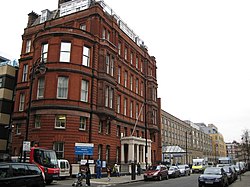
Britain's first pediatric hospital, the Hospital for Sick Children, Great Ormond Street, was founded in 1852 by Charles West, becoming a landmark institution for children's healthcare in Britain.
Image source: Great Ormond Street Hospital
1855
% complete
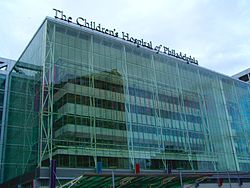
The Children's Hospital of Philadelphia opened in 1855 as the first hospital in the United States dedicated exclusively to the care of children, paving the way for American pediatric medicine.
Image source: Children's Hospital of Philadelphia
1860
% complete
The first children's hospital in Scotland opened in 1860 in Edinburgh, extending specialized pediatric care to Scotland and following Britain's earlier Great Ormond Street model.
Image source: Royal Hospital for Sick Children, Edinburgh
1869
% complete
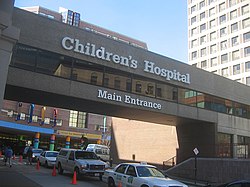
Boston Children's Hospital opened in 1869, becoming the second children's hospital in the United States after Philadelphia's and a leading center of American pediatric medicine and research.
Image source: Boston Children's Hospital
1920
% complete
In 1920, the Hôpital des Enfants Malades merged with the nearby Necker Hospital, founded in 1778, creating the Necker-Enfants Malades Hospital, which continues today as a renowned pediatric division.
Image source: Necker–Enfants Malades Hospital
1901 - 2000
% complete
During the twentieth century, medical experts began to put more emphasis on children's rights, expanding the role of pediatricians beyond treating illness to advocating for children's welfare broadly.
1989
% complete
At the 1989 United Nations Rights of the Child Convention, medical experts developed the Best Interest Standard of Child, designed to prioritize children's rights and best interests in decisions affecting them.
Image source: Convention on the Rights of the Child
1995
% complete
In 1995, the American Academy of Pediatrics (AAP) officially acknowledged the Best Interest Standard of a Child as an ethical principle for pediatric decision-making, and it remains in use today.
Image source: American Academy of Pediatrics
1996
% complete
Since its formal adoption in 1995, the Best Interest Standard of the Child has continued to be used as an ethical foundation for pediatric decision-making, ensuring that children's welfare remains central to medical care.
Or browse the full history timeline directory, with more than 2,000 topics.
This History of Pediatrics timeline was generated with the help of AI, using information found on the internet.
We work hard to keep these timelines accurate, but mistakes do get through. If you spot one, email us at [email protected] and we'll fix it for future visitors.
Generate yours with AI or build it from scratch, for free.
Export your timeline, add your own events, edit or remove AI-generated events, and much more
No credit card required.
Cancel anytime.
Cancel anytime.
You can create an unlimited number of timelines with up to 10 events on each one, customize how they look, export them to PDF, PNG, PowerPoint, CSV, and Excel, and share them with a link. Paid plans raise the event limit and add features like spreadsheet imports and collaborators.
Yes. You can cancel your subscription from your account page at any time, and you will not be charged again. Your subscription stays active for the rest of the period you already paid for.
Yes. We will email you a reminder before the annual renewal, and we will also email you a receipt.
Yes. You can email us within 15 days of any payment, and we will issue you a full refund.
Check out our pricing docs or send us an email anytime: [email protected].