-
Use Cases
-
Resources
-
Pricing
1493
During his second voyage, Christopher Columbus and other Europeans observed Indigenous Caribbean people playing with bouncing balls made from a previously unfamiliar material. The encounter introduced European observers to natural rubber.
Image source: Christopher Columbus
1530
European chroniclers began recording Indigenous latex collection and rubber manufacture in the Americas. These accounts described waterproofing, elastic balls, and other uses, although Europe did not yet possess a practical rubber industry.
Image source: Natural rubber
1736
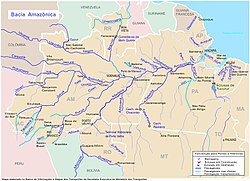
French scientist Charles Marie de La Condamine reported on a milky substance collected from trees in the Amazon basin. His observations helped establish rubber as a scientifically important natural material in Europe.
Image source: Charles Marie de La Condamine
1770
Joseph Priestley observed that the material could erase pencil marks and called it rubber. The term gradually became the standard English name for the elastic substance.
1791
English inventor Samuel Peal patented a method for waterproofing cloth with rubber dissolved in turpentine. The process was an early attempt to turn latex into commercially useful coated fabrics.
1820
Thomas Hancock pioneered machines for cutting, masticating, and reclaiming natural rubber. His processing innovations made raw rubber more workable and helped establish the British rubber-manufacturing industry.
1823
Charles Macintosh patented a waterproof fabric made by sandwiching rubber solution between layers of cloth. Macintosh raincoats became one of the first major mass-market products based on rubber.
Image source: Mac (computer)
1839
Charles Goodyear discovered that heating rubber with sulfur produced a stronger, more stable, and less temperature-sensitive material. Vulcanization transformed natural rubber from a troublesome substance into a reliable industrial material.
Image source: Charles Goodyear
1843
Thomas Hancock patented a practical vulcanization process in Britain after independently developing the technique. His patent helped commercialize sulfur-cured rubber products across Europe.
1853
Vulcanized rubber enabled durable waterproof boots to be manufactured at scale. Rubber footwear became an important early consumer and industrial application.
1858
The first transatlantic telegraph cable was insulated with gutta-percha, a latex-like material from Southeast Asian trees. Its use demonstrated the value of elastomeric materials for protecting submarine electrical infrastructure.
Image source: Transatlantic telegraph cable
1888
John Boyd Dunlop patented a practical pneumatic tire for bicycles. Air-filled rubber tires improved comfort and speed and helped stimulate the wider tire industry.
Image source: Tire
1895
Édouard and André Michelin demonstrated removable pneumatic tires on automobiles. Their innovation helped establish rubber tires as essential components of motor transport.
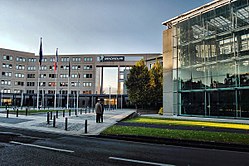
Image source: Michelin
1898
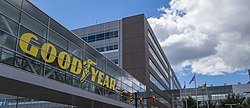
Frank Seiberling founded the Goodyear Tire and Rubber Company in Akron, Ohio. The company became one of the largest global manufacturers of tires and rubber goods.
Image source: Goodyear Tire and Rubber Company
1908 - 1927
The mass production of the Ford Model T greatly expanded automobile ownership. Rising vehicle production created enormous demand for rubber tires, hoses, belts, and other components.
Image source: Ford Model T
1946
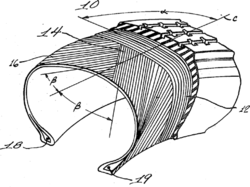
Michelin patented the radial tire design, in which cord plies run radially across the tire rather than diagonally. Radial construction improved tread life, fuel efficiency, handling, and high-speed performance.
Image source: Radial tire
1975
International rubber research programs advanced high-yielding Hevea clones, disease management, latex chemistry, and plantation practices. Scientific breeding became central to maintaining natural rubber's competitiveness.
2002
Thailand consolidated national rubber research through a dedicated institute focused on breeding, cultivation, processing, and market development. Thailand subsequently became the world's leading natural-rubber producer.
1876
British explorer Henry Wickham collected and transported thousands of Hevea brasiliensis seeds from Brazil to the Royal Botanic Gardens, Kew. Seedlings from this shipment became the foundation of plantation rubber production in Asia.
1879 - 1912
Demand for natural rubber drove a major economic boom in the Amazon basin. Cities such as Manaus and Belém grew rapidly, while Indigenous and transported laborers endured coercion, violence, debt, and severe exploitation.
Image source: Amazon rubber cycle
1900 - 1914
Hevea brasiliensis plantations spread through Malaya, Ceylon, the Dutch East Indies, and other parts of Southeast Asia. Asian cultivation soon displaced the Amazon as the principal source of globally traded natural rubber.
1922 - 1928
The British Stevenson Plan restricted rubber exports from Malaya and Ceylon to raise prices after a postwar surplus. The scheme illustrated the strategic importance and volatility of the international rubber market.
1941 - 1942
Japan's conquest of Malaya and the Dutch East Indies placed much of the world's natural-rubber production under Axis control during World War II. The loss threatened Allied military manufacturing and intensified the search for substitutes.
Image source: Japanese occupation of British Borneo
1942 - 1945
Brazil recruited tens of thousands of workers, known as rubber soldiers, to extract latex for the Allies during World War II. Many faced harsh conditions, disease, debt, and inadequate support in the Amazon.
1942
The wartime shortage established rubber as a strategic material central to national security. Governments created stockpiles, rationed civilian use, promoted recycling, and invested heavily in synthetic production.
Image source: Boots Adams
1944
The International Rubber Study Group was established to improve cooperation and information sharing among governments and industry participants. It became a major source of statistics and analysis for natural and synthetic rubber markets.
1946 - 1960
After World War II, plantations in Malaya, Indonesia, Ceylon, and nearby regions recovered and resumed supplying world markets. Southeast Asia remained the dominant center of natural-rubber production.
1952 - 1970
Malaysia used organized replanting programs and improved clones to modernize its rubber sector. Smallholder development and agricultural research increased yields and reshaped the country's rural economy.
1968 - 1979
Major producing and consuming countries created an international agreement to stabilize natural-rubber prices through export controls and buffer-stock mechanisms. It reflected continuing concern about sharp commodity-market fluctuations.
1979 - 1999
The International Natural Rubber Agreement created a buffer-stock system intended to moderate extreme price movements. The agreement represented one of the major postwar attempts to manage a global commodity market.
2002
Thailand, Indonesia, and Malaysia established a producer alliance to coordinate natural-rubber policies and strengthen their influence over prices and supply. The organization later became associated with broader ASEAN rubber cooperation.
2010 - 2011
Natural-rubber prices reached exceptional levels amid strong Asian vehicle demand, supply concerns, weather disruptions, and broader commodity speculation. The spike encouraged planting and intensified interest in synthetic substitutes.
2012
Global natural-rubber output exceeded 12 million tonnes as automobile ownership and industrial demand expanded, particularly in Asia. Thailand, Indonesia, Vietnam, Malaysia, and Côte d'Ivoire became major producers.
1930
A DuPont team led by Wallace Carothers developed polychloroprene, later marketed as neoprene. It was among the first commercially successful synthetic rubbers and offered resistance to oils, weather, and heat.
1932
The Soviet Union began large-scale production of synthetic rubber based on work by Sergei Lebedev. Synthetic rubber allowed countries with limited access to natural-rubber plantations to build domestic supplies.
Image source: Synthetic rubber
1935
German chemists developed Buna rubbers from butadiene and related monomers. These materials became important alternatives to natural rubber and later influenced the production of modern synthetic elastomers.
1942 - 1945
The United States coordinated a massive synthetic-rubber program during World War II. Companies including Goodyear, Firestone, Goodrich, and U.S. Rubber built plants that supplied tires and military goods after Asian natural-rubber imports were cut off.
Image source: Synthetic rubber
1989
Latex allergy became a major occupational and public-health concern, especially among healthcare workers and patients exposed to powdered natural-rubber gloves. Hospitals and manufacturers increasingly adopted powder-free and synthetic alternatives.
1990
Growing vehicle ownership produced enormous quantities of discarded tires, prompting governments to regulate collection, landfill disposal, retreading, crumb rubber, and energy recovery. Tire recycling became a significant part of rubber sustainability policy.
2015
Expansion of rubber plantations in Southeast Asia and parts of Africa became associated with deforestation, biodiversity loss, land conflicts, and greenhouse-gas emissions. Researchers and companies began promoting traceability and more sustainable production.
2020 - 2021
The COVID-19 pandemic produced an unprecedented increase in demand for natural-latex and synthetic-nitrile medical gloves. Supply shortages, factory shutdowns, and worker-safety concerns exposed the global health system's dependence on rubber manufacturing.
Or browse the full history timeline directory, with more than 2,500 topics.
This History of Rubber timeline was generated with the help of AI, using information found on the internet.
We work hard to keep these timelines accurate, but mistakes do get through. If you spot one, email us at [email protected] and we'll fix it for future visitors.
Generate yours with AI or build it from scratch, for free.
Export your timeline, add your own events, edit or remove AI-generated events, and much more
No credit card required.
Cancel anytime.
Cancel anytime.
You can create an unlimited number of timelines with up to 10 events on each one, customize how they look, export them to PDF, PNG, PowerPoint, CSV, and Excel, and share them with a link. Paid plans raise the event limit and add features like spreadsheet imports and collaborators.
Yes. You can cancel your subscription from your account page at any time, and you will not be charged again. Your subscription stays active for the rest of the period you already paid for.
Yes. We will email you a reminder before the annual renewal, and we will also email you a receipt.
Yes. You can email us within 15 days of any payment, and we will issue you a full refund.
Check out our pricing docs or send us an email anytime: [email protected].