-
Use Cases
-
Resources
-
Pricing
Rum is a distilled alcoholic beverage made from sugarcane byproducts such as molasses or sugarcane juice. Its history is deeply tied to the Caribbean, where sugar plantations produced molasses that was first fermented and distilled into rum in the 17th century. Rum became a major commodity in the triangular trade, a staple for sailors and pirates, and later evolved into a globally diverse spirit with styles ranging from light Cuban rums to rich Jamaican and Demerara varieties. More Less
1300
% complete
Marco Polo recorded a 14th-century account of a "very good wine of sugar(cane)" that was offered to him in the area that became modern-day Iran, an early precursor to the distilled sugarcane spirits that would later become rum.
1364
% complete
According to Maria Dembinska, King Peter I of Cyprus, also called Pierre I de Lusignan (9 October 1328 – 17 January 1369), brought rum with him as a gift for the other royal dignitaries at the Congress of Kraków, held in 1364.
1600 - 1699
% complete
The traditional history of modern-style rum tells of its invention in the Caribbean in the 17th century by enslaved people on sugarcane plantations, who discovered that molasses, a by-product of sugar refining, could be fermented to produce alcohol and then distilled. Today rum is produced in nearly every major sugar-producing region of the world.
1628
% complete
A liquid identified as rum has been found in a tin bottle on the Swedish warship Vasa, which sank in 1628, providing physical evidence of the spirit's presence in Europe during the early 17th century.
Image source: Vasa (ship)
1651
% complete
Both words surfaced in English about the same time as rum did — "rumbullion" in 1651, and "rum" before 1654. Proposed origins include obsolete British slang adjective "rum" meaning "high quality" (attested as "rum booze" from 1725), or a relation to ramboozle and rumfustian, popular British drinks of the mid-17th century.
Image source: Rum
1654
% complete
Regardless of the original source of the name, it was already in common use by 1654, when the General Court of Connecticut ordered the confiscation of "whatsoever Barbados liquors, commonly called rum, kill the devil and the like."
May 1657
% complete
A short time later in May 1657, the General Court of Massachusetts decided to make illegal the sale of strong liquor "whether knowne by the name of rumme, strong water, wine, brandy, etc."
1664
% complete
To support the demand for the drink, the first rum distillery in the Thirteen Colonies was set up in 1664 on Staten Island, New York.
1673
% complete
A sugar-making house under the plantation owner Richard Ligon containing a furnace, a cooling basin, and a filling room has been recorded on the island of Barbados since 1673, illustrating the infrastructure behind rum production.
1680 - 1699
% complete
By the late 17th century, rum had replaced French brandy as the exchange alcohol of choice in the triangle trade, cementing its central role in Atlantic commerce.
1700 - 1799
% complete
In the 18th century, ever-increasing demands for sugar, molasses, rum, and slaves led to a feedback loop that intensified the triangular trade across the Atlantic.
Image source: Triangular trade
1733
% complete
The outcry from the British rum industry led to the Molasses Act 1733, which levied a prohibitive tax on molasses imported into the Thirteen Colonies from foreign countries or colonies.
Image source: Molasses Act
1764
% complete
Strict enforcement of the Molasses Act's successor, the Sugar Act 1764, may have been an additional factor in causing the American Revolution, as colonial merchants and distillers chafed under the new duties.
1769 - 1772
% complete
In "The Doctor's Secret Journal", an account of happenings at Fort Michilimackinac in northern Michigan from 1769 to 1772 by Daniel Morison, a surgeon's mate, it was noted that there was not much for the men to do and drinking rum was very popular.
Image source: Fort Michilimackinac
1788
% complete
Australia was so far away from Britain that the penal colony, established in 1788, faced severe food shortages, compounded by poor conditions for growing crops and the shortage of livestock. Rum became a de facto currency in the struggling colony.
Image source: Rum Rebellion
1789
% complete
The popularity of rum continued after the American Revolution; George Washington insisted on a barrel of Barbados rum at his 1789 inauguration.
1808
% complete
In response to Bligh's attempt to regulate the use of rum, in 1808 the New South Wales Corps marched with fixed bayonets to Government House and placed Bligh under arrest, an event known as the Rum Rebellion.
1810
% complete
The mutineers continued to control the colony until the arrival of Governor Lachlan Macquarie in 1810, which restored orderly government after the Rum Rebellion.
Image source: Lachlan Macquarie
1817
% complete
By 1817, two out of every three ships which left Sydney went to Java or India, and cargoes from Bengal fed and equipped the colony.
1655
% complete
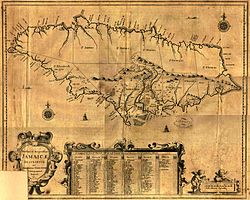
The association of rum with the Royal Navy began in 1655 when a Royal Navy fleet captured the island of Jamaica, beginning a centuries-long tradition linking the spirit to Britain's sailors.
Image source: Invasion of Jamaica
1740
% complete
While the naval ration was originally given neat or mixed with lime juice, the practice of watering down the rum began around 1740, reportedly at the direction of Admiral Edward Vernon, known as "Old Grog."
1866
% complete
In 1866 the Navy fixed the issued strength of the daily rum ration at 95.5 proof, defined as "4.5 under-Proof", equal to 54.6% ABV.
Jul 31, 1970
% complete
The Royal Navy continued to give its sailors a daily rum ration, known as a "tot", until the practice was abolished on 31 July 1970, ending a tradition of more than three centuries known as Black Tot Day.
Image source: Rum ration
Jun 29, 2010
% complete
An order to splice the mainbrace (take rum) can be given by the monarch as commander-in-chief, as occurred on 29 June 2010, when Queen Elizabeth II gave the order to the Royal Canadian Navy as part of the celebration of their 100th anniversary.
Image source: Splice the mainbrace
1934
% complete
In 1934, Jamaican lawmakers passed a cap for the maximum ester count that a rum can have to be allowed for export, regulating the intensely flavored high-ester style of Jamaican rum.
1997
% complete
Martinique rhum agricole was granted geographical indication protection in 1997, safeguarding the distinctive French island style of cane-juice rum.
2016
% complete
Jamaican rum was granted geographical indication protection in 2016, recognizing and protecting the island's distinctive rum styles under a certification mark.
2017
% complete
In 2017, NRJ (National Rums of Jamaica) was partially purchased by Maison Ferrand, who also own the West Indies Rum Distillery and have been opposed to a Barbados rum GI, since their business model relies on exporting rum and aging it in France.
May 25, 2021
% complete
From 25 May 2021, spirits labelled as rum must be unflavoured, unadulterated or diluted with alcohol, and produced using only cane sugar or molasses, with a minimum ABV of 37.5%.
Oct 2024
% complete
Following the October 2024 amendments by the Jamaica Intellectual Property Office (JIPO) to disallow aging Jamaican rum abroad for the GI, NRJ filed a complaint with the Fair Trading Commission (FTC) that this amounts to an anti-competitive practice, and the FTC launched investigations into the allegations.
Image source: National Rums of Jamaica
Jan 2025
% complete
In January 2025, Saint Lucia's application for a rum geographical indication, filed by Saint Lucia Distillers, was accepted, extending legal protection to yet another Caribbean rum origin.
Image source: Rum
2025 - 2026
% complete
According to Marotea Vitrac, president of the Défense de l'Indication Géographique Rhum Agricole de Polynésie Française, Tahiti has been working on a GI for the past five years as of 2025, and anticipates that it will be finalized in 2026.
Image source: Rhum agricole
Sep 19, 2025
% complete
On September 19, 2025, the Supreme Court sided with NRJ and issued a temporary injunction against the changes made to the GI by JIPO, not allowing the Spirits Pool Association (SPA) to process any applications under the new GI certification.
Or browse the full history timeline directory, with more than 2,000 topics.
This History of Rum timeline was generated with the help of AI, using information found on the internet.
We work hard to keep these timelines accurate, but mistakes do get through. If you spot one, email us at [email protected] and we'll fix it for future visitors.
Generate yours with AI or build it from scratch, for free.
Export your timeline, add your own events, edit or remove AI-generated events, and much more
No credit card required.
Cancel anytime.
Cancel anytime.
You can create an unlimited number of timelines with up to 10 events on each one, customize how they look, export them to PDF, PNG, PowerPoint, CSV, and Excel, and share them with a link. Paid plans raise the event limit and add features like spreadsheet imports and collaborators.
Yes. You can cancel your subscription from your account page at any time, and you will not be charged again. Your subscription stays active for the rest of the period you already paid for.
Yes. We will email you a reminder before the annual renewal, and we will also email you a receipt.
Yes. You can email us within 15 days of any payment, and we will issue you a full refund.
Check out our pricing docs or send us an email anytime: [email protected].