
-
Use Cases
-
Resources
-
Pricing
Beer is one of humanity's oldest beverages, with origins tracing back over 7,000 years to ancient Mesopotamia and Egypt. Over millennia, brewing evolved from a domestic and ritual activity into a commercial industry, shaped by monastic traditions, the Bavarian Reinheitsgebot of 1516, industrialization, pasteurization, refrigeration, and today's global craft beer renaissance. More Less
3000 BC - 500 BC
% complete
Beer became vital to all the grain-growing civilizations of Eurasian and North African antiquity, including Egypt. In 1868, James Death even put forward a theory in The Beer of the Bible that the manna from heaven given to the Israelites was a bread-based, porridge-like beer called wusa.
Image source: History of beer
2500 BCE
% complete
The Ebla tablets, discovered in 1974 in Ebla, Syria, show that beer was being produced in the city as early as 2500 BCE, documenting one of the earliest known records of beer production.
Image source: Ebla tablets
2100 BCE
% complete
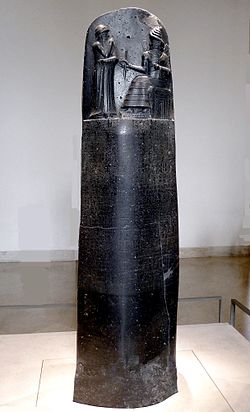
In 2100 BCE, the Babylonian king Hammurabi included regulations governing tavern keepers in his law code for the kingdom, demonstrating how integral beer and its sale had become to Babylonian society.
Image source: Code of Hammurabi
1500 BCE - 500 BCE
% complete
In Ancient India, the Vedas and Ramayana mention a beer-like drink called sura that was consumed during the Vedic Period (c. 1500 – c. 500 BCE).
500 BCE
% complete
The Thracians were known to consume beer made from rye since at least the 5th century BCE, according to the ancient Greek logographer Hellanicus of Lesbos.
700 CE
% complete
Beer produced before the Industrial Revolution continued to be made and sold on a domestic scale, although by the 7th century CE beer was also being produced and sold by European monasteries.
800 CE
% complete
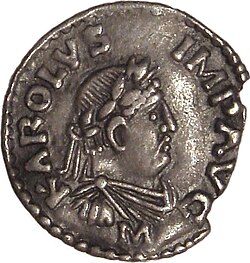
Charlemagne, Frankish king and ruler of the Holy Roman Empire during the 8th century, considered beer an important part of living and is often thought to have trained some brewers himself.
Image source: Charlemagne
900 CE
% complete
Flavoring beer with hops was known at least since the 9th century, but was only gradually adopted because of difficulties in establishing the right proportions of ingredients.
Image source: Hops
1040 CE - 1087 CE
% complete
Brewers active between 1040 and 1087 were recognized by some French and Flemish brewers, reflecting the growing status of the brewing craft in medieval Europe.
1200 CE
% complete
The key innovation in medieval brewing was the introduction of hops, which began in northern Germany in the 13th century and transformed the flavor and preservation of beer.
1300 CE
% complete
Hopped beer was perfected in the medieval towns of Bohemia by the 13th century, setting a standard for quality that would spread across Europe.
1300 CE - 1500 CE
% complete
By the 14th and 15th centuries, beermaking was gradually changing from a family-oriented activity to an artisan one, with taverns and monasteries brewing their own beer for mass consumption.
1400 CE
% complete
Hopped beer was imported to England from the Netherlands as early as 1400 in Winchester, and hops were being planted on the island by 1428.
1400 CE
% complete
In 15th century England, an unhopped beer would have been known as an ale, while the use of hops would make it a beer, creating a lasting distinction between the two terms.
Image source: Ale
1400 CE - 1500 CE
% complete
This type of hopped beer production spread to Holland in the 14th century and later to Flanders and Brabant, reaching England by the late 15th century.
1428 CE
% complete
By 1428, hops were being planted in England, marking the beginning of domestic hop cultivation that would support the growing popularity of hopped beer.
1500 CE - 1700 CE
% complete
In Hamburg, per capita beer consumption increased from an average of 300 liters per year in the 15th century to about 700 liters in the 17th century, reflecting beer's growing role in daily life.
1516 CE
% complete
In 1516, William IV, Duke of Bavaria, adopted the Reinheitsgebot (purity law), perhaps the oldest food regulation still in use through the 20th century. It ordered that beer ingredients be restricted to water, barley, and hops; yeast was added after Louis Pasteur's discovery in 1857. The law passed formally from German law in 1987.
Image source: Reinheitsgebot
1580 CE
% complete
Fragile hand-blown glass bottles began to be made in England in the late 16th century, opening the door to bottled beer.
Image source: Glass bottle
1600 CE
% complete
Bottom-fermented beers were discovered by accident in the 16th century after beer was stored in cool caverns for long periods; they have since largely outpaced top-fermented beers in terms of volume.
Image source: Lager
1600 CE
% complete
Prior to the late 18th century, malt was primarily dried over fires made from wood, charcoal, or straw, and after 1600, from coke, improving consistency in malt production.
Image source: Malt
1691 CE
% complete
By 1691, glass bottles had improved enough for the merchant Thomas Tryon to comment that bottled beer kept longer than beer in barrels.
1760 CE
% complete
The introduction of the thermometer in 1760 allowed brewers to measure temperatures precisely, increasing efficiency and control over the brewing process.
Image source: Thermometer
1765 CE
% complete
Following significant improvements in the efficiency of the steam engine in 1765, industrialization of beer became a reality, moving production from artisanal to industrial manufacture.
Image source: Industrial Revolution
1770 CE
% complete
Further innovations came with the introduction of the hydrometer in 1770, which allowed brewers to increase efficiency and attenuation in the brewing process.
Image source: Hydrometer
1816 CE
% complete
A British law of 1816 forbade the use of any ingredients other than malt and hops in beer, prompting innovations in malting technology.
Image source: Porter (beer)
1817 CE
% complete
The invention of the drum roaster in 1817 by Daniel Wheeler allowed for the creation of very dark, roasted malts, contributing to the flavour of porters and stouts.
Image source: Daniel Wheeler
1855 CE
% complete
Asia's first brewery was incorporated in 1855 (although it was established earlier) by Edward Dyer at Kasauli in the Himalayan Mountains in India under the name Dyer Breweries.
1857 CE
% complete
Louis Pasteur's 1857 discovery of yeast's role in fermentation led to the development of methods to prevent the souring of beer by undesirable microorganisms, revolutionizing brewing science.
Image source: Louis Pasteur
1870 CE - 1895 CE
% complete
Despite record increases in production between 1870 and 1895, the number of US brewing firms fell by 46%. As late as 1877, only four breweries topped 100,000 barrels annually, but by 1895 the largest sixteen firms were all brewing over 250,000 barrels annually.
Image source: Beer in the United States
1871 CE
% complete
The Bavarian Reinheitsgebot law was applied throughout Germany as part of the 1871 German unification as the German Empire under Otto von Bismarck, and has since been updated to reflect modern trends in beer brewing.
Image source: Unification of Germany
1879 CE
% complete
The metal screw-top was invented in 1879, making bottled beer easier to seal and transport.
Image source: Screw cap
1890 CE
% complete
Mass production of bottles by casting in moulds began in the late 19th century, dramatically lowering the cost of bottled beer.
1850 CE
% complete
The Finnish epic Kalevala, collected in written form in the 19th century but based on oral traditions many centuries old, devotes more lines to the origin of beer and brewing than it does to the origin of mankind.
Image source: Kalevala
1900 CE
% complete
During the Industrial Revolution, the production of beer moved from artisanal manufacture to industrial manufacture, and domestic manufacture ceased to be significant by the end of the 19th century.
1920 CE
% complete
Prior to 1920 there were thousands of breweries in the United States. Beginning with nationwide Prohibition in 1920, most of these breweries went out of business, although some converted to soft drinks and other businesses.
Image source: Prohibition in the United States
1945 CE
% complete
By 1945, the majority of beer was bottled, only to be overtaken by canned beer later in the 20th century.
Image source: Beer bottle
1953 CE
% complete
In 1953, New Zealander Morton Coutts developed the technique of continuous fermentation, allowing beer to be brewed without interruption and greatly increasing efficiency.
2006 CE
% complete
More than 133 billion liters (35 billion gallons) of beer are sold per year, producing total global revenues of $294.5 billion (£147.7 billion) in 2006.
Image source: Beer
2007 CE - 2010 CE
% complete
The number of breweries in the United States has been claimed as being either over 1,500 in 2007 or over 1,400 in 2010, depending on the source, reflecting the growth of craft brewing.
Jun 2013
% complete
As of June 2013, The Brewers Association reported the total number of currently operating US breweries to be 2,538, with all but 55 of those being craft breweries.
Image source: Brewers Association
Feb 2019
% complete
In February 2019, archaeologists from Mola Headland Infrastructure and experts from Highways England found evidence of the first Iron Age beer, dated back over 2,000 years, during road works in Cambridgeshire.
Feb 2021
% complete
In February 2021, archaeologists found a 5,000-year-old beer factory in Abydos, Egypt, dating back to the reign of King Narmer in the Early Dynastic Period.
Image source: Abydos, Egypt
2024 CE - 2028 CE
% complete
The global beer market is projected to grow by $148.43 billion between 2024 and 2028, according to a report by Technavio, continuing beer's remarkable global expansion.
Or browse the full history timeline directory, with more than 2,000 topics.
This History of Beer timeline was generated with the help of AI, using information found on the internet.
We work hard to keep these timelines accurate, but mistakes do get through. If you spot one, email us at [email protected] and we'll fix it for future visitors.
Generate yours with AI or build it from scratch, for free.
Export your timeline, add your own events, edit or remove AI-generated events, and much more
No credit card required.
Cancel anytime.
Cancel anytime.
You can create an unlimited number of timelines with up to 10 events on each one, customize how they look, export them to PDF, PNG, PowerPoint, CSV, and Excel, and share them with a link. Paid plans raise the event limit and add features like spreadsheet imports and collaborators.
Yes. You can cancel your subscription from your account page at any time, and you will not be charged again. Your subscription stays active for the rest of the period you already paid for.
Yes. We will email you a reminder before the annual renewal, and we will also email you a receipt.
Yes. You can email us within 15 days of any payment, and we will issue you a full refund.
Check out our pricing docs or send us an email anytime: [email protected].