-
Use Cases
-
Resources
-
Pricing
1100
% complete
The description of aqua ardens ('burning water', i.e., alcohol) made by distilling wine with salt appears in Latin works by the 12th century, marking an important milestone in European knowledge of distilled alcohol.
1300
% complete
By about 1300, the process of distillation was well known among European medieval chemists, enabling the spread of distilled spirits across the continent and eventually leading to the development of vodka.
1450
% complete
The production of liquor began in the mid-15th century, with varied local traditions emerging throughout Europe, including Poland where it was known as vodka (wódka or gorzałka).
Image source: Vodka
1780
% complete
In a book of travels published in English in 1780, Johann Gottlieb Georgi correctly explained that 'kabak in the Russian language signifies a public house for the common people to drink vodka (a sort of brandy) in'.
Image source: Johann Gottlieb Georgi
1799
% complete
In English literature, the word vodka first appeared around the late 18th century; in 1799, William Tooke glossed vodka as 'rectified corn-spirits', using the traditional English sense of corn to mean any grain.
Image source: William Tooke
1800
% complete
In 1800, the French poet Théophile Gautier glossed vodka as a 'grain liquor' served with meals in Poland (eau-de-vie de grain), reflecting foreign perceptions of the drink.
Image source: Théophile Gautier
1386
% complete
In 1386, the Genoese ambassadors brought the first aqua vitae ('water of life') to Moscow and presented it to Grand Prince Dmitry Donskoy, introducing a type of distilled liquor designated by the Russian word vodka to Russia in the late 14th century.
1399
% complete
Perhaps one of the earliest terms linked to vodka production was varenoe vino ('distilled wine'), which appears in a 1399 document, marking early Russian terminology for distilled alcoholic drinks.
1474
% complete
Ivan III established the first Russian state monopoly on vodka in 1474, beginning a long tradition of state control over vodka production and sales in Russia.
1495
% complete
Perevara, another term used as a precursor to vodka, last appears in official documents in 1495, illustrating the evolving vocabulary surrounding distilled spirits in Russia.
1505
% complete
By 1505, distilled Russian vodka was being exported to Sweden, demonstrating that vodka had become a trade commodity crossing international borders early in its history.
1533
% complete
The word written in Cyrillic appeared first in 1533, describing a medicinal drink brought from Poland to Russia by Russian merchants, reflecting vodka's original use as medicine.
1550
% complete
By the 16th century, consumption of vodka was widespread in Russia, with Sigismund von Herberstein stating that nobles at the Russian court 'at the beginning of the meal always drank aqua vitae'.
Image source: Sigismund von Herberstein
1600
% complete
The term korchma, one of the oldest official terms used for vodka alongside varenoe vino, later came to denote illegally produced vodka by the 16th century.
Jun 8, 1751
% complete
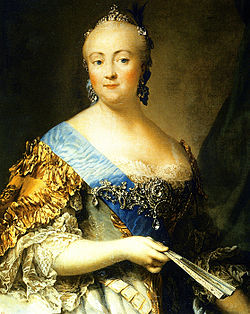
The first written usage of the word vodka in an official Russian document in its modern meaning is dated by the decree of Empress Elizabeth of 8 June 1751, which regulated the ownership of vodka distilleries.
Image source: Elizabeth of Russia
1863
% complete
In 1863, the government monopoly on vodka production was repealed, causing prices to plummet and making vodka available even to low-income citizens, dramatically increasing consumption.
1911
% complete
By 1911, vodka comprised 89% of all alcohol consumed in Russia. This level fluctuated somewhat during the 20th century but remained quite high at all times, with recent estimates putting it at 70% in 2001.
Mar 2007
% complete
In March 2007, BBC News in a documentary sought to find the cause of severe jaundice among imbibers of a 'bathtub' vodka in Russia, highlighting the dangers of illicitly produced spirits.
1405
% complete
The world's first written mention of the word wódka appeared in 1405 in the Akta Grodzkie recorder of deeds, in the court documents from the Palatinate of Sandomierz in Poland.
1500
% complete
In the 16th century, the Polish word for the beverage was gorzałka (from the Old Polish verb gorzeć meaning 'to burn'), which is also the source of Ukrainian horilka (горілка).
1534
% complete
Stefan Falimierz asserted in his 1534 works on herbs that vodka could serve 'to increase fertility and awaken lust', reflecting the period when spirits were regarded as medicines.
1550
% complete
Some Polish vodka blends go back centuries, most notably Żubrówka from about the 16th century and aged Starka vodka, also from the 16th century, alongside Goldwasser from the early 17th century.
Image source: Żubrówka
1580
% complete
Silesian cities bought vodka from Poznań, a city that in 1580 had 498 working spirits distilleries, showing the scale of the cottage industry that existed in Poland back to the 16th century.
Image source: Poznań
1600 - 1650
% complete
Goldwasser, one of Poland's most notable historic vodka blends, dates from the early 17th century, joining other traditional blends like Żubrówka and Starka that go back centuries.
Image source: Shafi Goldwasser
1600 - 1799
% complete
In the 17th and 18th centuries, Polish vodka was known in the Netherlands, Denmark, England, Russia, Germany, Austria, Hungary, Romania, Ukraine, Bulgaria and the Black Sea basin.
1614
% complete
Wodka lub gorzałka (1614), by Jerzy Potański, contains valuable information on the production of vodka, providing rare documentation of early distilling practices.
1650
% complete
In the mid-17th century, the szlachta (nobility of Poland) were granted a monopoly on producing and selling vodka in their territories, entrenching aristocratic control of the industry.
Image source: Szlachta
1693
% complete
Jakub Kazimierz Haur, in his book Skład albo skarbiec znakomitych sekretów ekonomii ziemiańskiej (Kraków, 1693), gave detailed recipes for making vodka from rye.
1768 - 1774
% complete
The exact production methods for Polish vodka were described in 1768 by Jan Paweł Biretowski and in 1774 by Jan Chryzostom Pasek, documenting traditional techniques.
1780 - 1799
% complete
The late 18th century inaugurated the production of vodka from various unusual substances, including even the carrot, as experimentation expanded beyond traditional grain bases.
1782
% complete
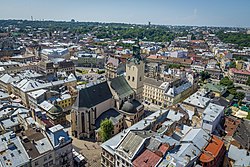
Though there was a substantial vodka cottage industry in Poland back to the 16th century, the end of the 18th century marked the start of real industrial production; the first industrial distillery was opened in 1782 in Lwów by J., followed soon after by others.
Image source: Lviv
1784
% complete
The Vodka Industry Museum, located at the park of the Potocki country estate, has an original document attesting that the distillery already existed in 1784, preserving evidence of late 18th-century production.
1804
% complete
He was soon followed by Jakub Haberfeld, who in 1804 established a factory at Oświęcim, contributing to the growth of industrial vodka production in Poland.
Image source: Jakub Haberfeld
1823
% complete
Hartwig Kantorowicz started producing Wyborowa in 1823 at Poznań, following Jakub Haberfeld's 1804 factory and further expanding Poland's industrial vodka industry.
Image source: Wyborowa
1850 - 1899
% complete
The implementation of new technologies in the latter half of the 19th century allowed the production of clear vodkas, which contributed significantly to their commercial success.
1871
% complete
The first rectification distillery was established in 1871, enabling more precise purification of spirits and supporting the rise of clear vodkas.
Image source: Rectified spirit
1925
% complete
In 1925, the production of clear vodkas was made a Polish government monopoly, extending state control over this segment of the vodka industry.
1879
% complete
Absolut Rent Brännvin ('absolutely pure brännvin') was created in 1879; its name would later be reused when Absolut Vodka launched in 1979, becoming one of the world's most famous vodka brands.
1956
% complete
In 1956, a US revenue ruling put into effect that sugar not more than 0.2% and trace amounts of citric acid are not considered flavoring agents, shaping American vodka regulations.
1958
% complete
The first Swedish product to use the term vodka was Explorer Vodka, which was created in 1958 and initially intended for the American export market.
1979
% complete
In 1979, Absolut Vodka was launched, reusing the name of the old Absolut Rent Brännvin created in 1879, and went on to become a globally iconic Swedish vodka brand.
Image source: Absolut Vodka
1995
% complete
The meaning of 'trace amounts' of citric acid in American vodka regulations was clarified as not more than 1,000 ppm in 1995, refining earlier rulings from 1956.
1995
% complete
After Sweden joined the European Union in 1995, the regulations were changed so that privately owned companies could produce vodka, liberalizing the Swedish market.
Image source: Sweden
2000
% complete
Since the year 2000, because of evolving consumer tastes and regulatory changes, several 'artisanal vodka' or even 'ultra premium vodka' brands have appeared, reshaping the premium end of the market.
2008
% complete
The success of grape-based vodka in the United States prompted traditional producers in the Vodka Belt countries of Poland, Finland, Estonia, Lithuania, and Sweden to campaign for EU legislation defining vodka as only spirits made from grain or potatoes; this regulation entered into force in 2008.
2013
% complete
In 2013, the organizers of the so-called 'vodka car' were jailed for two and a half years for having illegally provided thousands of liters of vodka to young people, some as young as 13.
Jul 2013
% complete
In summer 2013, American LGBT rights activists targeted Russian vodka brands for boycott over Russia's anti-gay policies, turning vodka into a symbol of political protest.
Feb 2022
% complete
In late February 2022, with the Russian invasion of Ukraine, some North American liquor stores and bars expressed symbolic solidarity with Ukraine and opposition to Russia by boycotting Russian vodka brands.
Or browse the full history timeline directory, with more than 2,000 topics.
This History of Vodka timeline was generated with the help of AI, using information found on the internet.
We work hard to keep these timelines accurate, but mistakes do get through. If you spot one, email us at [email protected] and we'll fix it for future visitors.
Generate yours with AI or build it from scratch, for free.
Export your timeline, add your own events, edit or remove AI-generated events, and much more
No credit card required.
Cancel anytime.
Cancel anytime.
You can create an unlimited number of timelines with up to 10 events on each one, customize how they look, export them to PDF, PNG, PowerPoint, CSV, and Excel, and share them with a link. Paid plans raise the event limit and add features like spreadsheet imports and collaborators.
Yes. You can cancel your subscription from your account page at any time, and you will not be charged again. Your subscription stays active for the rest of the period you already paid for.
Yes. We will email you a reminder before the annual renewal, and we will also email you a receipt.
Yes. You can email us within 15 days of any payment, and we will issue you a full refund.
Check out our pricing docs or send us an email anytime: [email protected].