
-
Resources
-
Pricing
The history of shampoo traces the evolution of hair cleansing from ancient botanical remedies and Indian traditions to the convenient, specialized products used today. More Less
Build a timeline like this one in minutes, for free. Start Yours →
500 BCE
Ayurvedic practices in South Asia employed herbal materials such as shikakai, amla, soapnuts, and various oils for cleansing and caring for hair. These traditions continued for centuries and still influence natural hair-care products.
Image source: Ayurveda

400 BCE
Greek and Roman writers described hair care using olive oil, perfumes, ashes, and other cleansing or conditioning substances. Hair washing was closely connected with bathing, grooming, and the social use of fragrance.
800
Medieval Islamic societies developed sophisticated soapmaking using oils and alkaline materials. Hard soaps and scented preparations became important cleansing products and contributed to later European hair-washing practices.
1000
Soapwort, a plant containing naturally foaming saponins, was used in Europe to clean textiles, skin, and hair. Its mild lather made it a long-standing alternative to harsher alkaline soaps.
1100
Medieval medical and household texts recorded hair treatments based on herbs, eggs, vinegar, ashes, and animal fats. Washing frequency varied, and many preparations combined cleansing with attempts to treat dandruff, parasites, or hair loss.
Image source: Medicine in the medieval Islamic world
1300
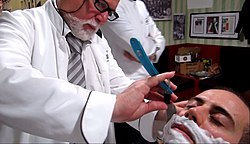
European barbers increasingly provided bathing, hair cutting, shaving, and grooming services. Their work helped make professional hair cleansing part of urban personal-care culture, even though modern liquid shampoo did not yet exist.
Image source: Barber
1700
In eighteenth-century Europe, wigs and natural hair were commonly styled with pomades, powders, and fragrances. These products often required periodic washing with soap or other cleansing mixtures to remove accumulated grease and powder.
1759 - 1840
Indian entrepreneur Sake Dean Mahomed introduced Indian-style vapour baths and therapeutic shampooing services in Britain. His establishments popularized the word shampoo in an English-speaking setting and linked it with massage and hair treatment.
1762
English usage of shampoo developed from the Hindi and Urdu word champo, meaning to press or massage. The term originally referred more broadly to massage and bathing before becoming associated primarily with washing hair.
Image source: Shampoo
1814
By the early nineteenth century, shampooing had become a recognized service in British bathhouses and grooming establishments. Practitioners promoted massage, steam, and herbal or soap-based washes for cleanliness and health.
1860
British hairdresser Kasey Hebert is commonly credited with selling an early commercial shampoo product in the nineteenth century. His preparation helped shift shampoo from a service or household recipe toward a packaged consumer product.
1860
Nineteenth-century household and beauty manuals published recipes for hair washes made from soap, borax, herbs, eggs, alcohol, and fragrances. These formulas reflected the period's limited understanding of scalp chemistry and preservation.
1870
London apothecary and perfumer D.R. Harris became one of the established British retailers offering hair-washing and grooming preparations. Such firms helped formalize shampoo as part of the expanding Victorian toiletries market.
1890
Late nineteenth-century products increasingly claimed to remove dandruff, parasites, and scalp impurities. They often relied on sulfur, tar, borax, or other medicinal ingredients and were sold through barbers, pharmacies, and hairdressers.
1903
Hans Schwarzkopf introduced a powdered hair-washing product in Germany. Unlike ordinary household soap, it was marketed specifically for hair and could be prepared by mixing the powder with water.
1927
Hans Schwarzkopf launched one of the first commercially successful liquid shampoos in 1927. Liquid formulation improved convenience, dosing, and distribution and became the foundation of the modern shampoo category.
1930 - 1945
Mass advertising increasingly presented regular hair washing as a marker of health, attractiveness, and modernity. This campaign helped move shampoo from an occasional treatment toward a routine consumer product.
1930
Procter & Gamble's Drene, introduced in the United States in 1930, is widely identified as an early shampoo based on synthetic detergents. Its formula helped demonstrate the commercial potential of non-soap hair cleansers.
1947
Procter & Gamble's Prell became a notable mass-market shampoo in the postwar United States. Its distinctive pearlized appearance and strong advertising helped establish shampoo as a major packaged beauty product.
1950 - 1965
Manufacturers began adding proteins, oils, silicones, and cationic conditioning agents to shampoo formulas. These ingredients addressed the drying and tangling effects of detergent cleansing and helped create two-in-one hair-care products.
1950 - 1970
Lightweight plastic gradually replaced glass and some metal packaging for shampoo. Plastic bottles reduced breakage and shipping costs, making larger-scale distribution and new dispensing designs practical.
Image source: Plastic bottle
1953
Johnson & Johnson introduced a widely marketed baby shampoo in the 1950s. The product popularized the idea of a mild, low-irritation formula and made tear-reduction claims central to baby-care advertising.
1961 - 2000
Procter & Gamble's Head & Shoulders, launched in 1961, helped make specialized anti-dandruff shampoo a global mass-market category. Its branding connected everyday shampooing with visible scalp-health benefits.
1972
Manufacturers introduced formulas designed to cleanse and condition hair in a single wash. Two-in-one products became a major convenience innovation, particularly for consumers seeking faster home hair care.
1980 - 2000
Late twentieth-century brands increasingly offered separate products for dry, oily, colored, curly, damaged, fine, and textured hair. Segmentation expanded consumer choice and encouraged formulas tailored to different hair structures and treatments.
1980 - 2000
Silicones such as dimethicone became common in shampoos and combination products because they coat hair, improve slip, reduce frizz, and increase shine. Their widespread use shaped modern expectations for smooth, manageable hair.
Image source: Silicone
2000 - 2015
Aerosol and powder dry shampoos expanded rapidly in the twenty-first century. By absorbing oil without water, they offered consumers a way to refresh hair between washes and became especially prominent in beauty and travel markets.
Image source: Dry shampoo
2016 - 2025
Direct-to-consumer companies began recommending or compounding shampoo formulas using online questionnaires, hair profiles, and sometimes subscription models. Personalization reflects the industry's shift toward customized products and digital commerce.
Image source: Personalized medicine
1930
Chemists began replacing traditional soap with synthetic surfactants that performed better in hard water and across a wider range of pH levels. This development enabled milder, more stable, and more cosmetically attractive shampoos.
1960 - 1980
Anti-dandruff shampoos developed into a distinct therapeutic segment using ingredients such as zinc pyrithione, selenium disulfide, coal tar, and sulfur. Products increasingly combined cosmetic cleansing with claims about controlling scalp conditions.
1970 - 1985
Research and marketing increasingly emphasized shampoos formulated near the natural acidity of hair and scalp. pH-balanced products were promoted as less harsh and better suited to preserving the hair cuticle.
1978 - 1995
Interest in plant-based ingredients, traditional remedies, and environmentally themed products encouraged the growth of herbal shampoo brands. Botanicals such as aloe vera, chamomile, tea tree, and henna became common marketing features.
Image source: Natural product
1990 - 2010
Concerns about harsh cleansing, color-treated hair, and environmental impact helped sulfate-free shampoos gain attention. These products substituted surfactants such as cocamidopropyl betaine and glucosides for some traditional sulfates.
2001 - 2010
The no-poo movement encouraged consumers to reduce or stop conventional shampoo use, sometimes substituting conditioner, baking soda, diluted vinegar, or water. It challenged the assumption that daily detergent washing was necessary for healthy hair.
2010
Shampoo bars and concentrated waterless formulas regained popularity as alternatives to liquid products. Their proponents emphasize reduced plastic packaging and lower transportation weight, while formulations seek to avoid the high alkalinity of ordinary soap bars.
2015 - 2020
Governments including the United States and United Kingdom restricted plastic microbeads in rinse-off cosmetics because of marine pollution concerns. The changes encouraged reformulation and reinforced scrutiny of shampoo ingredients and wastewater impacts.
2015 - 2025
Consumers increasingly sought sulfate-free, paraben-free, silicone-free, vegan, cruelty-free, and organically positioned shampoos. Brands responded with greater ingredient disclosure, certification claims, refill systems, and packaging-reduction initiatives.
Image source: K-beauty
Build a timeline like this one in minutes, for free. Start Yours →
Or browse the full history timeline directory, with more than 2,500 topics.
This History of Shampoo timeline was generated with the help of AI, using information found on the internet.
We work hard to keep these timelines accurate, but mistakes do get through. If you spot one, email us at [email protected] and we'll fix it for future visitors.
Generate yours with AI or build it from scratch, for free.
Export your timeline, add your own events, edit or remove AI-generated events, and much more
No credit card required.
15-day money-back guarantee.
You can create an unlimited number of timelines with up to 10 events on each one, customize how they look, export them to PDF, PNG, PowerPoint, CSV, and Excel, and share them with a link. Timelines made with Timeline Maker AI keep every event the generator created, and you can add up to 5 events of your own. Paid plans remove the event limit, add spreadsheet imports and hide Preceden's branding, and the higher-priced plan also adds collaborators, a custom logo and a custom domain.
Yes. You can cancel your subscription from your account page at any time, and you will not be charged again. Your subscription stays active for the rest of the period you already paid for.
Yes. We email you a reminder 15 days before your annual renewal, and we email you a receipt after every payment.
Yes. You can email us within 15 days of any payment, and we will issue you a full refund.
Check out our pricing docs or send us an email anytime: [email protected].