-
Use Cases
-
Resources
-
Pricing
The history of spices spans thousands of years, tracing humanity's quest for flavor, preservation, medicine, and wealth. Spices such as pepper, cinnamon, cloves, and nutmeg shaped ancient trade networks, drove European exploration and colonization, and continue to influence global cuisine and commerce today. More Less
2000 BCE
% complete
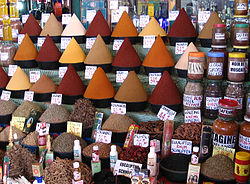
The spice trade developed throughout the Indian subcontinent and Middle East by 2000 BCE with cinnamon and black pepper, while in East Asia trade flourished with herbs and pepper. These early networks laid the foundation for millennia of commerce in aromatic goods.
Image source: Spice trade
1700 BCE
% complete
Cloves were used in Mesopotamia by 1700 BCE, demonstrating how far spices from Southeast Asia had traveled through ancient trade networks to reach the Near East.
Image source: Clove
1550 BCE
% complete
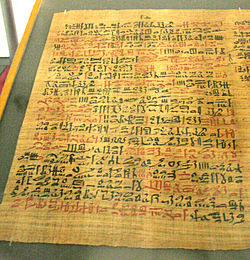
The Ebers Papyrus from early Egypt dating from 1550 BCE describes some eight hundred different herbal medicinal remedies and numerous medicinal procedures, showing the central role of plant-based substances in ancient medicine.
Image source: Ebers Papyrus
1000 BCE
% complete
By 1000 BCE, medical systems based on herbs could be found in China, Korea, and India, reflecting the growing importance of aromatic plants and spices in healing traditions across Asia.
Image source: Herbal medicine
600 BCE
% complete
Historians believe that nutmeg, which originates from the Banda Islands in Southeast Asia, was introduced to Europe in the 6th century BCE, marking one of the earliest arrivals of exotic Eastern spices on the continent.
Image source: Nutmeg
1 CE
% complete
The Romans had cloves in the 1st century CE, as Pliny the Elder wrote about them, documenting the presence of these prized Moluccan spices in the Roman world.
Image source: Pliny the Elder
700 - 1500
% complete
From the 8th until the 15th century, the Republic of Venice held a monopoly on the spice trade with the Middle East, using this position to dominate the neighbouring Italian maritime republics and city-states.
Image source: Republic of Venice
1100
% complete
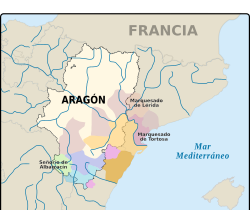
An example of the European aristocracy's demand for spice comes from the King of Aragon, who invested substantial resources into importing spices to Spain in the 12th century, reflecting the prestige attached to these luxury goods.
Image source: Kingdom of Aragon
1400
% complete
Spices have always been comparatively expensive: in 15th-century Oxford, a whole pig cost about the same as a pound of the cheapest spice, pepper, illustrating the extraordinary value placed on even common spices.
Image source: Black pepper
1400 - 1600
% complete
Another source of competition in the spice trade during the 15th and 16th centuries was the Ragusans from the maritime republic of Dubrovnik in southern Croatia, who challenged established powers in Mediterranean commerce.
Image source: Dubrovnik
1499
% complete
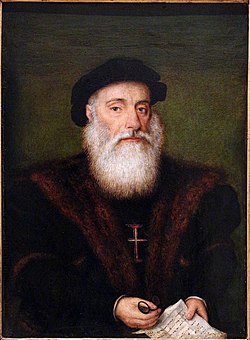
The control of trade routes and the spice-producing regions were the main reasons that Portuguese navigator Vasco da Gama sailed to India in 1499, opening a direct sea route from Europe to Asia.
Image source: Vasco da Gama
1506
% complete
In 1506, Afonso de Albuquerque took the island of Socotra at the mouth of the Red Sea, a strategic move in Portugal's campaign to control the sea routes carrying spices between Asia and Europe.
Image source: Afonso de Albuquerque
1507
% complete
In 1507, Afonso de Albuquerque captured Ormuz in the Persian Gulf, further tightening Portuguese control over the maritime chokepoints through which the spice trade flowed.
1510
% complete
Since becoming the viceroy of the Indies, Afonso de Albuquerque took Goa in India in 1510, establishing a key Portuguese base in the heart of the spice-producing region.
Image source: Goa
1511
% complete
In 1511, Afonso de Albuquerque took Malacca on the Malay Peninsula, securing control of the straits through which much of the spice trade of Southeast Asia passed.
Image source: Capture of Malacca (1511)
1500
% complete
Contrary to the myth that spices were used to preserve food, Cristoforo di Messisbugo suggested in the 16th century that pepper may actually speed up spoilage, and cooks typically added spices toward the end of cooking, where they could have no preservative effect whatsoever.
Image source: Cristoforo di Messisbugo
1800 - 1900
% complete
Developments in global commerce kept the spice trade, with the Americas as a latecomer contributing their new seasonings, profitable well into the 19th century.
2007 - 2009
% complete
A study by the Food and Drug Administration of shipments of spices to the United States during fiscal years 2007–2009 showed about 7% of the shipments were contaminated by Salmonella bacteria, some of it antibiotic-resistant.
Image source: Food and Drug Administration
2019
% complete
A 2019 review paper found that most claimed health benefits of spices were not supported by clinical evidence, although it noted that polyphenols found in spices may be beneficial.
Image source: Spice
1933
% complete
Redgrove (1933) offered a more specific definition of the biological source of spices than the OED, identifying them as the root, rhizome, flower, fruit, seed and bark when they are dried, in contrast with herbaceous parts which constitute herbs.
1969
% complete
James Innes Miller published his influential work in 1969, contributing to the scholarly study of the ancient spice trade and its role in classical history.
2000
% complete
Andrew Dalby published his work in 2000, adding to the modern historical literature on spices and their cultural significance across civilizations.
Image source: Andrew Dalby
2004
% complete
Jack Turner published his study of spices in 2004, exploring their history and the powerful allure they held for societies throughout the ages.
2005
% complete
Johannes Seidemann published his reference work on spices in 2005, providing a comprehensive resource for the study of spice sources and uses.
Image source: Allium ursinum
2006
% complete
Timothy Morton published his work in 2006, contributing to contemporary scholarship that engages with the cultural and literary dimensions of spices and consumption.
Image source: Timothy Morton
2008
% complete
Paul Freedman published his work in 2008, examining the role of spices in medieval cuisine and the European desire for exotic flavors.
Image source: Paul Freedman
2009
% complete
Fred Czarra published his book on spices in 2009, adding a global-history perspective to the literature on the spice trade and its impact on world history.
Image source: Spice
Or browse the full history timeline directory, with more than 2,000 topics.
This History of Spices timeline was generated with the help of AI, using information found on the internet.
We work hard to keep these timelines accurate, but mistakes do get through. If you spot one, email us at [email protected] and we'll fix it for future visitors.
Generate yours with AI or build it from scratch, for free.
Export your timeline, add your own events, edit or remove AI-generated events, and much more
No credit card required.
Cancel anytime.
Cancel anytime.
You can create an unlimited number of timelines with up to 10 events on each one, customize how they look, export them to PDF, PNG, PowerPoint, CSV, and Excel, and share them with a link. Paid plans raise the event limit and add features like spreadsheet imports and collaborators.
Yes. You can cancel your subscription from your account page at any time, and you will not be charged again. Your subscription stays active for the rest of the period you already paid for.
Yes. We will email you a reminder before the annual renewal, and we will also email you a receipt.
Yes. You can email us within 15 days of any payment, and we will issue you a full refund.
Check out our pricing docs or send us an email anytime: [email protected].