-
Use Cases
-
Resources
-
Pricing
Zambia's history spans thousands of years, from early hunter-gatherer societies and Bantu migrations through the colonial era of Northern Rhodesia under British rule, to its peaceful transition to independence led by Kenneth Kaunda in 1964 and its evolution as a multiparty democracy rich in copper resources. More Less
300 CE
% complete
According to recent scholarship by Nicholas Katanekwa, the earliest Bantu people in Zambia were the 'New Kalundu' culture, arriving from the west along the Zambezi valley from the fourth century CE.
Image source: History of Zambia
1300
% complete
From early Bantu communities arose the Luba Kingdom in the 14th century, a powerful Central African state whose political model would influence neighboring peoples, including the Lunda of present-day Zambia.
Image source: Luba Empire
1400 - 1699
% complete
The Mutapa Empire ruled territory between the Zambezi and Limpopo rivers, in what is now Zambia, Zimbabwe and Mozambique, from the 14th to the 17th century.
Image source: Kingdom of Mutapa
1480
% complete
In 1480 the Maravi Empire was founded by the Kalonga (paramount chief of the Maravi) from the Phiri clan, one of the main clans with the others being Banda, Mwale and Nkhoma.
Image source: Maravi
1500
% complete
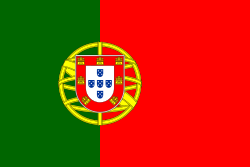
African traders were later joined by the Portuguese in the 16th century, expanding commerce in the region and linking inland societies to coastal trade networks.
Image source: Portuguese Mozambique
1600
% complete
According to Lunda genesis myths, a Luba hunter named Chibinda Ilunga, son of Ilunga Mbidi Kiluwe, introduced the Luba model of statecraft to the Lunda around 1600 when he married a local Lunda princess named Lueji and was granted control of her kingdom.
Image source: Lunda people
1750
% complete
At the end of the 18th century, some of the Mbunda migrated to Barotseland, Mongu, upon the migration of among others, the Ciyengele.
1875
% complete
By the late 19th century, most of the various peoples of Zambia were established in their current areas, setting the demographic pattern of the modern country.
1888
% complete
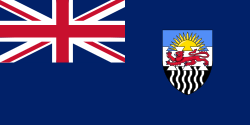
Northern Rhodesia became a British sphere of influence in the present-day region of Zambia in 1888, marking the start of formal British imperial interest in the territory.
Image source: Northern Rhodesia
1888
% complete
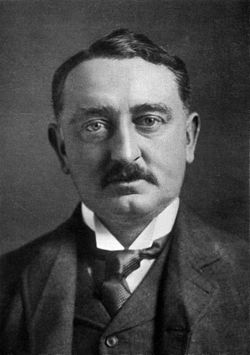
In 1888, Cecil Rhodes, who was spearheading British commercial and political interests in Central Africa, obtained mineral rights concessions from local chiefs, opening the way for British control over the region.
Image source: Cecil Rhodes
1895
% complete
The discovery of copper was due partly to an American prospector, Frederick Russell Burnham, who in 1895 led and oversaw the massive Northern Territories (BSA) Exploration Co., surveying the region's mineral wealth.
Image source: Frederick Russell Burnham
1923
% complete
As a result, Southern Rhodesia was annexed formally and granted self-government in 1923, becoming a self-governing British colony while Northern Rhodesia followed a different path.
Image source: Southern Rhodesia
1923
% complete
In 1923 the British government decided not to renew the British South Africa Company's charter, ending company rule over the Rhodesias and prompting direct colonial administration.
Image source: British South Africa Company
1924
% complete
After negotiations, the administration of Northern Rhodesia was transferred to the British Colonial Office in 1924 as a protectorate, with Livingstone as its capital. Northern Rhodesia was officially proclaimed a British protectorate in 1924.
1928
% complete
In 1928, enormous copper deposits were discovered in the region which then became known as the Copperbelt, transforming the colony's economy.
Image source: Copperbelt
1935
% complete
The capital of Northern Rhodesia was transferred from Livingstone to the more central Lusaka in 1935, reflecting the growing importance of the railway line and Copperbelt region.
Image source: Lusaka
1935
% complete
The poor safety record and increased taxes triggered the African mineworkers' Copperbelt strike in 1935, an early expression of labor militancy in the mining towns.
Image source: 1935 Copperbelt strike
1938
% complete
By 1938, the country produced 13% of the world's copper extraction, making Northern Rhodesia one of the most important copper producers globally.
1940
% complete
During the Second World War, white miners went out on strike in 1940; realizing the importance of their products for the war, they demanded higher salaries.
1953 - Dec 31, 1963
% complete
In 1953, both Rhodesias were joined with Nyasaland (now Malawi) to form the Central African Federation, an unpopular arrangement for many Africans that fueled nationalist movements until it was dissolved at the end of 1963.
Image source: Federation of Rhodesia and Nyasaland
1960
% complete
In 1960, the British prime minister, Harold Macmillan, declared that the age of colonial rule in Africa was ending, signaling Britain's acceptance of African independence movements.
Image source: Wind of Change (speech)
Oct 1962 - Dec 1962
% complete
A two-stage election held in October and December 1962 resulted in an African majority in the legislative council and an uneasy coalition between the two African nationalist parties.
Dec 31, 1963
% complete
Finally, on 31 December 1963, the federation was dissolved, allowing Northern Rhodesia to proceed toward full independence as a sovereign state.
Oct 24, 1964
% complete
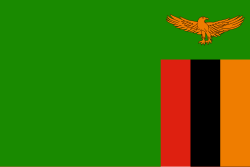
On 24 October 1964, Northern Rhodesia became the independent Republic of Zambia, ending British colonial rule and beginning the presidency of Kenneth Kaunda. The Republic of Zambia was formed out of Northern Rhodesia on 23 October 1964, with independence celebrated on 24 October.
Image source: Zambia
1968
% complete
In 1968 Kenneth Kaunda was re-elected as president, consolidating his leadership of the newly independent nation.
Image source: Kenneth Kaunda
1970 - 1973
% complete
Kenneth Kaunda served as chairman of the Non-Aligned Movement from 1970 to 1973, positioning Zambia as a leading voice among developing nations.
1970
% complete
Internationally, Zambia was an active member of the Non-Aligned Movement (NAM), and hosted a summit in Lusaka in 1970, raising its diplomatic profile.
Image source: Non-Aligned Movement
Sep 3, 1978 - Feb 12, 1979
% complete
Rhodesian counterinsurgency operations extended into Zambia after ZIPRA rebels shot down two unarmed Vickers Viscount civilian airliners — Air Rhodesia Flight 825 on 3 September 1978 and Flight 827 on 12 February 1979 — using Soviet-supplied SA-7 missiles.
Image source: Air Rhodesia Flight 825
Oct 1978
% complete
In retaliation for the shooting down of Flight 825, the Rhodesian Air Force attacked the ZIPRA guerrilla base at Westlands farm near Lusaka in October 1978, warning Zambian forces by radio not to interfere.
1972 - 1973
% complete
In 1972 all political parties except UNIP were banned, formalized in a new constitution adopted in 1973, ushering in single-party rule under Kenneth Kaunda.
1973 - 1988
% complete
Under one-party rule, Kaunda was re-elected unopposed with a yes or no vote in 1973, 1978, 1983 and 1988.
1975 - 1990
% complete
Between 1975 and 1990 Zambia's economy dropped by approximately 30%, driven largely by declining copper prices and mounting debt.
1977
% complete
Chisembele later rejoined the Cabinet as Minister for Eastern Province, and in 1977 he was transferred in the same position to the Copperbelt Province, where the political situation was tense ahead of the forthcoming general elections.
1978
% complete
Simon Kapwepwe and Harry Nkumbula challenged the resultant 1978 election of President Kaunda in the High Court, but their action was unsuccessful.
1981
% complete
Several strikes hit the country in 1981 as economic hardship deepened under the one-party state.
1986 - 1987
% complete
In 1986 and 1987, protests arose again in Lusaka and the Copperbelt, reflecting growing discontent with austerity measures and economic decline.
1990
% complete
Riots over rising food prices erupted in 1990, in which at least 30 people were killed, intensifying pressure on Kaunda's government to reform.
1990
% complete
An attempted military takeover occurred in 1990, but the Zambian coup d'état attempt failed, further weakening the one-party regime's grip on power.
1991
% complete
After a new constitution had been drafted, elections were held in 1991. When one-party rule was abolished, many expected a more democratic future for Zambia.
Image source: 1991 Zambian general election
1993
% complete
In 1993, the government-owned Times of Zambia reported a story about a secret UNIP plan to take control of government by unconstitutional means, called the 'Zero Option Plan', leading to a state of emergency and tensions between government and opposition.
1996
% complete
Prior to the 1996 elections, UNIP formed an alliance with six other opposition parties to challenge the ruling MMD.
Image source: 1996 Zambian general election
1997 - Jun 1998
% complete
In 1997 matters escalated when soldiers attempted a coup against President Chiluba. Former president Kenneth Kaunda was detained amid the crackdown and released in June the following year. Fifty-four of the soldiers who took part in the coup were convicted and sentenced to death.
2001
% complete
Prior to the 2001 elections, Frederick Chiluba tried to change the constitution to allow him to run for a third term, but he stood down after huge public protests.
Image source: Frederick Chiluba
2003
% complete
The death sentences of the convicted soldiers were appealed to Zambia's supreme court in 2003, which commuted the sentence for ten soldiers but upheld the death sentence for the other 44.
2004
% complete
In 2004, Zambia's president Levy Mwanawasa commuted the death sentence for 22 of the coup plotters and released 14 of them as having served their prison sentence.
Image source: Levy Mwanawasa
2008
% complete
President Levy Mwanawasa died in office in 2008, becoming the first Zambian leader to die in office. Rupiah Banda served as president after his death from 2008 to 2011.
Image source: Rupiah Banda
2011 - Oct 28, 2014
% complete
Rupiah Banda lost the election to Michael Sata in 2011. From 2011 to 2014 Sata served as president of Zambia until he died on 28 October 2014, the second Zambian leader to die in office.
Image source: Michael Sata
Jan 24, 2015
% complete
On 24 January 2015, it was announced that Edgar Chagwa Lungu had won the election to become the 6th President of Zambia in a tightly contested race.
Image source: Edgar Lungu
Aug 2016
% complete
In the August 2016 Zambian general election, president Edgar Lungu won re-election narrowly in the first round of voting.
Image source: 2016 Zambian general election
Aug 2021
% complete
In the August 2021 presidential election, opposition leader Hakainde Hichilema defeated incumbent President Edgar Lungu by a landslide, marking a major political transition.
Image source: 2021 Zambian general election
Aug 24, 2021
% complete
On 24 August 2021, Hakainde Hichilema was sworn in as the new President of Zambia, beginning a new chapter in the country's democratic history.
Image source: Hakainde Hichilema
Or browse the full history timeline directory, with more than 2,000 topics.
This History of Zambia timeline was generated with the help of AI, using information found on the internet.
We work hard to keep these timelines accurate, but mistakes do get through. If you spot one, email us at [email protected] and we'll fix it for future visitors.
Generate yours with AI or build it from scratch, for free.
Export your timeline, add your own events, edit or remove AI-generated events, and much more
No credit card required.
Cancel anytime.
Cancel anytime.
You can create an unlimited number of timelines with up to 10 events on each one, customize how they look, export them to PDF, PNG, PowerPoint, CSV, and Excel, and share them with a link. Paid plans raise the event limit and add features like spreadsheet imports and collaborators.
Yes. You can cancel your subscription from your account page at any time, and you will not be charged again. Your subscription stays active for the rest of the period you already paid for.
Yes. We will email you a reminder before the annual renewal, and we will also email you a receipt.
Yes. You can email us within 15 days of any payment, and we will issue you a full refund.
Check out our pricing docs or send us an email anytime: [email protected].