-
Resources
-
Pricing
Explore the timeline of Linux, an open-source operating system that was created in 1991 and has become a popular alternative to proprietary systems. More Less
Build a timeline like this one in minutes, for free. Start Yours →
Part of our collection of invention and technology timelines.
1980
Onyx Systems begins selling Unix workstations, contributing to the early development and adoption of Unix-based systems.
Image source: Onyx Systems
1982
Sun Microsystems, founded as a spin-off of a student project at Stanford University, starts selling Unix-based desktop workstations, further popularizing Unix.
Image source: Sun Microsystems
1983
The GNU Project, initiated by Richard Stallman, aims to develop a complete Unix-compatible software system composed entirely of free software.
Image source: GNU Project
1985
Richard Stallman starts the Free Software Foundation (FSF) and writes the GNU General Public License (GPL), a widely used free software license.
1987
Andrew S. Tanenbaum releases MINIX, a minimal Unix-like operating system designed for educational purposes.
Image source: Minix
1990
Linus Torvalds enrolls in a Unix course, sparking his interest in operating systems and eventually leading to the development of Linux.
Jul 3, 1991
Linus Torvalds attempts to obtain a digital copy of the POSIX standards documentation, which inspires him to create his own operating system.
Image source: Linus Torvalds
Sep 1991
The files of the Linux kernel are uploaded to the FTP server (ftp.funet.fi) of FUNET, making them accessible for development and collaboration.
Sep 17, 1991
Linus Torvalds releases the Linux kernel, an open-source Unix-like operating system, marking the beginning of the Linux project.
1997
The film Titanic, released in 1997, becomes the first major film to be produced using Linux servers.
Image source: Linux

1997
Linus Torvalds and affected organizations settle a trademark dispute, resulting in the Linux trademark being assigned to Torvalds.
2001
A study finds that Red Hat Linux 7.1 contains approximately 30 million source lines of code, representing a significant effort in software development.
Image source: Red Hat Linux
2002 - Present
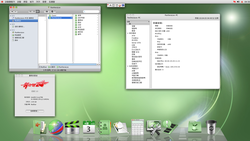
North Korea develops the Red Star OS, based on a version of Fedora Linux, for use in their country.
Image source: Red Star OS
2003
The LLVM project is released, providing an alternative cross-platform open-source compiler for many programming languages.
Image source: LLVM
2007
A study estimates that Debian version 4.0 contains close to 283 million source lines of code, highlighting the scale of development and collaboration in the Debian project.
Image source: Debian
May 2011
Linux distributions, such as Ubuntu, contain GNU components, with approximately 8% to 13% of the lines of code in Ubuntu being attributed to GNU.
Image source: Ubuntu
2014
An initiative is launched to automatically collect a database of all tested hardware configurations, aiding compatibility and hardware support in Linux.
2017
Analysis shows that over 85% of the Linux kernel code is developed by paid developers, with the remaining contributions coming from unpaid developers.
2022
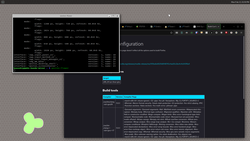
Wayland, a display server protocol intended as a replacement for X11, gains relatively wide adoption in the Linux ecosystem.
Image source: Wayland (protocol)
1 Jan 2007 - 31 Mar 2007
Linux holds 12.7% of the overall server market, based on the number of Linux servers sold by various companies.
2013
Android, based on Linux, is responsible for over 60% of tablet sales, solidifying its dominance in the tablet market.
May 2015
Linux holds a dominant market share of 96.55% in web servers, with Windows and FreeBSD accounting for 1.73% and 1.72% respectively.
May 2022
Linux, including Android, achieves the largest installed base among all general-purpose operating systems, primarily due to the dominance of Android on smartphones.
May 2022
Linux has an estimated market share of around 2.5% on desktop computers, while Windows and macOS dominate with approximately 75.5% and 14.9% respectively.
Apr 2023
Android holds a market share of 68.61% of mobile devices accessing websites, making it the most widely used mobile operating system.
Image source: Android (operating system)
2027
The Linux operating system market size is projected to grow by 19.2% and reach $15.64 billion by 2027, compared to $3.89 billion in 2019.
Nov 2017
Linux becomes the leading operating system on servers, mainframes, and supercomputers, with over 96.4% of the top 1 million web servers' operating systems being Linux.
Nov 2022
Linux-based Chromebooks, running ChromeOS, dominate the US K-12 education market, capturing nearly 20% of sub-$300 notebook sales.
Image source: Chromebook
Build a timeline like this one in minutes, for free. Start Yours →
Or browse the full history timeline directory, with more than 2,500 topics.
This Linux timeline was generated with the help of AI, using information found on the internet.
We work hard to keep these timelines accurate, but mistakes do get through. If you spot one, email us at [email protected] and we'll fix it for future visitors.
Generate yours with AI or build it from scratch, for free.
Export your timeline, add your own events, edit or remove AI-generated events, and much more
No credit card required.
15-day money-back guarantee.
You can create an unlimited number of timelines with up to 10 events on each one, customize how they look, export them to PDF, PNG, PowerPoint, CSV, and Excel, and share them with a link. Timelines made with Timeline Maker AI keep every event the generator created, and you can add up to 5 events of your own. Paid plans remove the event limit, add spreadsheet imports and hide Preceden's branding, and the higher-priced plan also adds collaborators, a custom logo and a custom domain.
Yes. You can cancel your subscription from your account page at any time, and you will not be charged again. Your subscription stays active for the rest of the period you already paid for.
Yes. We email you a reminder 15 days before your annual renewal, and we email you a receipt after every payment.
Yes. You can email us within 15 days of any payment, and we will issue you a full refund.
Check out our pricing docs or send us an email anytime: [email protected].