-
Use Cases
-
Resources
-
Pricing
Magna Carta is a royal charter of rights agreed to by King John of England at Runnymede on June 15, 1215. Sealed under pressure from rebellious barons, it established the principle that the king was subject to the law rather than above it. Although many of its original clauses were later annulled or reissued in revised versions (notably in 1216, 1217, and 1225), Magna Carta became a foundational symbol of liberty, influencing documents such as the English Bill of Rights, the U.S. Constitution, and the Universal Declaration of Human Rights. More Less
Dec 19, 1154
% complete
Henry II became King of England and expanded royal authority through legal and administrative reforms. His reign established the powerful Angevin monarchy whose later abuses, under his son John, would provoke the baronial revolt that produced Magna Carta.
Image source: Henry II of England
Jul 6, 1189
% complete
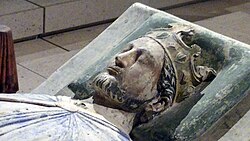
Richard I succeeded his father Henry II. Constantly absent on crusade and captive abroad, he imposed heavy taxation on England to fund his wars, deepening resentment among the baronage over the crown's financial demands.
Image source: Richard I of England
May 27, 1199
% complete
John was crowned King of England after Richard's death. His reign would be marked by military failures, heavy taxation, and conflicts with the nobility and the Church that culminated in the crisis leading to Magna Carta.
Image source: John, King of England
1204
% complete
King John lost the Duchy of Normandy to Philip II of France in 1204, stripping the English crown of vital continental lands. The defeat forced John to raise enormous sums for campaigns to recover his territories, intensifying taxation of his barons.
Image source: Normans
Mar 23, 1208
% complete
After a dispute with Pope Innocent III over the appointment of the Archbishop of Canterbury, England was placed under papal interdict, suspending most church services. John retaliated by seizing church revenues, worsening tensions between crown, clergy, and Rome.
Image source: Pope Innocent III
1209
% complete
Pope Innocent III formally excommunicated King John in 1209 for his defiance over ecclesiastical appointments and seizure of Church property. The sentence isolated John politically and encouraged domestic opposition to his rule.
May 15, 1213
% complete
Facing threatened invasion from France, John submitted to Pope Innocent III and accepted Stephen Langton as Archbishop of Canterbury. He surrendered England as a papal fief and promised an annual tribute, securing papal protection at the cost of royal prestige.
Jul 27, 1214
% complete
John's allies were decisively defeated by Philip II of France at Bouvines, ending John's hopes of recovering Normandy. The humiliating failure destroyed his credibility, drained the treasury, and pushed the English barons toward open rebellion.
Image source: Battle of Bouvines
Jan 1215
% complete
A group of northern and eastern barons refused to pay scutage and formally renounced their homage to King John, citing his repeated violations of feudal custom. This act of open defiance set England on the path to civil war.
Image source: First Barons' War
May 17, 1215
% complete
Rebel barons captured London through the city gates opened by sympathizers, gaining a crucial strategic and financial stronghold. With the capital in rebel hands and support growing, King John was compelled to negotiate.
Jun 10, 1215 - Jun 14, 1215
% complete
King John met the rebel barons at Runnymede meadow beside the Thames near Windsor. Over several days of tense negotiation, mediated in part by Archbishop Stephen Langton, the parties drafted the Articles of Barons outlining concessions the king would seal.
Image source: Magna Carta
Jun 15, 1215
% complete
King John affixed his Great Seal to Magna Carta at Runnymede, agreeing to 63 clauses limiting royal power. The charter protected baronial rights, restricted arbitrary taxation, established due process before the law, and created a council of twenty-five barons to enforce its terms.
Jun 15, 1215
% complete
Clause 39 of Magna Carta declared that no free man could be imprisoned, outlawed, or deprived of life, liberty, or property except by lawful judgment of his peers or by the law of the land. Clause 40 added that justice would not be sold, delayed, or denied — principles that remain foundations of constitutional law.
Jun 19, 1215
% complete
Following the sealing of the charter, scribes produced numerous copies that were dispatched to cathedrals and castles across England for public proclamation. Four copies from this original distribution survive today, held at the British Library, Lincoln Cathedral, and Salisbury Cathedral.
Aug 24, 1215
% complete
Pope Innocent III annulled Magna Carta by the papal bull 'Quia Emptores Terrarum,' declaring it invalid because John had sealed it under duress and had acted against papal interests as a vassal king. The annulment plunged England back into conflict.
Oct 1215
% complete
With the charter annulled, open war broke out between King John and the rebel barons, who offered the throne to Prince Louis of France. The civil war devastated much of eastern and southern England over the following two years.
Oct 18, 1216
% complete
King John died of dysentery at Newark Castle amid the civil war, leaving his nine-year-old son Henry as heir. His death removed the immediate cause of baronial hostility and opened the way for reconciliation through reissued charters.
Oct 28, 1216
% complete
The boy-king Henry III was crowned at Gloucester with the kingdom still at war. Government fell to regents led by William Marshal, Earl of Pembroke, who sought to end the rebellion by reviving Magna Carta in modified form.
Image source: Henry III of England
Nov 12, 1216
% complete
The regency government issued a revised version of Magna Carta in Henry III's name, removing clauses concerning the council of twenty-five barons and other provisions deemed too radical. The reissue helped win over waverers during the civil war.
May 20, 1217
% complete
Royalist forces under William Marshal decisively defeated Prince Louis's army at the Battle of Lincoln. Combined with a naval defeat off Sandwich, the victory forced Louis to abandon his claim to the English throne and sue for peace.
Image source: Battle of Lincoln (1217)
Sep 11, 1217
% complete
Prince Louis renounced his claim to the English crown and withdrew to France under the Treaty of Lambeth. The settlement restored peace and allowed the minority government to consolidate the reissued Magna Carta as settled law.
Nov 6, 1217
% complete
After the war ended, a second reissue separated forest regulations into a companion document, the Charter of the Forest, which limited royal encroachment on woodland. Together the two charters confirmed key liberties won in 1215.
Feb 11, 1225
% complete
Henry III personally reissued Magna Carta in exchange for a grant of taxation, giving the charter renewed authority. This definitive 1225 version became the text permanently entered into statute rolls and the foundation for all later confirmations.
Oct 10, 1297
% complete
Facing resistance to heavy war taxation, Edward I issued the Confirmation of Charters, reaffirming Magna Carta and the Charter of the Forest. A copy of the 1297 confirmation remains legally active in Australian law and is displayed in Parliament House, Canberra.
Image source: Magna Carta
1341
% complete
During the fourteenth century, Parliaments repeatedly cited Magna Carta in statutes and petitions, using clause 39's guarantee of due process as a basis for expanding parliamentary oversight of justice and taxation.
Image source: The Statutes of the Realm
Jun 7, 1628
% complete
Parliament forced Charles I to accept the Petition of Right, invoking Magna Carta against forced loans, imprisonment without cause, billeting of soldiers, and martial law. Sir Edward Coke championed the charter as a bulwark against absolutism.
Image source: Petition of Right
1642 - 1651
% complete
During the conflict between Parliament and Charles I, both sides appealed to Magna Carta as a symbol of ancient liberties against arbitrary royal power, cementing the charter's place in English political mythology and radical thought.
Image source: English Civil War
Sep 17, 1787
% complete
The framers of the United States Constitution drew on Magna Carta's principles of limited government, due process, and rule of law. Its legacy is visible in the Bill of Rights and in state constitutions across America.
Image source: Constitution of the United States
Dec 15, 1791
% complete
The Fifth Amendment to the U.S. Constitution, ratified in 1791, guaranteed that no person shall be deprived of life, liberty, or property without due process of law — language directly descended from Magna Carta's clause 39.
Image source: Fifth Amendment to the United States Constitution
Dec 10, 1948
% complete
Eleanor Roosevelt and the UN commission drew inspiration from Magna Carta when drafting the Universal Declaration of Human Rights, calling it the first international expression of rights owed to all people regardless of status.
Image source: Universal Declaration of Human Rights
Jun 15, 2015
% complete
Britain marked eight centuries since the sealing of Magna Carta with celebrations at Runnymede attended by Queen Elizabeth II, exhibitions of surviving copies, and global reflection on the charter's enduring role in constitutional democracy and human rights.
Or browse the full history timeline directory, with more than 2,000 topics.
This Magna Carta timeline was generated with the help of AI, using information found on the internet.
We work hard to keep these timelines accurate, but mistakes do get through. If you spot one, email us at [email protected] and we'll fix it for future visitors.
Generate yours with AI or build it from scratch, for free.
Export your timeline, add your own events, edit or remove AI-generated events, and much more
No credit card required.
Cancel anytime.
Cancel anytime.
You can create an unlimited number of timelines with up to 10 events on each one, customize how they look, export them to PDF, PNG, PowerPoint, CSV, and Excel, and share them with a link. Paid plans raise the event limit and add features like spreadsheet imports and collaborators.
Yes. You can cancel your subscription from your account page at any time, and you will not be charged again. Your subscription stays active for the rest of the period you already paid for.
Yes. We will email you a reminder before the annual renewal, and we will also email you a receipt.
Yes. You can email us within 15 days of any payment, and we will issue you a full refund.
Check out our pricing docs or send us an email anytime: [email protected].