-
Use Cases
-
Resources
-
Pricing
The Norman Conquest was the 11th-century invasion and occupation of England by Norman, Breton, Flemish, and French forces led by Duke William II of Normandy. Culminating in the decisive Battle of Hastings in 1066, it overthrew Anglo-Saxon rule, crowned William as King of England, and profoundly reshaped English language, law, architecture, and aristocracy. More Less
Jan 1, 1066 - Dec 31, 1071
% complete
William the Conqueror never developed a working knowledge of English, and for centuries afterwards English was not well understood by the nobility, reshaping the linguistic landscape of elite England.
Image source: Norman Conquest
Jan 1, 1066 - Dec 31, 1071
% complete
Several marriages are attested between Norman men and English women during the years before 1100, but such marriages were uncommon. Within a century of the invasion, intermarriage between the native English and the Norman immigrants had become common.
Jan 1, 1066 - Dec 31, 1071
% complete
A colossal programme of expropriation transferred land from English to Norman hands; by 1086 only about 5 per cent of land in England south of the Tees was left in English hands. After 1075 all earldoms were held by Normans, and Englishmen were only occasionally appointed as sheriffs.
Jan 1, 1066 - Dec 31, 1071
% complete
An estimated 8000 Normans and other continentals settled in England as a result of the conquest, although exact figures cannot be established. They were few in number compared to the native English population; historians estimate the number of Norman landholders at around 8000.
Dec 25, 1066
% complete
With his rivals gone after Hastings, William was acclaimed King of England on Christmas Day 1066, marking the beginning of Norman rule over the conquered kingdom.
Image source: William the Conqueror
Dec 25, 1066
% complete
William was crowned by Ealdred on 25 December 1066, in Westminster Abbey, formally establishing him as King of England following his victory at Hastings.
Image source: Coronations of William the Conqueror and Matilda
Mar 1, 1067
% complete
William remained in England until March 1067, when he returned to Normandy with English prisoners, including Stigand, Morcar, Edwin, Edgar Ætheling, and Waltheof.
Nov 1, 1067
% complete
The unrest in England forced William to return to England at the end of 1067 to reassert his authority over the unsettled kingdom.
Sep 11, 1069
% complete
The see of York had become vacant following the death of Ealdred in September 1069, leaving a key ecclesiastical post unfilled during a time of crisis.
Image source: Ealdred (archbishop of York)
Dec 1, 1069 - Mar 31, 1070
% complete
William bought off the Danes, who agreed to leave England in the spring, removing a major external threat to his rule during the winter of 1069–70.
Image source: Harrying of the North
Dec 25, 1069
% complete
As a symbol of his renewed authority over the north, William ceremonially wore his crown at York on Christmas Day 1069 amid the suppression of the northern rebellions.
Jan 1, 1070
% complete
In early 1070, having secured the submission of Waltheof and Gospatric, William consolidated control over the remaining English magnates of the north.
Feb 1, 1070
% complete
Having secured the north, William returned to Mercia, where he based himself at Chester and crushed all remaining resistance in the area before returning to the south.
Jan 1, 1066
% complete
In early 1066, Harold's exiled brother, Tostig Godwinson, raided southeastern England with a fleet he had recruited in Flanders, later joined by other ships from Orkney, adding to the instability surrounding the English succession.
Jan 5, 1066
% complete
King Edward died at the beginning of January 1066. The lack of a clear heir led to a disputed succession in which several contenders laid claim to the throne of England.
Image source: Edward the Confessor
Jan 6, 1066
% complete
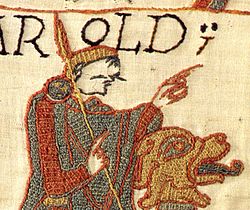
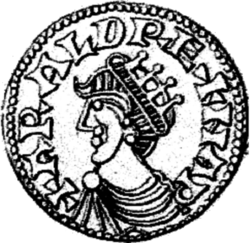
Edward was succeeded by his brother-in-law Harold Godwinson, whose accession was disputed by other claimants including Duke William of Normandy and the Norwegian king Harald Hardrada.
Image source: Harold Godwinson
Sep 1, 1066
% complete
Another claimant for the throne, the Norwegian king Harald Hardrada, invaded northern England in September 1066, opening a second front against Harold Godwinson's new regime.
Image source: Harald Hardrada
Sep 20, 1066
% complete
Hardrada was victorious at the Battle of Fulford on 20 September 1066, defeating the northern English earls. Their forces were devastated and unable to participate in the rest of the campaigns of 1066, although the two earls survived the battle.
Image source: Battle of Fulford
Sep 25, 1066
% complete
Godwinson's army marched north and defeated and killed Harald Hardrada at the Battle of Stamford Bridge on 25 September 1066, eliminating one of his main rivals for the throne.
Image source: Battle of Stamford Bridge
Sep 28, 1066
% complete
The Norman Conquest was an 11th-century invasion by an army made up of thousands of Norman, French, Flemish, and Breton troops, all led by the Duke of Normandy, later styled William the Conqueror.
Oct 14, 1066
% complete
Modern historians have offered a range of estimates for the size of William's forces: 7000–8000 men, 1000–2000 of them cavalry; 10,000–12,000 men; 10,000 men, 3000 of them cavalry; or 7500 men.
Oct 14, 1066
% complete
Recent historians have suggested figures of between 5000 and 13,000 for Harold's army at Hastings, but most agree on a range of between 7000 and 8000 English troops.
Image source: Battle of Hastings
Oct 14, 1066
% complete
The battle began at about 9 am on 14 October 1066 and lasted all day, but while a broad outline is known, the events are obscured by contradictory accounts in the sources.
Oct 14, 1066
% complete
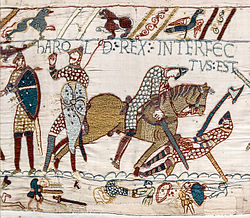
King Harold fell at the Battle of Hastings. The Bayeux Tapestry has been claimed to show Harold's death by an arrow to the eye, but this may be a later reworking of the tapestry to conform to 12th-century stories that Harold had died from an arrow wound to the head.
Jan 1, 1067
% complete
In 1067 rebels in Kent launched an unsuccessful attack on Dover Castle in combination with Eustace II of Boulogne, one of the first uprisings against Norman rule.
Jan 1, 1068
% complete
In 1068 William besieged rebels in Exeter, including Harold's mother Gytha, and after suffering heavy losses managed to negotiate the town's surrender.
Jan 28, 1069
% complete
Early in 1069 the newly installed Norman Earl of Northumbria, Robert de Comines, and several hundred soldiers accompanying him were massacred at Durham, igniting rebellion in the north.
Aug 15, 1069
% complete
In August or September 1069 a large fleet sent by Sweyn II of Denmark arrived off the coast of England, sparking a new wave of rebellions across the country.
Image source: Sweyn II of Denmark
Dec 1, 1069 - Mar 31, 1070
% complete
During the winter of 1069–70 William's forces systematically devastated Northumbria in the Harrying of the North, subduing all resistance through scorched-earth campaigns.
Jan 1, 1070
% complete
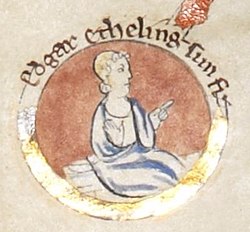
Early in 1070 William drove Edgar Ætheling and his remaining supporters back to Scotland, ending the last serious dynastic challenge based in England itself.
Image source: Edgar Ætheling
Jun 1, 1070
% complete
In 1070 Sweyn II arrived to take personal command of his fleet and renounced the earlier agreement to withdraw, sending troops into the Fens to join forces with English rebels led by Hereward the Wake, at that time based on the Isle of Ely.
Jan 1, 1071
% complete
After the departure of the Danes, the Fenland rebels remained at large, protected by the marshes, and early in 1071 there was a final outbreak of rebel activity in the area.
Image source: Hereward the Wake
Or browse the full history timeline directory, with more than 2,000 topics.
This Norman Conquest timeline was generated with the help of AI, using information found on the internet.
We work hard to keep these timelines accurate, but mistakes do get through. If you spot one, email us at [email protected] and we'll fix it for future visitors.
Generate yours with AI or build it from scratch, for free.
Export your timeline, add your own events, edit or remove AI-generated events, and much more
No credit card required.
Cancel anytime.
Cancel anytime.
You can create an unlimited number of timelines with up to 10 events on each one, customize how they look, export them to PDF, PNG, PowerPoint, CSV, and Excel, and share them with a link. Paid plans raise the event limit and add features like spreadsheet imports and collaborators.
Yes. You can cancel your subscription from your account page at any time, and you will not be charged again. Your subscription stays active for the rest of the period you already paid for.
Yes. We will email you a reminder before the annual renewal, and we will also email you a receipt.
Yes. You can email us within 15 days of any payment, and we will issue you a full refund.
Check out our pricing docs or send us an email anytime: [email protected].