-
Use Cases
-
Resources
-
Pricing
The Mexican Revolution was a major armed conflict that began in 1910 as a revolt against the long-standing dictatorship of Porfirio Díaz. Sparked by widespread inequality, land dispossession, and political repression, it involved iconic figures such as Francisco Madero, Emiliano Zapata, Pancho Villa, and Venustiano Carranza. The revolution transformed Mexico's political and social landscape, culminating in the 1917 Constitution, which introduced land reform, labor rights, and limits on church power. More Less
May 5, 1884
% complete
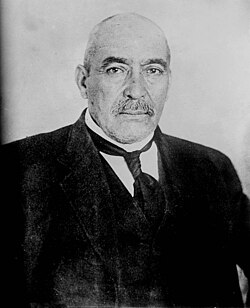
After a brief interlude under Manuel González, Díaz returned to the presidency in 1884 and would be continuously re-elected, suppressing opposition, controlling elections, and centralizing power while peasants lost communal lands to haciendas.
Image source: Porfiriato
Mar 1, 1908
% complete
In an interview with journalist James Creelman for Pearson's Magazine, President Díaz stated he would not seek re-election in 1910 and would welcome opposition parties. This sparked intense political activity as reformers believed democratic change was finally possible.
Image source: James Creelman
May 22, 1909
% complete
Coahuilan landowner Francisco I. Madero published 'The Presidential Succession of 1910' and founded the Anti-Reelectionist Party, campaigning against Díaz's endless re-elections on a platform of democracy and effective suffrage.
Image source: Francisco I. Madero
Jun 1, 1910
% complete
As Madero gained popular momentum, Díaz had him arrested on charges of sedition just before the June 1910 election. Held in San Luis Potosí, Madero was unable to campaign, and Díaz was declared the winner of another fraudulent contest.
Jul 4, 1910
% complete
With Madero jailed and widespread ballot manipulation, Porfirio Díaz was announced as winner of the 1910 presidential election, igniting outrage across Mexico and convincing Madero that only armed uprising could end the dictatorship.
Image source: 1910 Mexican general election
Oct 5, 1910
% complete
Having escaped to San Antonio, Texas, Madero issued the Plan de San Luis Potosí, declaring the 1910 election void, naming himself provisional president, and calling Mexicans to rise in arms on November 20, 1910, promising land restitution to dispossessed peasants.
Image source: Plan of San Luis Potosí
Nov 20, 1910
% complete
The date called for by the Plan de San Luis Potosí saw uprisings in Puebla, Chihuahua, and other states. Though initially scattered, the rebellion grew rapidly as leaders like Pascual Orozco and Pancho Villa won early victories against federal forces.
Image source: Mexican Revolution
May 7, 1911 - May 10, 1911
% complete
Insurgent forces under Pascual Orozco and Pancho Villa captured the strategic border city of Ciudad Juárez after fierce fighting. The victory was a decisive blow that shattered federal morale and made the fall of the Díaz regime inevitable.
Image source: Battle of Ciudad Juárez (1911)
Nov 28, 1911
% complete
Disillusioned by Madero's failure to deliver land reform, Emiliano Zapata denounced him in the Plan de Ayala, calling for the expropriation of large estates and return of lands to peasant communities. 'Tierra y Libertad' became the rallying cry of agrarian revolutionaries.
Image source: Plan of Ayala
Mar 3, 1912
% complete
Former ally Pascual Orozco rose against Madero over unmet demands and political slights, launching a major revolt in Chihuahua. Federal troops led by Victoriano Huerta eventually suppressed the rebellion by late 1912.
Image source: Pascual Orozco
Mar 26, 1913
% complete
Venustiano Carranza, governor of Coahuila, proclaimed the Plan de Guadalupe, refusing to recognize Huerta and calling for his overthrow. Carranza became First Chief of the Constitutionalist Army, drawing support from Obregón, Villa, and other commanders.
Image source: Plan of Guadalupe
Apr 21, 1914 - Nov 23, 1914
% complete
In response to the Tampico Affair, U.S. forces seized the port of Veracruz, intending to block German arms shipments to Huerta. The occupation inflamed Mexican nationalism and hastened diplomatic pressure that helped topple the dictator.
Image source: Battle of Veracruz (1914)
Jun 23, 1914
% complete
Pancho Villa's División del Norte delivered a crushing defeat to Huerta's federal army at Zacatecas, killing or capturing thousands. The bloodiest battle of the revolution left Huerta's position untenable.
Image source: Battle of Zacatecas (1914)
Nov 24, 1914
% complete
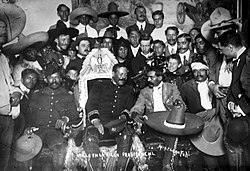
Forces of Pancho Villa and Emiliano Zapata entered Mexico City together, with photographs showing the two leaders side by side in the National Palace. Their alliance could not govern the country, however, and they withdrew within weeks.
Image source: Pancho Villa
Apr 6, 1915 - Apr 15, 1915
% complete
Alvaro Obregón's modern defensive warfare, using trenches, barbed wire, and machine guns, annihilated Villa's cavalry charges at Celaya. The decisive defeat broke the power of the División del Norte and secured Carranza's ascendancy.
Image source: Battle of Celaya
Mar 9, 1916
% complete
Enraged by U.S. recognition of Carranza, Pancho Villa attacked the border town of Columbus, New Mexico, killing civilians and soldiers. The raid prompted the United States to launch a punitive expedition into northern Mexico.
Image source: Battle of Columbus (1916)
Mar 15, 1916 - Feb 7, 1917
% complete
General John J. Pershing led roughly 5,000 American troops deep into Chihuahua to capture Villa. The eleven-month expedition failed to catch him but tested Mexican sovereignty, nearly sparking war between the two nations.
Image source: Pancho Villa Expedition
May 21, 1911 - May 25, 1911
% complete
Under the Treaty of Ciudad Juárez, Porfirio Díaz agreed to resign and go into exile, with Francisco León de la Barra serving as interim president pending new elections. After 35 years in power, Díaz sailed from Veracruz into exile in Paris, where he died in 1915.
Image source: Treaty of Ciudad Juárez
Oct 1, 1911
% complete
Francisco I. Madero won the October 1911 presidential election with overwhelming support and took office on November 6, becoming Mexico's first democratically elected leader in decades amid high hopes for reform.
Oct 16, 1912
% complete
Nephew of the former dictator, Félix Díaz launched a rebellion at Veracruz demanding the restoration of old-regime privileges. The poorly supported uprising failed, but Díaz survived and remained a persistent threat to the Madero government.
Feb 9, 1913 - Feb 19, 1913
% complete
A coup attempt by Félix Díaz and generals loyal to the old regime plunged Mexico City into ten days of shelling and street fighting. Thousands of civilians died as rebels bombarded the city center, setting the stage for Madero's overthrow.
Image source: Ten Tragic Days
Feb 18, 1913
% complete
General Victoriano Huerta secretly allied with Félix Díaz and U.S. Ambassador Henry Lane Wilson in the Pact of the Embassy. Huerta betrayed President Madero, arresting him along with Vice President Pino Suárez.
Feb 22, 1913
% complete
While being transferred to prison, President Madero and Vice President José María Pino Suárez were assassinated on orders attributed to Huerta's regime. The murders outraged the nation and united revolutionary factions against the usurper.
Feb 26, 1913
% complete
Victoriano Huerta assumed the presidency, establishing a brutal military dictatorship backed by conservative elites. His regime relied on repression, press censorship, and forced conscription, earning international condemnation.
Image source: Victoriano Huerta
Jul 15, 1914
% complete
Facing military collapse and international pressure, Huerta resigned and fled into exile aboard a German ship. He later attempted to return via the U.S. border in 1915 but was arrested and died in an American prison in January 1916.
Oct 1, 1914 - Nov 13, 1914
% complete
Revolutionary factions met at Aguascalientes to reconcile their differences and decide Mexico's future. The convention demanded Carranza's resignation, recognized Villista dominance, and deepened the split between Carrancistas and their former allies.
Image source: Convention of Aguascalientes
Oct 19, 1915
% complete
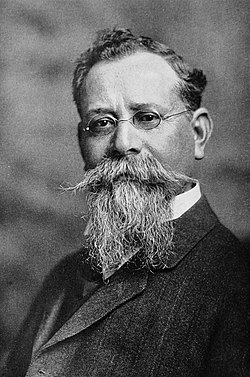
The United States formally extended diplomatic recognition to Carranza's de facto government, dealing a severe blow to Villa and Zapata, who lost access to arms supplies and international legitimacy.
Image source: Venustiano Carranza
Apr 10, 1919
% complete
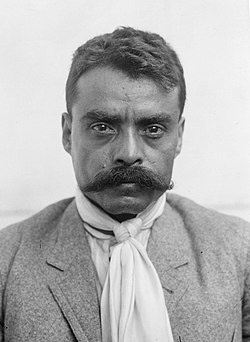
Carranza's agents lured Emiliano Zapata into an ambush at Hacienda de Chinameca in Morelos, where he was shot dead. The death of the iconic agrarian leader marked the decline of the southern revolutionary movement.
Image source: Emiliano Zapata
Apr 23, 1920 - May 21, 1920
% complete
When Carranza tried to impose a weak successor instead of Alvaro Obregón, Obregón launched the Agua Prieta revolt. Carranza fled toward Veracruz with the national treasury and was assassinated in a mountain village in Puebla on May 21, 1920.
Feb 5, 1917
% complete
A constituent congress convened by Carranza produced a new constitution at Querétaro. It incorporated radical social guarantees: Article 27 asserted national control over land and subsoil resources, and Article 123 established labor rights including the eight-hour day. It remains the foundation of Mexican law today.
Image source: Constitution of Mexico
Jun 1, 1920 - Dec 1, 1920
% complete
Following Carranza's death, Adolfo de la Huerta served as interim president, overseeing demobilization and reconciliation. Notably, he negotiated peace with Emiliano Zapata's successors in Morelos, ending years of fighting in the south.
Image source: Adolfo de la Huerta
Dec 1, 1920
% complete
Alvaro Obregón took office as president on December 1, 1920, marking the consolidation of the revolutionary state. Though sporadic revolts continued, historians generally consider this the end of the Revolution's principal military phase.
Image source: Álvaro Obregón
Or browse the full history timeline directory, with more than 2,000 topics.
This Mexican Revolution timeline was generated with the help of AI, using information found on the internet.
We work hard to keep these timelines accurate, but mistakes do get through. If you spot one, email us at [email protected] and we'll fix it for future visitors.
Generate yours with AI or build it from scratch, for free.
Export your timeline, add your own events, edit or remove AI-generated events, and much more
No credit card required.
Cancel anytime.
Cancel anytime.
You can create an unlimited number of timelines with up to 10 events on each one, customize how they look, export them to PDF, PNG, PowerPoint, CSV, and Excel, and share them with a link. Paid plans raise the event limit and add features like spreadsheet imports and collaborators.
Yes. You can cancel your subscription from your account page at any time, and you will not be charged again. Your subscription stays active for the rest of the period you already paid for.
Yes. We will email you a reminder before the annual renewal, and we will also email you a receipt.
Yes. You can email us within 15 days of any payment, and we will issue you a full refund.
Check out our pricing docs or send us an email anytime: [email protected].