-
Use Cases
-
Resources
-
Pricing
The Ming Dynasty was a major imperial dynasty of China that ruled from 1368 to 1644. Founded by Zhu Yuanzhang, a peasant rebel leader who became the Hongwu Emperor, it restored Han Chinese rule after the Mongol-led Yuan Dynasty. The Ming era is renowned for its cultural achievements, including blue-and-white porcelain, the construction of much of the Great Wall as seen today, and the Forbidden City in Beijing. It is also known for Zheng He's maritime expeditions, economic expansion, and eventual decline due to internal strife, fiscal problems, and rebellion, culminating in the Manchu conquest. More Less
Jan 23, 1368
% complete
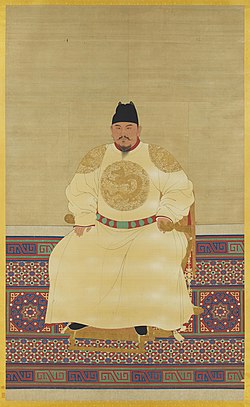
Zhu Yuanzhang, a former Buddhist monk and peasant rebel leader, proclaimed himself the Hongwu Emperor in Nanjing after driving out the Mongol-led Yuan Dynasty. He established a centralized autocratic government, restored Han Chinese rule, and laid the institutional foundations of a dynasty that would last nearly three centuries.
Image source: Hongwu Emperor
Sep 1368
% complete
Ming armies under General Xu Da captured Dadu (modern Beijing), forcing the last Yuan emperor Toghon Temür to flee north to Mongolia. This conquest cemented Ming control over northern China and marked the definitive end of Mongol governance over the Chinese heartland.
1380
% complete
After accusing chancellor Hu Weiyong of treason, the Hongwu Emperor executed him and thousands of associates, then abolished the office of prime minister entirely. This placed all six ministries directly under imperial control, creating one of the most autocratic governments in Chinese history.
1399 - 1402
% complete
Prince Zhu Di of Yan rebelled against his nephew, the Jianwen Emperor, in a three-year civil war. Capturing Nanjing in 1402, he took the throne as the Yongle Emperor, inaugurating an era of ambitious expansion, construction, and maritime exploration.
Image source: Jingnan campaign
1420
% complete
The Yongle Emperor completed construction of the Forbidden City, a vast palace complex employing hundreds of thousands of workers, and formally moved the capital from Nanjing to Beijing. The palace served as the imperial residence for both the remaining Ming and subsequent Qing dynasties.
Image source: Forbidden City
1487 - 1505
% complete
The Hongzhi Emperor devoted himself to governance, reducing taxes, promoting capable Confucian officials, and taking only one empress. His reign is often called the Hongzhi Restoration, regarded as a golden age of competent administration within the dynasty.
Image source: Hongzhi Emperor
1581
% complete
Grand Secretary Zhang Juzheng implemented nationwide fiscal reforms consolidating land taxes and labor obligations into single silver payments. The reform simplified administration, boosted state revenues, and accelerated the monetization of the Chinese economy through imported silver.
1625
% complete
Eunuch dictator Wei Zhongxian unleashed purges against the Donglin Academy faction of reformist scholar-officials, torturing leading members to death and erecting temples to himself across the empire. The persecution deepened court factionalism that weakened late-Ming government.
Image source: Donglin movement
1403 - 1408
% complete
Commissioned by the Yongle Emperor, this massive leishu encyclopedia compiled over 11,000 volumes encompassing all fields of knowledge from classical texts to agriculture and medicine. It remained for centuries the largest encyclopedia in the world until it was surpassed by Wikipedia.
Image source: Yongle Encyclopedia
Jul 11, 1405 - Oct 2, 1407
% complete
Admiral Zheng He led a fleet of over 300 ships and some 27,000 men on the first of seven great maritime expeditions, sailing to Southeast Asia, India, and beyond. These voyages projected Chinese power and diplomacy across the Indian Ocean decades before European explorers arrived.
Image source: Ming treasure voyages
1465 - 1487
% complete
The reign of the Chenghua Emperor saw the production of exquisite doucai porcelain celebrated as among the finest ever made. Jingdezhen's imperial kilns expanded dramatically, making the city the world's ceramic capital and a major source of export wealth.
Image source: Chinese ceramics
1513
% complete
Portuguese navigator Jorge Álvares became the first European to trade directly with China during the Ming period, anchoring off Lingding Island near the Pearl River estuary. His arrival opened sustained maritime contact between China and Europe.
Image source: Jorge Álvares
1596
% complete
Li Shizhen's monumental Compendium of Materia Medica was published posthumously, cataloguing nearly 1,900 drugs and remedies gathered over decades of research. It became the foundational text of traditional Chinese pharmacology, translated worldwide.
Image source: Bencao Gangmu
1601
% complete
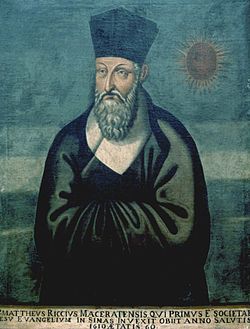
Jesuit missionary Matteo Ricci gained access to the Forbidden City, presenting clocks and scientific instruments to the Wanli Emperor. His mastery of Chinese language and Confucian scholarship enabled lasting cultural and scientific exchange between Europe and China.
Image source: Matteo Ricci
Sep 1, 1449
% complete
The young emperor personally led a disastrous campaign against the Oirat Mongols under Esen Taishi and was captured when his army was annihilated at Tumu Fortress. The shock prompted the court to enthrone his half-brother Jingtai and fortify Beijing against an impending Mongol siege.
Image source: Tumu Crisis
Oct 1449
% complete
Minister Yu Qian organized the defense of Beijing against Esen's invading Oirat army, refusing demands to ransom the captive emperor. The successful defense preserved the dynasty but later cost Yu Qian his life in political reprisals following the emperor's restoration.
Image source: Defense of Beijing
Feb 11, 1457
% complete
Supporters of the former emperor Yingzong staged a palace coup while his half-brother Jingtai lay ill, restoring Yingzong to the throne for a second reign known as Tianshun. The coup reversed succession arrangements made during the Tumu Crisis.
1521
% complete
Ming naval forces expelled Portuguese ships that had fortified themselves near present-day Hong Kong, using superior numbers and fire ships despite the Europeans' advanced cannon. The engagement began decades of tense Sino-Portuguese relations before trade was eventually legalized.
Image source: Battle of Tunmen
1567 - 1570
% complete
Under Minister Qi Jiguang and the Longqing Emperor, extensive sections of the Great Wall were rebuilt in stone and brick with watchtowers and garrisons. Much of the iconic wall visible today near Beijing dates from this massive Ming-era reconstruction program.
Image source: Great Wall of China
1592 - 1598
% complete
When Toyotomi Hideyoshi invaded Joseon Korea with ambitions toward China, the Ming sent massive expeditionary forces alongside Korean armies and Admiral Yi Sun-sin's navy. Seven years of brutal fighting ended with Japan's withdrawal, though the war drained Ming treasury and manpower severely.
Image source: Japanese invasions of Korea (1592–1598)
1616 - 1617
% complete
Officials in Nanjing accused Jesuits of subverting Confucian order and foreign intrigue, leading to the expulsion of missionaries from the capital region. The persecution proved temporary, and Jesuits returned under more tolerant officials in the following years.
1618
% complete
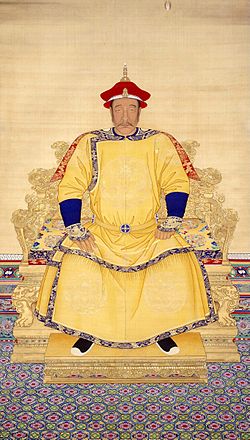
Nurhaci unified Jurchen tribes and declared war on the Ming with his 'Seven Grievances,' capturing Fushun and beginning the Manchu challenge to Ming rule. His military innovations created the Eight Banners system that would eventually conquer China.
Image source: Nurhaci
Apr 1619
% complete
A four-pronged Ming expedition against the Later Jin collapsed when Nurhaci defeated each column piecemeal in the forests of Liaodong. The catastrophic loss shifted the strategic initiative in the northeast permanently to the rising Manchu power.
Image source: Battle of Sarhū
1636
% complete
Hong Taiji, son of Nurhaci, renamed his people Manchus and proclaimed the Qing Dynasty at Mukden, formally claiming the Mandate of Heaven. The declaration signaled the Manchu ambition to supplant the Ming as rulers of China proper.
Image source: Qing dynasty
1633 - 1644
% complete
A devastating bubonic plague swept through Shanxi, Hebei, and Beijing over the final decade of the dynasty, killing large fractions of urban populations. The epidemic gutted Ming garrison strength in the capital just as rebels and Manchus closed in.
Image source: Ming dynasty
1644
% complete
Rebel leader Zhang Xianzhong conquered Chengdu and declared the Xi Kingdom, presiding over massacres so devastating that Sichuan's population collapsed. His ravaging of the province compounded the famine, rebellion, and chaos engulfing the dying dynasty.
Image source: Zhang Xianzhong
Apr 25, 1644
% complete
Rebel forces under Li Zicheng breached Beijing's walls, and the last Ming emperor hanged himself on Coal Hill rather than be captured. Li proclaimed the short-lived Shun Dynasty, ending 276 years of Ming rule over China proper.
Image source: Chongzhen Emperor
May 1644
% complete
Ming general Wu Sangui, holding the strategic Shanhai Pass, allied with the Manchus against Li Zicheng's rebel army. The combined forces crushed Li at the Battle of Shanhai Pass, allowing Dorgon's Qing troops to enter Beijing and claim the capital.
Image source: Shanhai Pass
Jun 1644 - 1645
% complete
Loyalists enthroned Zhu Yousong in Nanjing as the Hongguang Emperor, continuing Ming rule in the south. Factional infighting doomed the regime, which fell when Qing armies captured Nanjing in 1645 after the defection of key generals.
Image source: Southern Ming
1662
% complete
Koxinga (Zheng Chenggong), a Ming loyalist admiral, besieged and captured the Dutch fortress of Zeelandia on Taiwan, establishing a base for continued anti-Qing resistance. His kingdom remained the last significant stronghold of Ming loyalism until the Qing annexed Taiwan in 1683.
Image source: Koxinga
Or browse the full history timeline directory, with more than 2,000 topics.
This Ming Dynasty timeline was generated with the help of AI, using information found on the internet.
We work hard to keep these timelines accurate, but mistakes do get through. If you spot one, email us at [email protected] and we'll fix it for future visitors.
Generate yours with AI or build it from scratch, for free.
Export your timeline, add your own events, edit or remove AI-generated events, and much more
No credit card required.
Cancel anytime.
Cancel anytime.
You can create an unlimited number of timelines with up to 10 events on each one, customize how they look, export them to PDF, PNG, PowerPoint, CSV, and Excel, and share them with a link. Paid plans raise the event limit and add features like spreadsheet imports and collaborators.
Yes. You can cancel your subscription from your account page at any time, and you will not be charged again. Your subscription stays active for the rest of the period you already paid for.
Yes. We will email you a reminder before the annual renewal, and we will also email you a receipt.
Yes. You can email us within 15 days of any payment, and we will issue you a full refund.
Check out our pricing docs or send us an email anytime: [email protected].