-
Use Cases
-
Resources
-
Pricing
1400 - 1500
By the fifteenth century, Kanien'kehá:ka communities were established along the Mohawk River in present-day New York. Their villages, agricultural fields, hunting territories, and river networks formed the heartland later known as Kanienke.
Image source: Mohawk people
1450 - 1500
The Mohawk joined the Oneida, Onondaga, Cayuga, and Seneca in the Haudenosaunee, or Iroquois, Confederacy. Traditionally associated with the Peacemaker and Hiawatha, the confederacy created a political system based on consensus, kinship, and the Great Law of Peace.
1500
Within the Haudenosaunee political system, the Mohawk became known as the Eastern Door of the Confederacy. Their position at the eastern edge connected the confederacy with Algonquian peoples and later with European newcomers.
Image source: Iroquois
1640 - 1700
During seventeenth-century warfare, Mohawk communities adopted many captives from neighboring nations. Adoption helped replace population losses, incorporate new families, and sometimes bring Catholic converts and multilingual intermediaries into Mohawk society.
1609
Henry Hudson's voyage up the river later named for him brought Dutch exploration into the region. Although Hudson did not necessarily meet Mohawk communities directly, the expedition began sustained European commercial and geopolitical involvement near Mohawk territory.
Image source: Henry Hudson
1614
Dutch traders established Fort Nassau near present-day Albany, opening a regular exchange of European goods and firearms for Indigenous furs. Dutch trade altered regional alliances and intensified competition between the Haudenosaunee and neighboring peoples.
Image source: Fort Nassau (North River)
1624 - 1628
The Mohawk fought the Mahican for control of trade routes and access to Dutch markets along the Hudson River. Mohawk victory strengthened their position as a major intermediary in the northeastern fur trade.
1642 - 1646
Mohawk and other Haudenosaunee forces repeatedly attacked French-allied Wendat, Innu, and Algonquin communities. These campaigns reflected competition over the fur trade, territorial security, and control of strategic waterways.
Image source: Beaver Wars
1642
Mohawk warriors captured the Jesuit missionary Isaac Jogues and companions during the wider Beaver Wars. Jogues was later killed after returning to Mohawk country, while the episode became a major feature of French accounts of Mohawk-French conflict.
1667
French Jesuits established a Catholic mission for Haudenosaunee people near Montreal. Mohawks became the largest community at Kahnawake, which developed into an important Kanien'kehá:ka settlement and diplomatic center.
1678
The Treaty of Casco Bay helped end a period of warfare between New England colonists and several Wabanaki peoples. The broader diplomatic environment affected Mohawk relations with French and English colonies and contributed to renewed Haudenosaunee diplomacy.
1689 - 1697
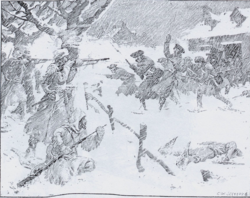
The first major war between England and France in North America brought raids and counterraids to the northeastern borderlands. Mohawk communities faced attacks from French-allied forces while maintaining their alliance with the English colonies.
Image source: King William's War
1701
The Great Peace of Montreal brought the Haudenosaunee and many French-allied Indigenous nations into a broad peace agreement with New France. It stabilized trade and diplomacy while recognizing Indigenous political relationships and territorial claims.
Image source: Great Peace of Montreal
1702 - 1713
During Queen Anne's War, Mohawk diplomacy and military activity remained central to the British defense of the New York frontier. The conflict further tied colonial security to Haudenosaunee alliances.
Image source: Queen Anne's War
1710
Four Haudenosaunee diplomats, including Mohawk representatives, visited Queen Anne in London. Their visit publicized the alliance between the Haudenosaunee and Britain and reinforced the diplomatic importance European governments attributed to Indigenous nations.
1744 - 1748
Mohawk allies supported Britain during the North American theater of the War of the Austrian Succession. The conflict increased pressure on Mohawk lands and deepened the strategic importance of the Mohawk Valley to British colonial authorities.
Image source: King George's War
1754 - 1763
The French and Indian War transformed the northeastern borderlands. Mohawk leaders and other Haudenosaunee communities navigated competing French and British demands while defending their own sovereignty and territorial interests.
Image source: French and Indian War
Sep 8, 1755
Mohawk warriors led by Hendrick Theyanoguin fought alongside British colonial forces at the Battle of Lake George. Hendrick was killed in the battle, and the engagement exposed tensions between Mohawk expectations and British military planning.
Image source: Battle of Lake George
1758
The Treaty of Easton helped remove several Indigenous nations from the French side during the French and Indian War. Its diplomacy contributed to the weakening of French alliances and reflected Indigenous efforts to limit colonial encroachment.
Image source: Treaty of Easton
Feb 10, 1763
The Treaty of Paris ended the French and Indian War and transferred New France to Britain. Mohawk communities now faced a single dominant imperial power rather than a balance between French and British rivals.
Image source: Treaty of Paris (1763)
1710 - 1750
Colonial land purchases and expanding settlement placed increasing pressure on Mohawk territory in New York. Mohawk leaders used diplomacy and treaty negotiations to defend lands, but colonial officials and speculators repeatedly disputed Indigenous understandings of those agreements.
1712
A Mohawk settlement and Anglican chapel were established at Tionondoroge, later called Fort Hunter, on the Schoharie Creek. The site became one of the principal Mohawk communities in the central Mohawk Valley.
1755 - 1800
Akwesasne developed as a major Mohawk community along the St. Lawrence River, spanning territory later divided by the international boundary between the United States and Canada. The community became an enduring center of Kanien'kehá:ka identity and governance.
Oct 7, 1763
Britain's Royal Proclamation restricted colonial settlement west of a designated boundary and required Indigenous land cessions to be made through the Crown. It became an important legal reference in later Mohawk land-rights claims, despite frequent colonial violations.
Image source: Royal Proclamation of 1763
1775 - 1783
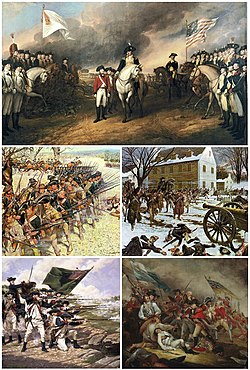
Most Mohawk leaders, including Joseph Brant, allied with Britain during the American Revolutionary War, while some Mohawks and other Haudenosaunee supported the American side or sought neutrality. Warfare devastated Mohawk settlements and undermined the Confederacy's unity.
Image source: American Revolutionary War
1777 - 1778
Raids and counterraids in the Mohawk Valley destroyed homes, crops, and villages. Mohawk communities suffered major losses during the campaign, including the destruction of settlements later remembered as part of the wartime devastation of the Haudenosaunee.
Image source: Sullivan Expedition
Aug 6, 1777
At Oriskany, Haudenosaunee and Loyalist forces ambushed an American relief column near Fort Stanwix. The battle was exceptionally costly, including heavy Mohawk losses, and intensified divisions within the Haudenosaunee.
Image source: Battle of Oriskany
1784
After the Revolution, Joseph Brant led many Mohawk and other Haudenosaunee refugees to lands along the Grand River in present-day Ontario. The settlement became the Six Nations of the Grand River, one of the largest Haudenosaunee communities.
Oct 22, 1784
The United States negotiated the Treaty of Fort Stanwix with Haudenosaunee representatives after the Revolutionary War. The treaty ceded extensive lands and contributed to the displacement of Mohawk people and other Haudenosaunee nations.
Nov 11, 1794
The Treaty of Canandaigua established peace between the United States and the Haudenosaunee and recognized reserved lands, including the Oneida, Onondaga, Cayuga, Seneca, and Tuscarora territories. Its promises remain central to Haudenosaunee legal and political claims.
Image source: Treaty of Canandaigua
1828 - 1970
The Mohawk Institute in Brantford, Ontario, operated as a residential school for Indigenous children for more than a century. Students were separated from their families and communities and subjected to assimilationist education; survivors later documented abuse and lasting intergenerational harm.
Image source: Mohawk Institute Residential School
1830 - 1840
Disputes over unauthorized leases, land sales, and colonial administration intensified at Six Nations of the Grand River. Mohawk and other Haudenosaunee leaders challenged the reduction of their recognized territory and the erosion of their governing authority.
1857
The Gradual Civilization Act encouraged the enfranchisement and assimilation of Indigenous people in what became Canada. It laid groundwork for later federal policies that sought to replace Haudenosaunee governance with colonial administrative systems.
Image source: Gradual Civilization Act
1867
Canadian Confederation placed responsibility for Indigenous affairs under the federal government. Subsequent administration and legislation, including the Indian Act, constrained Mohawk governance, landholding, cultural practices, and political status.
Image source: Indian Act
1876
Canada consolidated earlier Indigenous legislation in the Indian Act. The law imposed federal definitions and administrative controls on First Nations, including Mohawk communities, while limiting traditional governance and facilitating assimilation.
1899
The Mohawk Council of Akwesasne emerged as an elected governing institution during a period when Canadian and American authorities imposed new administrative structures. It became one of the principal political bodies representing Akwesasne Mohawks.
1950 - 1980
Mohawk communities increasingly used courts, petitions, negotiations, and public organizing to challenge questionable land transactions and defend treaty rights. These efforts helped establish modern Indigenous land-claims and sovereignty movements.
1990 - 2025
Mohawk communities expanded immersion schools, language programs, cultural centers, ceremonies, and digital learning initiatives. These efforts seek to strengthen Kanien'kehá:ka identity and restore intergenerational transmission after centuries of colonial suppression.
Image source: Mohawk language
Jul 11, 1990 - Sep 26, 1990
The Oka Crisis began when Kanien'kehá:ka land defenders opposed a proposed golf-course expansion on disputed territory at Kanehsatà:ke. The 78-day standoff with Quebec police and the Canadian military brought Mohawk land rights and sovereignty into international focus.
Image source: Oka Crisis
Nov 21, 1996
Canada's Royal Commission on Aboriginal Peoples issued a major report documenting the historical effects of colonialism and recommending renewed nation-to-nation relationships. Its findings addressed governance, land, culture, education, and self-determination relevant to Mohawk communities.
Image source: Royal Commission on Aboriginal Peoples
Sep 13, 2007
The United Nations adopted the Declaration on the Rights of Indigenous Peoples, affirming rights to self-determination, culture, lands, resources, and free, prior, and informed consent. Haudenosaunee and Mohawk advocates have used its principles in sovereignty and land-rights work.
Image source: Declaration on the Rights of Indigenous Peoples
2008 - 2015
Canada's Truth and Reconciliation Commission collected testimony about residential schools, including the Mohawk Institute, and published calls to action. The process increased public recognition of survivor experiences and supported Mohawk-led cultural and educational revitalization.
Image source: Truth and Reconciliation Commission of Canada
Or browse the full history timeline directory, with more than 2,500 topics.
This Mohawk History timeline was generated with the help of AI, using information found on the internet.
We work hard to keep these timelines accurate, but mistakes do get through. If you spot one, email us at [email protected] and we'll fix it for future visitors.
Generate yours with AI or build it from scratch, for free.
Export your timeline, add your own events, edit or remove AI-generated events, and much more
No credit card required.
Cancel anytime.
Cancel anytime.
You can create an unlimited number of timelines with up to 10 events on each one, customize how they look, export them to PDF, PNG, PowerPoint, CSV, and Excel, and share them with a link. Paid plans raise the event limit and add features like spreadsheet imports and collaborators.
Yes. You can cancel your subscription from your account page at any time, and you will not be charged again. Your subscription stays active for the rest of the period you already paid for.
Yes. We will email you a reminder before the annual renewal, and we will also email you a receipt.
Yes. You can email us within 15 days of any payment, and we will issue you a full refund.
Check out our pricing docs or send us an email anytime: [email protected].