-
Use Cases
-
Resources
-
Pricing
The Old Testament is the first major section of the Christian Bible and largely corresponds to the Hebrew Bible (Tanakh). It comprises 39 books (in Protestant tradition) covering creation, the patriarchs Abraham, Isaac, and Jacob, the Exodus from Egypt under Moses, the conquest of Canaan, the era of judges, the united and divided monarchies of Israel and Judah, prophetic ministries, the Babylonian exile, and the return and restoration. Its texts were composed over roughly a thousand years and form the foundational scriptures of Judaism and Christianity. More Less
1000 BC - 100 BC
% complete
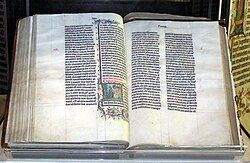
The Old Testament consists of many distinct books by various authors produced over a period of centuries, forming a diverse collection of law, history, prophecy, poetry, and wisdom literature.
Image source: Old Testament
800 BC - 500 BC
% complete
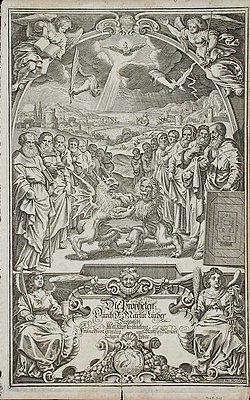
The books of the various prophets—Isaiah, Jeremiah, Ezekiel, and the twelve 'minor prophets'—were written between the 8th and 6th centuries BC, with the exceptions of Jonah and Daniel, which were written much later.
Image source: Prophets in Judaism
600 BC
% complete
Among the 'wisdom' books, Job was completed by the 6th century BC, contributing poetic reflections on suffering and divine justice to the Old Testament's wisdom literature.
Image source: Book of Job
600 BC - 539 BC
% complete
There is a broad consensus among scholars that Joshua, Judges, Samuel, and Kings originated as a single work—the so-called 'Deuteronomistic History'—during the Babylonian exile of the 6th century BC.
400 BC - 301 BC
% complete
The two Books of Chronicles cover much the same material as the Pentateuch and Deuteronomistic history and probably date from the 4th century BC.
Image source: Books of Chronicles
332 BC - 198 BC
% complete
The book of Proverbs was possibly completed by the Hellenistic time (332–198 BC), though it contains much older material as well.
Image source: Proverb
300 BC - 201 BC
% complete
The wisdom book Ecclesiastes was completed by the 3rd century BC, offering philosophical meditations on the meaning of life.
Image source: Ecclesiastes
300 BC - 201 BC
% complete
Chronicles and Ezra–Nehemiah were probably finished during the 3rd century BC, completing key historical works of the Hebrew Bible.
200 BC - 100 BC
% complete
Catholic and Orthodox Old Testaments contain two (Catholic) to four (Orthodox) Books of the Maccabees, written in the 2nd and 1st centuries BC, recounting Jewish revolt and resistance.
900 BC
% complete
Mainstream scholarship generally takes a skeptical but balanced approach to historical material from the 9th century BC onward; some chronologically later biblical traditions align with archaeological findings.
1844 AD - 1918 AD
% complete
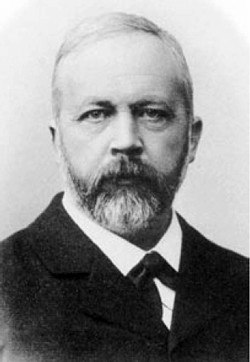
Earlier biblical scholars such as Julius Wellhausen (1844–1918) could be described as 'maximalist', accepting biblical text unless it had been disproven.
Image source: Julius Wellhausen
1909 AD
% complete
Psychoanalyst Otto Rank noted similarities between the origin story of Moses and that of Sargon of Akkad in 1909, observations later popularized by 20th-century writers.
Image source: Otto Rank
1990 AD - 1999 AD
% complete
During the 1990s, the minimalist school of biblical scholarship dismissed the Bible's historical value more or less entirely, sparking intense debate over the reliability of biblical accounts.
2000 AD
% complete
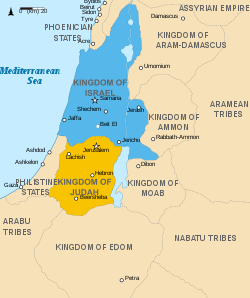
Since the minimalist debates of the 1990s, mainstream scholarship has taken a more balanced approach, recognizing that some biblical traditions align with archaeological findings, particularly from the 9th century BC onward.
Image source: History of ancient Israel and Judah
2007 AD
% complete
In 2007, historian of ancient Judaism Lester L. Grabbe explained how earlier biblical scholars like Wellhausen accepted biblical texts unless disproven, contrasting with later skeptical approaches.
2022 AD
% complete
In 2022, archaeologist Avraham Faust summarized recent scholarship arguing that while early histories of Israel were heavily based on biblical accounts, their reliability has been increasingly questioned over time.
500 BC - 400 BC
% complete
By about the 5th century BC, Jews saw the five books of the Torah (the Old Testament Pentateuch) as having authoritative status within their religious tradition.
Image source: Torah
200 BC - 101 BC
% complete
By the 2nd century BC, the Prophets had a status similar to that of the Torah, although without quite the same level of respect.
1546 AD
% complete
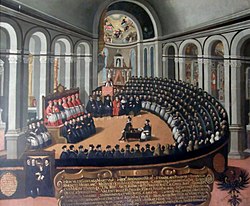
At the Council of Trent in 1546, Catholics formally defined their canon, describing certain books as deuterocanonical and including them in the Old Testament.
Image source: Council of Trent
1672 AD
% complete
Greek Orthodox Christians, following the Synod of Jerusalem (1672), use the traditional name anagignoskomena, meaning 'that which is to be read,' for their additional Old Testament books.
Image source: Synod of Jerusalem (1672)
300 BC - 200 BC
% complete
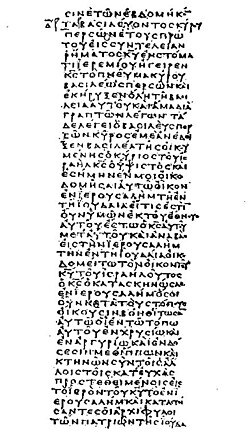
The spelling and names in the Septuagint differ from those used in modern editions which are derived from the Hebrew Masoretic Text, reflecting its Greek translation tradition.
Image source: Septuagint
200 AD
% complete
For Aramaic Christians, there was a Syriac translation of the Hebrew Bible called the Peshitta, providing scripture in the language of early Syriac-speaking Christianity.
Image source: Peshitta
200 AD - 400 AD
% complete
Coptic translations of the Bible were made in the everyday language of Egypt in the first Christian centuries, descended from ancient Egyptian.
Image source: Bible translations into Coptic
400 AD - 600 AD
% complete
An Ethiopic version of the Bible was produced for use in the Ethiopian church, one of the oldest Christian churches.
Image source: Bible translations into Geʽez
405 AD
% complete
An Armenian version of the Bible was created; Armenia was the first nation to adopt Christianity as its official religion.
Image source: Bible translations into Armenian
800 AD
% complete
Arabic versions of the Hebrew Bible were produced for Arabic-speaking Christian communities across the Middle East.
Image source: Bible translations into Arabic
1582 AD
% complete
The 1582 Rheims New Testament, later paired with the Douay Old Testament, used spellings and names that differ from those in modern editions derived from the Hebrew Masoretic Text.
1609 AD - 1610 AD
% complete
The 1609–10 Douay Old Testament provided an English Catholic translation whose spellings and names differ from those used in modern editions based on the Masoretic Text.
1611 AD
% complete
The English 1611 King James Version included the deuterocanonical books, as did a few other historic Protestant versions such as the German Luther Bible.
Image source: King James Version
1749 AD
% complete
Bishop Challoner's 1749 revision of the Douay Bible became the edition currently in print used by many Catholics and the source of traditional Catholic spellings in English.
Image source: Douay–Rheims Bible
Or browse the full history timeline directory, with more than 2,000 topics.
This Old Testament timeline was generated with the help of AI, using information found on the internet.
We work hard to keep these timelines accurate, but mistakes do get through. If you spot one, email us at [email protected] and we'll fix it for future visitors.
Generate yours with AI or build it from scratch, for free.
Export your timeline, add your own events, edit or remove AI-generated events, and much more
No credit card required.
Cancel anytime.
Cancel anytime.
You can create an unlimited number of timelines with up to 10 events on each one, customize how they look, export them to PDF, PNG, PowerPoint, CSV, and Excel, and share them with a link. Paid plans raise the event limit and add features like spreadsheet imports and collaborators.
Yes. You can cancel your subscription from your account page at any time, and you will not be charged again. Your subscription stays active for the rest of the period you already paid for.
Yes. We will email you a reminder before the annual renewal, and we will also email you a receipt.
Yes. You can email us within 15 days of any payment, and we will issue you a full refund.
Check out our pricing docs or send us an email anytime: [email protected].