-
Resources
-
Pricing
The biblical Patriarchs are Abraham, Isaac, Jacob, and Joseph, whose stories in Genesis describe the origins of Israel and its covenant relationship with God. More Less
Build a timeline like this one in minutes, for free. Start Yours →
4004 BC
The biblical creation narrative presents Adam as the first human and the ancestor of humanity. God forms him from dust, places him in the Garden of Eden, and gives him responsibility over creation.
Image source: Adam and Eve
4004 BC
Eve is created as Adam’s companion and is described in Genesis as the first woman and mother of humanity. Together, Adam and Eve become the foundational human pair in the biblical genealogies.
4004 BC
Adam and Eve eat from the tree of the knowledge of good and evil after being tempted by the serpent. Their disobedience leads to expulsion from Eden and introduces death, toil, and alienation into the biblical story.
Image source: Fall of man
4003 BC
Adam and Eve’s sons Cain and Abel represent the first recorded generation after Eden. Cain becomes a farmer and Abel a shepherd, establishing the family conflict that culminates in the first murder.
Image source: Cain and Abel
4002 BC
After God favors Abel’s offering, Cain kills his brother in the field. The narrative portrays Cain’s punishment and exile as the first major act of violence among Adam’s descendants.
3874 BC
Seth is born to Adam and Eve after Abel’s death. Genesis presents him as the son through whom Adam’s named genealogical line continues toward Noah.
Image source: Seth
3769 BC
Enosh, the son of Seth, is listed in the genealogy of Genesis 5. His generation is associated with the beginning of calling on the name of the Lord.
3377 BC
Enoch, a descendant of Seth and father of Methuselah, is remembered for walking with God. Genesis uniquely says that he was taken by God rather than describing an ordinary death.
Image source: Enoch
3312 BC
Methuselah is identified as Enoch’s son and the longest-lived person in the biblical genealogical record, reaching 969 years according to Genesis.
Image source: Methuselah
3125 BC
Lamech, a descendant of Seth through Methuselah, becomes the father of Noah. His naming of Noah anticipates relief from the hardship associated with the cursed ground.
2948 BC
Noah is born to Lamech and becomes the central patriarch of the flood narrative. Genesis portrays him as righteous in his generation and as the ancestor of the post-flood human family.
Image source: Noah
2446 BC
Shem is one of Noah’s three sons and is presented as the ancestor of the Semitic peoples. The biblical genealogies trace Abraham’s line through Shem.
2348 BC - 2347 BC
Genesis describes a catastrophic flood that covers the earth and destroys life outside Noah’s ark. Noah, his family, and the preserved animals survive the judgment.
2348 BC
Because of widespread violence and corruption, God instructs Noah to construct a large ark and preserve his household and representatives of the animal world. Noah follows the detailed divine instructions.
Image source: Noah's Ark
2347 BC
After the waters recede, Noah leaves the ark and builds an altar. God establishes a covenant with Noah and places the rainbow in the clouds as its sign, promising not to destroy the earth by flood again.
2247 BC
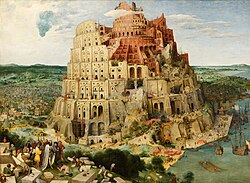
Humanity attempts to build a city and tower reaching heaven. God confuses the builders’ language and scatters them, explaining the division of peoples in the primeval biblical account.
Image source: Tower of Babel
2178 BC
Terah is born in the genealogical line from Shem to Abraham. Genesis later identifies him as Abraham’s father and as the head of the household that leaves Ur.
2166 BC
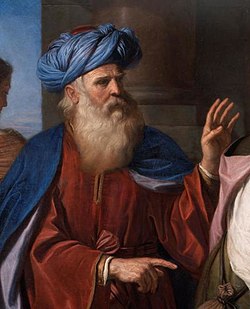
Abram, later renamed Abraham, is born in the line of Shem. He becomes the principal patriarch of Genesis and the recipient of promises concerning land, descendants, and blessing to the nations.
Image source: Abraham
2091 BC
Terah takes Abram, Sarai, and Lot from Ur of the Chaldeans toward Canaan. The family settles at Harran, where Terah dies and the next stage of Abraham’s calling begins.
2091 BC
God commands Abram to leave his country and promises to make him a great nation and a source of blessing. Abram travels through Canaan and builds altars at sites associated with his worship.
2081 BC
As the households of Abram and Lot become too large to remain together, they divide the land between them. Lot chooses the Jordan plain, while Abram remains in Canaan and receives renewed promises.
2080 BC
At Sarai’s request, Abram fathers Ishmael through Hagar, Sarai’s Egyptian servant. God promises that Ishmael will become the ancestor of a great people, although the covenant line will continue through Isaac.
Image source: Ishmael
2080 BC
God formally makes a covenant with Abram, promising innumerable descendants and the land of Canaan. In the covenant ceremony, God’s presence passes between divided animals, marking the promise as divine.
Image source: Covenant of the pieces
2080 BC
After Lot is captured during a regional war, Abram pursues the victorious kings, defeats them, and rescues Lot and the other captives. On his return, he encounters Melchizedek, king of Salem.
2067 BC
God changes Abram’s name to Abraham and Sarai’s name to Sarah as part of the covenant revelation. Circumcision is instituted as the sign of the covenant for Abraham’s household and descendants.
2067 BC
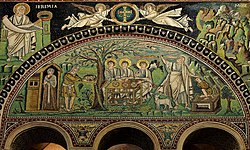
Two angels visit Abraham before announcing judgment on Sodom and Gomorrah. Abraham intercedes, but the cities are destroyed; Lot and his daughters escape while Lot’s wife becomes a pillar of salt.
Image source: Sodom and Gomorrah
2066 BC
Sarah gives birth to Isaac in her old age, fulfilling God’s promise to Abraham. Isaac’s name, associated with laughter, recalls the incredulous joy surrounding the announcement of his birth.
Image source: Isaac
2050 BC
God tests Abraham by commanding him to offer Isaac on Mount Moriah. Abraham obeys until an angel stops him, and a ram is provided instead; the episode becomes a defining account of faith and covenant obedience.
Image source: Binding of Isaac
2029 BC
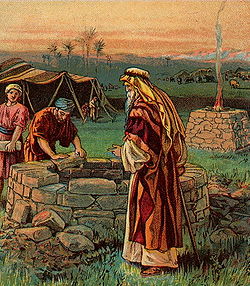
Sarah dies at Hebron at the age of 127. Abraham purchases the cave of Machpelah from Ephron the Hittite as a family burial place, making it his first established property in Canaan.
Image source: Sarah
2026 BC
Abraham sends a servant to find a wife for Isaac from his extended family in Mesopotamia. Rebekah agrees to return to Canaan, marries Isaac, and becomes the mother of Esau and Jacob.
Image source: Rebekah Neumann
2006 BC
Rebekah gives birth to twins, Esau and Jacob. The younger Jacob emerges holding Esau’s heel, and God reveals that the elder will serve the younger, foreshadowing their rivalry.
Image source: Jacob
1986 BC
Esau sells his birthright to Jacob for a meal after returning exhausted from the field. The transaction establishes Jacob’s ambition to secure the privileges ordinarily belonging to the firstborn.
1966 BC
While traveling, Jacob dreams of a stairway or ladder reaching heaven, with angels ascending and descending. God confirms to him the promises made to Abraham and Isaac and promises protection and descendants.
Image source: Jacob's Ladder
1966 BC
With Rebekah’s assistance, Jacob disguises himself as Esau and receives Isaac’s patriarchal blessing. Esau’s anger forces Jacob to flee toward his mother’s family in Mesopotamia.
1959 BC - 1952 BC
Jacob works for Laban in exchange for Rachel but is first given Leah through Laban’s deception. He then marries Rachel and serves additional years, beginning the family relationships from which the tribes of Israel arise.
1959 BC - 1915 BC
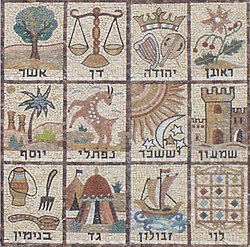
Jacob’s sons are born to Leah, Rachel, Bilhah, and Zilpah. The twelve sons—Reuben, Simeon, Levi, Judah, Dan, Naphtali, Gad, Asher, Issachar, Zebulun, Joseph, and Benjamin—become the traditional ancestors of Israel’s tribes.
Image source: Twelve Tribes of Israel
1899 BC
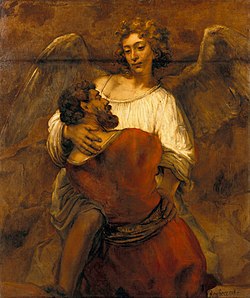
On the eve of meeting Esau, Jacob wrestles through the night with a mysterious divine figure. He receives the name Israel, meaning associated with striving with God, and leaves the encounter injured but blessed.
1899 BC
Jacob and Esau meet after years of separation. Instead of attacking him, Esau embraces Jacob, allowing the estranged brothers to reconcile even though their households continue along separate paths.
Image source: Esau
1886 BC
Isaac dies at the age of 180 and is buried by his sons Esau and Jacob. His death marks the transfer of the patriarchal narrative’s central focus to Jacob and his children.
1898 BC
Jacob’s favored son Joseph is sold by his jealous brothers to traveling merchants after they cast him into a pit. They deceive Jacob with Joseph’s bloodied garment, leading him to believe Joseph is dead.
1886 BC
After slavery and imprisonment, Joseph interprets Pharaoh’s dreams as seven years of abundance followed by seven years of famine. Pharaoh appoints him governor over Egypt, second only to the king.
1876 BC
During the famine, Joseph reveals himself to his brothers and invites Jacob’s household to Egypt. Jacob, also called Israel, travels with his family and settles in Goshen under Joseph’s protection.
1859 BC
Near his death, Jacob adopts Joseph’s sons Ephraim and Manasseh as his own and gives the younger Ephraim the greater blessing. The act helps establish Joseph’s double inheritance among Israel’s tribes.
1859 BC
Jacob dies in Egypt after blessing his sons and insisting that he be buried in Canaan. Joseph and his brothers carry him to the cave of Machpelah, where Abraham, Sarah, Isaac, Rebekah, and Leah were buried.
1805 BC
Joseph dies at the age of 110 after seeing multiple generations of his family. He makes the Israelites swear to carry his bones from Egypt when God brings them back to the promised land.
Build a timeline like this one in minutes, for free. Start Yours →
Or browse the full history timeline directory, with more than 2,500 topics.
This Patriarchs of the Bible timeline was generated with the help of AI, using information found on the internet.
We work hard to keep these timelines accurate, but mistakes do get through. If you spot one, email us at [email protected] and we'll fix it for future visitors.
Generate yours with AI or build it from scratch, for free.
Export your timeline, add your own events, edit or remove AI-generated events, and much more
No credit card required.
15-day money-back guarantee.
You can create an unlimited number of timelines with up to 10 events on each one, customize how they look, export them to PDF, PNG, PowerPoint, CSV, and Excel, and share them with a link. Timelines made with Timeline Maker AI keep every event the generator created, and you can add up to 5 events of your own. Paid plans remove the event limit, add spreadsheet imports and hide Preceden's branding, and the higher-priced plan also adds collaborators, a custom logo and a custom domain.
Yes. You can cancel your subscription from your account page at any time, and you will not be charged again. Your subscription stays active for the rest of the period you already paid for.
Yes. We email you a reminder 15 days before your annual renewal, and we email you a receipt after every payment.
Yes. You can email us within 15 days of any payment, and we will issue you a full refund.
Check out our pricing docs or send us an email anytime: [email protected].