-
Resources
-
Pricing
A timeline of the Onondaga Nation, the Central Fire of the Haudenosaunee Confederacy, tracing its political, cultural, and territorial history from the confederacy’s formation to the present. More Less
Build a timeline like this one in minutes, for free. Start Yours →
1200 - 1400
The Onondaga emerged as one of the Haudenosaunee, or Iroquois, peoples. Their name is commonly translated as People of the Hills, and their language, political institutions, and clan system developed within the wider northeastern Indigenous world.
Image source: Onondaga people
1450 - 1500
According to Haudenosaunee tradition, the Peacemaker and Hiawatha brought rival nations together under the Great Law of Peace. The tradition places the central council fire and meeting place of the resulting confederacy with the Onondaga.
1450 - 1500
The Mohawk, Oneida, Onondaga, Cayuga, and Seneca formed the Haudenosaunee Confederacy. The Onondaga served as the confederacy's central nation, keeper of the council fire, and host of the Grand Council.
Image source: Iroquois
1500
The Grand Council of the Haudenosaunee met at the Onondaga council fire. Onondaga chiefs held a central role in arranging councils, preserving constitutional traditions, and helping the confederacy deliberate on matters affecting all member nations.
1535 - 1650
Diseases introduced through European contact, including epidemics documented across northeastern North America, caused severe population losses among Indigenous peoples. Onondaga communities experienced these disruptions while maintaining political and cultural institutions.
1609 - 1650
French exploration, missionary activity, and commerce expanded around the Great Lakes and Saint Lawrence basin. These contacts affected Onondaga diplomacy, trade networks, and relations with neighboring Indigenous nations and European powers.
Image source: Samuel de Champlain
1640 - 1701
Competition over the fur trade, access to hunting territories, and alliances with European powers produced a long period of warfare known as the Beaver Wars. The Onondaga participated in Haudenosaunee diplomacy and military campaigns during this era.
Image source: Beaver Wars
1656 - 1658
French Jesuits established a mission among the Onondaga after negotiations with Haudenosaunee leaders. The mission was short-lived, but it illustrates the diplomatic importance of the Onondaga homeland and the limits placed on European religious expansion.
Image source: Jesuit missions in North America
1658
The French mission at Onondaga ended after growing tensions and fears that the missionaries' presence could lead to French political or military intervention. Its abandonment preserved Haudenosaunee control over the immediate homeland for the time being.
1660 - 1701
Onondaga and other Haudenosaunee leaders repeatedly used diplomacy to balance French, English, and Indigenous interests. Their central council system enabled negotiations over prisoners, trade, war, and territorial boundaries.
1677 - 1754
The Covenant Chain became a diplomatic framework linking the Haudenosaunee with English and later British colonial authorities. Onondaga leaders participated in councils that reaffirmed alliances, addressed disputes, and negotiated the political position of the confederacy.
Image source: Covenant Chain
Aug 4, 1701
Haudenosaunee representatives, including Onondaga leadership within the confederacy, joined dozens of Indigenous nations and New France at the Great Peace of Montreal. The agreement ended or reduced major hostilities and reorganized diplomatic relations in the Great Lakes region.
Image source: Great Peace of Montreal
Apr 11, 1713
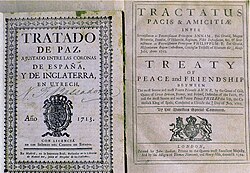
The Treaty of Utrecht transferred French and Spanish possessions and altered the balance among European powers in North America. For the Onondaga and other Haudenosaunee nations, the changing imperial landscape brought new diplomatic pressures and competing claims.
Image source: Peace of Utrecht
1754 - 1763
The global conflict between Britain and France brought renewed strategic pressure to the Onondaga homeland and Haudenosaunee Confederacy. Haudenosaunee nations pursued their own diplomatic interests while navigating divided alliances and military demands.
Image source: French and Indian War
Jun 19, 1754 - Jul 11, 1754
Haudenosaunee representatives met British colonial delegates at Albany during the crisis preceding the Seven Years' War. The conference addressed alliance, trade, and colonial unity, although the proposed Albany Plan of Union was not adopted.
Image source: Albany Congress
Oct 26, 1758
The Treaty of Easton helped remove some Indigenous opposition to British operations during the French and Indian War. Its negotiations reflected the continuing role of Haudenosaunee diplomacy in determining the political future of the Northeast.
Image source: Treaty of Easton
1775 - 1783
The American Revolution fractured Haudenosaunee political relationships. Most Haudenosaunee nations, including many Onondaga leaders, supported the British, while the Oneida and Tuscarora largely supported the American rebels.
Image source: American Revolutionary War
Apr 20, 1779 - Sep 30, 1779
American forces conducted a campaign against Haudenosaunee settlements during the Revolutionary War. Onondaga villages, fields, orchards, and food stores were destroyed, causing displacement, hunger, and long-term disruption in the Onondaga homeland.
Image source: Sullivan Expedition
Oct 7, 1763
Britain's Royal Proclamation restricted colonial settlement west of the Appalachian Mountains and recognized that Indigenous lands required formal Crown negotiations. Its principles became important in later arguments about Haudenosaunee land rights, although colonial encroachment continued.
Image source: Royal Proclamation of 1763
Nov 5, 1768
The Treaty of Fort Stanwix established a boundary between British colonial lands and Haudenosaunee territory. The agreement involved major land cessions and remains central to interpretations of Haudenosaunee sovereignty and the legality of later land transfers.
Image source: Treaty of Fort Stanwix (1768)
1780 - 1790
After wartime destruction and the defeat of the British alliance, many Onondaga people sought refuge in other Haudenosaunee communities, including territories in what became Ontario. Others remained in or returned to the central New York homeland.
Oct 22, 1784
The post-Revolutionary Treaty of Fort Stanwix required the Six Nations to cede extensive lands to the United States. Haudenosaunee leaders disputed the circumstances and authority behind the agreement, and it contributed to major losses of ancestral territory.
Image source: Treaty of Fort Stanwix (1784)
Jan 9, 1789
The Treaty of Fort Harmar reaffirmed and modified earlier land arrangements involving the Six Nations. The agreement was part of a continuing process through which the United States sought to formalize territorial claims over Haudenosaunee lands.
Image source: Treaty of Fort Harmar
1790 - 1820
New York officials and private interests pursued land transactions involving Haudenosaunee territory despite federal restrictions requiring United States involvement. These agreements reduced the Onondaga land base and became the foundation of later land-rights disputes.
Nov 11, 1794
The Treaty of Canandaigua established peace and friendship between the United States and the Six Nations and recognized a substantial Onondaga reservation. The United States has continued to acknowledge the treaty's legal significance, including its protection of Haudenosaunee sovereignty and rights.
Image source: Treaty of Canandaigua
1822 - 1823
New York obtained additional Onondaga lands through agreements that the Onondaga Nation and later legal advocates challenged as unauthorized. The resulting reduction left the Nation with a much smaller reservation near Syracuse.
May 28, 1830
The United States enacted the Indian Removal Act, intensifying pressure on Indigenous nations east of the Mississippi. The Onondaga were not removed under a single federal expulsion, but the era strengthened state and federal efforts to diminish Indigenous landholding and autonomy.
1846
New York constitutional debates reflected ongoing conflict over whether Haudenosaunee people should be treated as citizens of the state or as members of sovereign Indigenous nations. Onondaga political status remained grounded in the Nation's own institutions and treaty relationships.
Feb 8, 1887
The Dawes Act authorized allotment of collectively held Indigenous lands elsewhere in the United States. Although it did not directly allot the Onondaga Reservation in the same manner, the policy era brought broader pressure toward assimilation and the breakup of Indigenous communal landholding.
Image source: Dawes Act
1900 - 1950
The Onondaga Nation continued to govern through its traditional chiefs, clan-based responsibilities, and Grand Council while also managing relations with New York and the United States. Community institutions supported land stewardship, diplomacy, family life, and cultural continuity.
Jun 2, 1924
The Indian Citizenship Act granted United States citizenship to Indigenous people born in the country. Onondaga citizenship and political belonging nevertheless continued to be defined by the Nation, its clans, and its own laws rather than by federal citizenship alone.
1940 - 1970
During the twentieth century, the Onondaga Nation continued asserting rights arising from the Treaty of Canandaigua and other agreements. Nation leaders defended jurisdiction, land interests, and the right to maintain self-government despite changing federal policies.
1944
The founding of the National Congress of American Indians created a major intertribal organization for defending Indigenous sovereignty and treaty rights. Onondaga concerns formed part of the wider political movement opposing termination and assimilation.
1953 - 1968
United States termination policies sought to end the federal relationship with selected Indigenous nations and encourage assimilation. The Onondaga Nation, like many Haudenosaunee communities, resisted policies that threatened collective landholding and inherent sovereignty.
Image source: Indian termination policy
1968
The American Indian Movement emerged amid a broader Indigenous rights resurgence. Its activism helped draw national attention to treaty obligations, self-determination, cultural survival, and the continuing effects of land dispossession, issues also central to Onondaga advocacy.
Image source: American Indian Movement
1983
The Haudenosaunee Nationals lacrosse team, representing the Six Nations collectively, became an international expression of Indigenous identity and diplomacy. Lacrosse remains deeply connected to Haudenosaunee cultural teachings, including among the Onondaga.
Image source: Haudenosaunee men's national lacrosse team
1990 - 2025
Onondaga educators, speakers, families, and cultural leaders expanded efforts to preserve and teach the Onondaga language. These initiatives support intergenerational transmission of ceremonial knowledge, place-based history, and Nation identity.
1990 - 2025
Into the twenty-first century, the Onondaga Nation continued to exercise self-government and engage with the United States, New York, neighboring communities, and international Indigenous forums. Its diplomacy has focused on sovereignty, land, water, culture, and the continuing force of treaties.
2005
The Onondaga Nation filed a federal land-rights action arguing that millions of acres had been taken through transactions that violated federal law and the Treaty of Canandaigua. The case sought recognition of land, sovereignty, and environmental harms rather than only monetary compensation.
Sep 22, 2010
A federal district court dismissed the Onondaga Nation's land claim, ruling that equitable and political considerations prevented the requested relief. The Nation continued to emphasize that dismissal did not resolve its historical and moral claims regarding unauthorized land taking.
Image source: Onondaga Nation
2012 - 2015
Cleanup planning for Onondaga Lake progressed through federal and state environmental programs. The Nation has connected lake restoration with the historical importance of the lake, treaty responsibilities, and the environmental consequences of industrial contamination.
Image source: Onondaga Lake
Build a timeline like this one in minutes, for free. Start Yours →
Or browse the full history timeline directory, with more than 3,000 topics.
This Onondaga Nation History timeline was generated with the help of AI, using information found on the internet.
We work hard to keep these timelines accurate, but mistakes do get through. If you spot one, email us at [email protected] and we'll fix it for future visitors.
Generate yours with AI or build it from scratch, for free.
Export your timeline, add your own events, edit or remove AI-generated events, and much more
No credit card required.
15-day money-back guarantee.
You can create an unlimited number of timelines with up to 10 events on each one, customize how they look, export them to PDF, PNG, PowerPoint, CSV, and Excel, and share them with a link. Timelines made with Timeline Maker AI keep every event the generator created, and you can add up to 5 events of your own. Paid plans remove the event limit, add spreadsheet imports and hide Preceden's branding, and the higher-priced plan also adds collaborators, a custom logo and a custom domain.
Yes. You can cancel your subscription from your account page at any time, and you will not be charged again. Your subscription stays active for the rest of the period you already paid for.
Yes. We email you a reminder 15 days before your annual renewal, and we email you a receipt after every payment.
Yes. You can email us within 15 days of any payment, and we will issue you a full refund.
Check out our pricing docs or send us an email anytime: [email protected].