-
Resources
-
Pricing
Seneca Nation History traces the experiences, governance, diplomacy, displacement, resilience, and cultural traditions of the Seneca people, one of the original Haudenosaunee nations. More Less
Build a timeline like this one in minutes, for free. Start Yours →
1600
Archaeological evidence suggests that Seneca territory eventually extended to the Allegheny River in present-day northwestern Pennsylvania, particularly after the Haudenosaunee destroyed the Wenrohronon and Erie nations in the seventeenth century.
Image source: Seneca people
1600 - 1699
By the seventeenth century, the Seneca were the most populous Haudenosaunee nation, numbering approximately four thousand people.
1600 - 1699
Ganondagan, or Tganödagë:ën, became the largest Seneca village of the seventeenth century, with approximately 150 longhouses.
Image source: Ganondagan State Historic Site
1600 - 1609
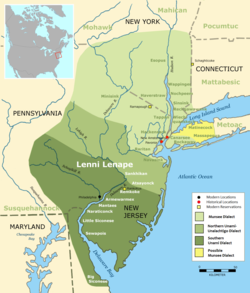
Around 1600, Lenape communities lived in the area now comprising Sullivan, Ulster, and Orange counties of New York. Their Algonquian-speaking territory extended along much of the mid-Atlantic coast.
Image source: Lenape
1700
Around 1700, the upper Delaware watershed of New York and Pennsylvania became home to Minnisink people moving north and northwest from New Jersey and Esopus people moving west from the Mid-Hudson Valley.
Image source: Munsee
1712
By 1712, the Esopus were reported to have reached the east branch of the Pepacton River on the western slopes of the Catskill Mountains.
Image source: Esopus people
1715 - 1754
Fieldwork at the Townley-Read site near Geneva, New York, recovered evidence of substantial Seneca autonomy, selectivity, innovation, and opportunism between 1715 and 1754.
1720 - 1750
From the 1720s through the 1750s, the Seneca resettled and assimilated Munsee people into Seneca society and the Haudenosaunee Confederacy.
1600 - 1610
Around the turn of the seventeenth century, the Seneca traded beads with the Dutch. Production sites included places such as Factory Hollow.
1609
In 1609, the French allied with the Wendat, or Huron, and launched a campaign intended to destroy the Haudenosaunee.
1609 - 1650
The Iroquois-Huron War continued until approximately 1650, bringing prolonged conflict between the Haudenosaunee and the French-allied Wendat.
1626
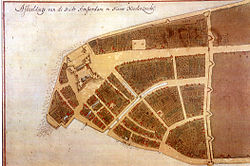
As early as 1626, the Susquehannock struggled to pass through Lenape territory to reach Dutch traders in New Amsterdam, on Manhattan.
Image source: Susquehannock
1634 - 1638
War began in 1634 between the Unami and Susquehannock. By 1638, the defeated Unami had become tributaries of the Susquehannock.
1635
The Haudenosaunee conducted Mourning Wars to capture people who could replace community members lost in a severe smallpox epidemic in 1635.
Image source: History of the Haudenosaunee
1648
By the winter of 1648, the Confederacy, led by the Seneca, had fought deep into Canada and surrounded the capital of Huronia.
1650 - 1653
In 1650, the Seneca attacked and defeated the Neutrals to their west. In 1653, they attacked and defeated the Erie to their southwest.
Image source: Beaver Wars
1657 - 1658
The Seneca visited Dutch colonial officials in New Amsterdam as diplomats in 1657 and 1658, demonstrating their growing role in regional diplomacy.
Image source: New Amsterdam
1659 - 1660
In 1659 and 1660, the Seneca intervened diplomatically in the First Esopus War between the Dutch and the Esopus near present-day Kingston, New York.
1675
In 1675, after a decade of warfare, the Seneca and other Haudenosaunee finally defeated the Andaste, or Susquehannock. Survivors were settled along the Susquehanna River and assimilated into Seneca and Cayuga communities.
1677
In 1677, the English formed an alliance with the Haudenosaunee known as the Covenant Chain, creating an important framework for later colonial diplomacy.
Image source: Covenant Chain
1694
In an official report in 1694, Captain Arent Schuyler wrote that Minnisink chiefs feared Seneca attack because they had not paid wampum tribute to the Haudenosaunee.
1756
In 1756, the Confederacy directed the Munsee to settle in Assinisink, a new satellite town in Seneca territory on the Chemung River, where Corning later developed.
Image source: Corning, New York
1758
At the 1758 peace conference in Easton, Pennsylvania, Seneca chief Tagashata required the Munsee and Minnisink to make peace with the colonists and symbolically bury the hatchet.
Image source: Treaty of Easton
1759
Colonial records from 1759 indicate that negotiators had to work through the Seneca to achieve diplomatic success with the Munsee.
1760
By 1760, during the Seven Years' War, the Seneca helped the British capture Fort Niagara from the French.
Image source: Fort Niagara
1760 - 1775
The Seneca experienced relative peace from 1760 to 1775, despite continuing tensions among European powers and Indigenous nations.
1763
In 1763, during Pontiac's Rebellion, a Seneca war party ambushed a British supply train and soldiers in the Battle of Devil's Hole, also known as the Devil's Hole massacre.
Image source: Battle of Devil's Hole
1768
In 1768, Sir William Johnson renewed the English alliance with the Haudenosaunee by signing the Treaty of Fort Stanwix.
Image source: Treaty of Fort Stanwix (1768)
1777 - 1783
The American Revolutionary War divided the Haudenosaunee, and from 1777 onward Seneca communities and leaders fought on opposing sides.
Image source: Haudenosaunee
Aug 6, 1777
On August 6, 1777, Haudenosaunee forces led a brutal attack at Oriskany against American rebels, killing, wounding, or capturing most of the patriot soldiers involved.
Image source: Battle of Oriskany
1778
In 1778, United States forces attacked the Seneca and other western Haudenosaunee nations during the Sullivan Expedition. General John Sullivan received between 3,000 and 4,500 soldiers for the campaign.
Image source: Sullivan Expedition
1778
The planning of the Sullivan Expedition began in 1778 as an American response to Haudenosaunee victories and attacks on colonial communities.
1778
In 1778, Seneca, Cayuga, Onondaga, and Mohawk warriors conducted raids against white settlements in the upper Susquehanna Valley.
1780
An especially hard winter in 1780 caused additional suffering for Haudenosaunee communities already weakened by wartime destruction and displacement.
1781
The Haudenosaunee continued attacks against American forces even after General Charles Cornwallis surrendered at Yorktown in 1781.
1782
In 1782, British General Frederick Haldimand recalled the Haudenosaunee from the war pending peace negotiations in Paris, bringing their active fighting to an end.
1784
After the Revolutionary War, the Seneca's late-war settlements were assigned to them as reservations under the Treaty of Fort Stanwix.
Image source: Treaty of Fort Stanwix (1784)
Jul 8, 1788
On July 8, 1788, the Seneca and other Haudenosaunee nations sold rights to land east of the Genesee River to Oliver Phelps and Nathaniel Gorham of Massachusetts.
Image source: Phelps and Gorham Purchase
Nov 11, 1794
On November 11, 1794, the Seneca and the other Haudenosaunee nations signed the Treaty of Canandaigua with the United States, agreeing to peaceful relations.
Image source: Treaty of Canandaigua
Sep 15, 1797
At the Treaty of Big Tree on September 15, 1797, the Seneca sold their lands west of the Genesee River while retaining ten reservations.
Image source: Treaty of Big Tree
Jan 15, 1838
On January 15, 1838, the United States and some Seneca leaders signed the Treaty of Buffalo Creek. It called for relocation to land west of Missouri, but most Seneca refused to leave.
1800 - 1899
During the nineteenth century, many Seneca adopted customs of nearby American communities, including building log cabins, practicing Christianity, and participating in the local agricultural economy.
1848
In 1848, most Seneca in New York formed the Seneca Nation of Indians, a republican government with elected leadership.
Image source: Seneca Nation of Indians
1890
In 1890, the Seneca granted 99-year leases for lands that later became part of Salamanca and nearby villages, eventually producing a major land dispute.
1908
The Smithsonian Institution received an example of a Seneca bow in 1908, preserving an object associated with Seneca material culture.
1960
Construction of Kinzua Dam on the Allegheny River began in 1960. The project forced approximately 600 Seneca from 10,000 acres of land held under the Treaty of Canandaigua.
Image source: Kinzua Dam
1960 - 1990
In the late twentieth century, several tribes filed land claims seeking to recover traditional lands by having disputed treaties declared invalid.
Image source: Land tenure
1961
After the Seneca lost their court case concerning the Kinzua Dam, President John F. Kennedy denied their request in 1961, citing the immediate need for flood control.
1990
In 1990, Congress passed the Seneca Settlement Act to resolve the long-running dispute involving leased lands in and around Salamanca.
Aug 25, 1993
On August 25, 1993, the Seneca filed suit in United States District Court to reclaim land allegedly taken by New York without the required approval of the United States Senate.
Nov 1993
In November 1993, the Tonawanda Band of Seneca Indians moved to join the land claim as a plaintiff and was granted standing.
Image source: Tonawanda Seneca Nation
1998
In 1998, the United States intervened on behalf of the plaintiffs, allowing the Seneca land claim to proceed against New York.
2000 - 2009
In the early 2000s, disputes re-emerged over Seneca use of settlement lands for casino gaming operations, which generated substantial revenues for many tribes.
2000 - 2026
In the twenty-first century, more than 10,000 Seneca live in the United States. Three federally recognized Seneca tribes are based there.
Jun 21, 2002
On June 21, 2002, the trial court held that the Seneca had ceded the disputed lands to Great Britain in 1764 peace treaties following the French and Indian War.
Sep 9, 2004
The United States Court of Appeals for the Second Circuit affirmed the trial court's decision on September 9, 2004.
Jun 5, 2006
On June 5, 2006, the United States Supreme Court declined to hear the Seneca land case, leaving the lower-court rulings in place.
2007
In 2007, the Seneca language was rated critically endangered, with fewer than fifty fluent speakers, most of them elderly.
Image source: Seneca language
Apr 18, 2007
On April 18, 2007, the Seneca Nation claimed a roughly three-mile stretch of Interstate 90 crossing the Cattaraugus Reservation, arguing that a 1954 highway agreement lacked required federal approval.
2011
In 2011, Seneca President Robert Odawi Porter said the Nation should receive one dollar every time a vehicle traveled the disputed section of Interstate 90, potentially amounting to tens of millions of dollars.
2020
As of 2020, the Seneca lawsuit over the Thruway crossing remained ongoing. A 1999 court ruling had held that the state could not be sued by the tribe.
Build a timeline like this one in minutes, for free. Start Yours →
Or browse the full history timeline directory, with more than 3,000 topics.
This Seneca Nation History timeline was generated with the help of AI, using information found on the internet.
We work hard to keep these timelines accurate, but mistakes do get through. If you spot one, email us at [email protected] and we'll fix it for future visitors.
Generate yours with AI or build it from scratch, for free.
Export your timeline, add your own events, edit or remove AI-generated events, and much more
No credit card required.
15-day money-back guarantee.
You can create an unlimited number of timelines with up to 10 events on each one, customize how they look, export them to PDF, PNG, PowerPoint, CSV, and Excel, and share them with a link. Timelines made with Timeline Maker AI keep every event the generator created, and you can add up to 5 events of your own. Paid plans remove the event limit, add spreadsheet imports and hide Preceden's branding, and the higher-priced plan also adds collaborators, a custom logo and a custom domain.
Yes. You can cancel your subscription from your account page at any time, and you will not be charged again. Your subscription stays active for the rest of the period you already paid for.
Yes. We email you a reminder 15 days before your annual renewal, and we email you a receipt after every payment.
Yes. You can email us within 15 days of any payment, and we will issue you a full refund.
Check out our pricing docs or send us an email anytime: [email protected].