-
Use Cases
-
Resources
-
Pricing
Palenque was a prominent Maya city-state located in present-day Chiapas, southern Mexico. Flourishing during the Classic period of Maya civilization (roughly 250–900 CE), it is renowned for its elegant architecture, intricate bas-relief carvings, and inscriptions. Its most famous ruler, K'inich Janaab' Pakal, reigned for 68 years and was buried in the Temple of the Inscriptions, one of Mesoamerica's most significant funerary monuments. More Less
Jan 1, 250 - Dec 31, 799
% complete
Palenque, also anciently known in the Itza' language as Lakamha ('big water'), was a Maya city-state in southern Mexico that flourished for centuries before it perished in the 8th century. It became one of the most important centers of the Classic Maya world.
Image source: Palenque
Jan 1, 400
% complete
Much of the history of Palenque has been reconstructed from reading the hieroglyphic inscriptions on its many monuments, giving historians a long sequence of the ruling dynasty stretching back to the 5th century.
Jan 1, 400 - Dec 31, 799
% complete
Historians have extensive knowledge of the city-state's rivalry with other Maya states such as Calakmul and Toniná, conflicts that shaped much of Palenque's political history during the Classic period.
Jan 1, 400 - Dec 31, 799
% complete
The Palace, a complex of several connected and adjacent buildings and courtyards, was built by several generations on a wide artificial terrace over a four-century period, becoming the iconic heart of the city.
Jan 1, 487
% complete
Little was known about B'utz Aj Sak Chiik, one of the earliest rulers in the dynasty, until a tablet was later found describing a ritual performed for the king.
Jan 1, 600 - Dec 31, 699
% complete
Thanks to the reign of three successive kings, B'aakal enjoyed a full century of growth and splendor, marking the height of the city-state's power and artistic achievement.
Jan 1, 700 - Dec 31, 799
% complete
One king, followed by his son and grandson, governed B'aakal until the end of the 8th century, continuing the dynastic line through the city's final decades.
Jan 1, 700 - Dec 31, 799
% complete
During the 8th century, B'aakal came under increasing stress, in concert with most other Classic Maya city-states, as the wider Classic Maya civilization began to decline.
Jan 1, 800 - Dec 31, 899
% complete
The once-great Maya city-state perished in the 8th century era of decline, and its structures were progressively covered by jungle, remaining hidden for nearly a thousand years.
Jan 1, 800
% complete
Sometime after 800, there was no new elite construction in the ceremonial center, signaling the collapse of royal authority and the waning of the city.
Jan 1, 1773
% complete
In 1773, Don Ramon de Ordoñez y Aguilar examined Palenque and sent a report to the Capitan General in Antigua Guatemala, renewing outside attention to the ruins after a long period of neglect.
Jan 1, 1784
% complete
A further examination in 1784 concluded that the ruins were of particular interest, prompting colonial authorities to commission a more detailed survey of the site.
Jan 1, 1786
% complete
Two years after the 1784 examination, surveyor and architect Antonio Bernasconi was sent with a small military force under Colonel Antonio del Río to examine the site in more detail, producing some of the earliest systematic documentation of Palenque.
Jan 1, 1807
% complete
Draughtsman Luciano Castañeda made more drawings of Palenque in 1807, adding valuable visual records that would later be used in published accounts of the site.
Jan 1, 1822
% complete
Descriptions of the Ruins of an Ancient City, Discovered near Palenque was published in London in 1822, based on the reports of the last two expeditions together with engravings based on Bernasconi and Castañeda's drawings.
Jan 1, 1831
% complete
Juan Galindo visited Palenque in 1831 and filed a report with the Central American government, contributing further firsthand observations of the site.
Jan 1, 1832 - Dec 31, 1833
% complete
Starting in 1832, Jean-Frédéric Waldeck spent two years at Palenque making numerous drawings, though most of his work was not published until 1866.
Image source: Jean-Frédéric Waldeck
Jan 1, 1834
% complete
Two more publications appeared in 1834 containing descriptions and drawings of Palenque based on the same earlier sources, spreading knowledge of the ruins across Europe.
Jan 1, 1840
% complete
The site was visited in 1840 by Patrick Walker and Herbert Caddy on a mission from the governor of British Honduras, part of a wave of renewed interest in the ruins.
Jan 1, 1840
% complete
Also in 1840, John Lloyd Stephens and Frederick Catherwood visited Palenque, publishing an illustrated account the following year that was greatly superior to all previous descriptions of the ruins.
Image source: John Lloyd Stephens
Jan 1, 1858
% complete
Désiré Charnay took the first photographs of Palenque in 1858, pioneering the photographic documentation of the site.
Image source: Désiré Charnay
Jan 1, 1881 - Dec 31, 1882
% complete
Désiré Charnay returned to Palenque in 1881–1882, expanding his photographic record of the ruins made two decades earlier.
Jan 1, 1890 - Dec 31, 1891
% complete
Alfred Maudslay encamped at the ruins in 1890–1891, took extensive photographs of all the art and inscriptions he could find, made paper and plaster molds of many inscriptions, and produced detailed maps and drawings, setting a high standard for future investigators.
Image source: Alfred Maudslay
Jan 1, 1923
% complete
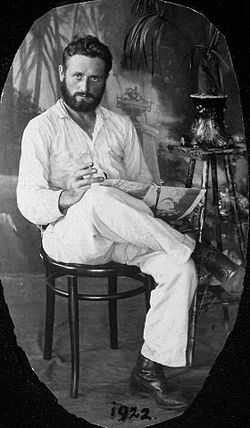
Frans Blom of Tulane University made superior maps of both the main site and various previously neglected outlying ruins, and filed a report for the Mexican government recommending work to preserve the ruins.
Image source: Frans Blom
Jan 1, 1949 - Dec 31, 1952
% complete
From 1949 through 1952, Alberto Ruz Lhuillier supervised excavations and consolidations of the site for Mexico's National Institute of Anthropology and History (INAH), transforming modern understanding of Palenque.
Image source: Alberto Ruz Lhuillier
Jun 15, 1952
% complete
In 1952, Alberto Ruz Lhuillier removed a stone slab in the floor of the temple superstructure to reveal a passageway leading through a long stairway to Pakal's tomb, becoming the first person to gaze upon Pacal the Great's tomb in over a thousand years.
Image source: Kʼinich Janaabʼ Pakal
Jan 1, 1994
% complete
Little had been known about the early king B'utz Aj Sak Chiik until 1994, when a tablet was found describing a ritual for the king, shedding light on one of the dynasty's earliest rulers.
Jan 1, 1994
% complete
Temple XIII contained the Tomb of the Red Queen, an unknown noblewoman possibly the wife of Pakal, whose richly decorated burial chamber was discovered in 1994.
Image source: Tomb of the Red Queen
Jan 1, 2000
% complete
The existence of certain fossils associated with the region had been known since the 19th century, but they only received significant scientific and archaeological attention starting in the 2000s.
Jan 1, 2010
% complete
In 2010, Pennsylvania State University researchers Christopher Duffy and Kirk French identified the Piedras Bolas Aqueduct as a pressurized aqueduct, the earliest known in the New World.
Jun 1, 2022
% complete
In June 2022, archaeologists from Mexico's National Institute of Anthropology and History (INAH) announced the discovery of a 1,300-year-old nine-inch-tall stucco head statue in a pond, believed to depict a young Hun Hunahpu, the Maya mythological maize god.
Jan 1, 1973
% complete
In 1973, the first of the very productive Palenque Mesa Redonda (Round Table) conferences was held on the inspiration of Merle Greene Robertson; thereafter leading Mayanists would meet every few years to discuss new findings.
Image source: Merle Greene Robertson
Jan 1, 1981
% complete
'Palenque National Park' was designated in 1981 by the Mexican government, protecting the archaeological zone and its surrounding rainforest environment.
Image source: Palenque
Jan 1, 2005
% complete
By 2005, the discovered area covered up to 2.5 km² (0.97 sq mi), yet it is estimated that less than 10% of the total area of the city is explored, leaving more than a thousand structures still covered by jungle.
Jan 1, 2017
% complete
Palenque received 920,470 visitors in 2017, underscoring its status as one of Mexico's most popular archaeological destinations.
Or browse the full history timeline directory, with more than 2,000 topics.
This Palenque timeline was generated with the help of AI, using information found on the internet.
We work hard to keep these timelines accurate, but mistakes do get through. If you spot one, email us at [email protected] and we'll fix it for future visitors.
Generate yours with AI or build it from scratch, for free.
Export your timeline, add your own events, edit or remove AI-generated events, and much more
No credit card required.
Cancel anytime.
Cancel anytime.
You can create an unlimited number of timelines with up to 10 events on each one, customize how they look, export them to PDF, PNG, PowerPoint, CSV, and Excel, and share them with a link. Paid plans raise the event limit and add features like spreadsheet imports and collaborators.
Yes. You can cancel your subscription from your account page at any time, and you will not be charged again. Your subscription stays active for the rest of the period you already paid for.
Yes. We will email you a reminder before the annual renewal, and we will also email you a receipt.
Yes. You can email us within 15 days of any payment, and we will issue you a full refund.
Check out our pricing docs or send us an email anytime: [email protected].