-
Use Cases
-
Resources
-
Pricing
1559
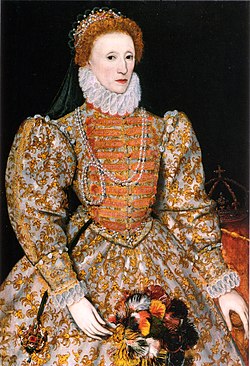
The Elizabethan Religious Settlement established the Church of England as a Protestant church and brought the English Reformation to a close.
Image source: Elizabethan Religious Settlement
1564
Thomas Fuller, in his Church History, dated the first use of the word Puritan to 1564.
Image source: Puritans
1570 - 1579
The vestments controversy of the 1570s demonstrated the limits of Puritan influence within the Church of England, despite the presence of many Calvinist bishops.
Image source: Vestments controversy
1580
From as early as the 1580s, Brownists rejected the notion of a state church and argued that congregations should remain independent from civil power.
1601
Arthur Dent's The Plain Man's Pathway to Heaven was one of the influential devotional works associated with English Puritan religious culture.
1603
Richard Rogers's Seven Treatises was among the devotional books identified with Puritan literature.
1610
The 1610 publication date is associated with Richard Rogers's Seven Treatises in the supplied historical account of Puritan devotional literature.
1620
Richard Sibbes was associated with Puritan devotional writing; the supplied list gives 1620 for his work.
1627
Henry Scudder's Christian's Daily Walk was one of the devotional works cited as part of Puritan literature.
1678
John Bunyan became famous for The Pilgrim's Progress, published in 1678 and associated with the broader Puritan literary tradition.
Image source: The Pilgrim's Progress
1603
The accession of James I prompted the Millenary Petition, a Puritan manifesto calling for reform of the English church.
1604
James I called the Hampton Court Conference in 1604 and heard four prominent Puritan leaders, including Laurence Chaderton, but largely sided with his bishops.
1642 - 1646
Church organs were commonly damaged or destroyed during the Civil War period, including the organ of Worcester Cathedral, which was attacked with an axe in 1642.
Image source: English Civil War
1642 - 1646
Puritans became a major political force in England and came to power as a result of the First English Civil War.
Image source: First English Civil War
1643
The Westminster Assembly was called in 1643 and brought together clergy of the Church of England to consider religious reform.
Image source: Westminster Assembly
1647
Parliament outlawed the celebration of Christmas, Easter, and Whitsuntide in 1647.
Image source: Christmas controversies
1649 - 1660
Under Oliver Cromwell, the parish system was retained and ministers were financed by tithes, while state-appointed Triers and Ejectors supervised ministers and excluded Catholics and radical sects.
Sep 27, 1650
The Rump Parliament passed an Act repealing the Acts of Supremacy and Uniformity and laws making recusancy a crime.
Image source: Rump Parliament
1653
Responsibility for recording births, marriages, and deaths was transferred from the church to a civil registrar.
1653
The Instrument of Government stated that people should not be compelled in matters of religion by penalties or otherwise, while supporting persuasion through doctrine and example.
Image source: Instrument of Government
1618
James I's Book of Sports permitted Christians to play football on Sunday afternoons after worship, in an attempt to offset Puritan strictness.
Image source: Declaration of Sports
1620 - 1640
Puritan settlers in the New England colonies established colony-supported churches and governments that closely intertwined civil law with religious practice.
Image source: Puritan migration to New England (1620–1640)
1629 - 1640
Some Puritans left for New England during Charles I's Personal Rule, supporting the founding of the Massachusetts Bay Colony and other northern settlements.
1634
Massachusetts laws banned the practice of individuals toasting each other's health as an expression of Puritan social discipline.
1635
The Puritans established Boston Latin School in 1635 to educate their sons. It became the first and oldest formal education institution in the English-speaking New World.
Image source: Boston Latin School
1636
Roger Williams established Providence Plantations in 1636 with a formal separation of church and state, representing a separatist alternative to Puritan colonial governance.
Image source: Rhode Island
1636
Harvard, founded in 1636, became one of the colleges to which boys interested in the ministry were sent.
Image source: Harvard University
1636
Massachusetts made blasphemy, defined as cursing God by atheism or the like, punishable by death.
1639
The New Haven code prescribed death for men convicted of lying with mankind as a man lies with a woman.
1641
Large-scale Puritan migration to New England ceased by 1641, after approximately 21,000 people had crossed the Atlantic.
1642
Massachusetts required heads of households to teach wives, children, and servants basic reading and writing so they could read the Bible and understand colonial laws.
1647
Massachusetts passed a law prohibiting Jesuit Roman Catholic priests from entering territory under Puritan jurisdiction.
1647
Massachusetts required towns of 50 or more households to hire a teacher and towns of 100 or more households to hire a grammar-school instructor.
1649
William Pynchon wrote The Meritorious Price of Our Redemption, a critique of Puritanical Calvinism.
1650
When Pynchon's book reached Boston after its London publication, it was burned on Boston Common and the colony pressured him to return to England.
1659 - 1681
Christmas was outlawed in Boston from 1659. The ban was revoked in 1681 by the English-appointed governor Edmund Andros.
1692
The Salem witch trials of 1692 had a lasting impact on the historical reputation of New England Puritans. Before 1692, New England had recorded at most sixteen convictions for witchcraft.
Image source: Salem witch trials
1790
By 1790, the rapid growth of New England's colonies had brought their population to around 700,000, attributed almost entirely to high birth rates and lower annual death rates.
Image source: New England
Oct 27, 1659
The first two of the four Boston martyrs were executed by Puritans on 27 October 1659. The date is commemorated as International Religious Freedom Day.
1660
The Quaker Mary Dyer was hanged in Boston in 1660 for repeatedly defying a Puritan law banning Quakers from the colony.
Image source: Mary Dyer
1660
After the Restoration, the Savoy Conference was called to determine a new religious settlement for England and Wales.
1661
King Charles II explicitly forbade Massachusetts from executing anyone for professing Quakerism.
1662
The Act of Uniformity restored the Church of England's pre-Civil War constitution. Around 2,400 Puritan clergy are traditionally estimated to have left the church in the Great Ejection.
Image source: Great Ejection
1662
After the Great Ejection, most expelled Puritans became nonconformists and worshipped outside the established Church of England.
1663
The supplied account states that 62 percent of Royal Society members in 1663 were similarly identified with Puritan religious culture.
Image source: Royal Society
1689
The Toleration Act was passed in the wake of the Glorious Revolution and ultimately allowed the position of religious dissenters to prevail.
Image source: Toleration Act 1688
1689 - 1728
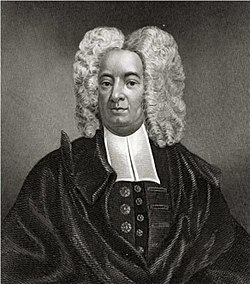
The generation of Cotton Mather ran from the overthrow of Edmund Andros and the new charter, mediated by Increase Mather, to Cotton Mather's death in 1728.
Image source: Cotton Mather
1750
From the middle of the 18th century, the term Nonconformist generally replaced Dissenter as the broader designation for Protestants outside the established church.
1775 - 1783
Puritanism contributed to the American Revolution through the belief that America was part of God's plan and through the development of eighteenth-century British Radical Whig ideas.
Or browse the full history timeline directory, with more than 2,500 topics.
This Puritan History timeline was generated with the help of AI, using information found on the internet.
We work hard to keep these timelines accurate, but mistakes do get through. If you spot one, email us at [email protected] and we'll fix it for future visitors.
Generate yours with AI or build it from scratch, for free.
Export your timeline, add your own events, edit or remove AI-generated events, and much more
No credit card required.
Cancel anytime.
Cancel anytime.
You can create an unlimited number of timelines with up to 10 events on each one, customize how they look, export them to PDF, PNG, PowerPoint, CSV, and Excel, and share them with a link. Paid plans raise the event limit and add features like spreadsheet imports and collaborators.
Yes. You can cancel your subscription from your account page at any time, and you will not be charged again. Your subscription stays active for the rest of the period you already paid for.
Yes. We will email you a reminder before the annual renewal, and we will also email you a receipt.
Yes. You can email us within 15 days of any payment, and we will issue you a full refund.
Check out our pricing docs or send us an email anytime: [email protected].