
-
Use Cases
-
Resources
-
Pricing
Pyotr Ilyich Tchaikovsky was a Russian composer of the late Romantic period, renowned for his symphonies, ballets (Swan Lake, The Nutcracker, The Sleeping Beauty), operas (Eugene Onegin), and the 1812 Overture. Despite personal struggles, he became one of the most popular composers of all time. More Less
May 7, 1840
% complete
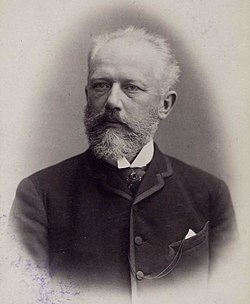
Pyotr Ilyich Tchaikovsky was born on 7 May 1840 in Votkinsk, a small town in Vyatka Governorate during the Russian Empire, in present-day Udmurtia near the banks of the Kama River. He would become one of the most celebrated Russian composers of the Romantic period.
Image source: Pyotr Ilyich Tchaikovsky
1844
% complete
In 1844, the Tchaikovsky family hired Fanny Dürbach, a 22-year-old French governess, who played an important role in the young Pyotr's early upbringing and education.
1850
% complete
In 1850, Tchaikovsky's parents sent him to the Imperial School of Jurisprudence in Saint Petersburg. His early separation from his mother caused emotional trauma that lasted the rest of his life.
Image source: Imperial School of Jurisprudence
1855
% complete
In 1855, Tchaikovsky's father funded private piano lessons with Rudolph Kündinger and questioned him about the prospects of a musical career for his son.
Image source: Pyotr Ilyich Tchaikovsky
Jun 10, 1859
% complete
On 10 June 1859, the 19-year-old Tchaikovsky graduated from the Imperial School of Jurisprudence as a titular counselor, a low rung on the civil service ladder.
1861
% complete
In 1861, Tchaikovsky attended Russian Musical Society classes in music theory taught by Nikolai Zaremba at the Mikhailovsky Palace, now the Russian Museum. These classes were a precursor to the Saint Petersburg Conservatory.
Image source: Saint Petersburg Conservatory
1862
% complete
The Saint Petersburg Conservatory opened its doors in 1862, building upon the RMS classes Tchaikovsky had attended. Tchaikovsky entered the nascent institution to pursue formal musical education.
1865
% complete
Tchaikovsky graduated from the Saint Petersburg Conservatory in 1865, completing his formal musical training and preparing to launch his professional career as a composer.
1854
% complete
In 1854, when Tchaikovsky was just 14 years old, his mother died from cholera. The loss intensified the emotional trauma caused by their earlier separation and affected him for the rest of his life.
1868
% complete
In 1868, Tchaikovsky met Belgian soprano Désirée Artôt, with whom he considered marriage. Owing to various circumstances, however, the relationship ultimately ended.
Image source: Désirée Artôt
1877
% complete
In 1877, at the age of 37, Tchaikovsky wed Antonina Miliukova, a former student. The marriage proved troubled, and discussion of Tchaikovsky's personal life, especially his sexuality, has been extensive among composers of his era.
Image source: Antonina Miliukova
Mar 23, 1881
% complete
On 23 March 1881, Nikolai Rubinstein died in Paris. Tchaikovsky composed a tribute piece in response, first performed privately at the Moscow Conservatory on the first anniversary of Rubinstein's death; it became extremely popular during the composer's lifetime.
Image source: Nikolai Rubinstein
1884
% complete
In 1884, Tchaikovsky began to shed his unsociability and restlessness, becoming more engaged with public and professional life as his stature grew.
1856
% complete
In 1856, critic Vladimir Stasov and 18-year-old pianist Mily Balakirev agreed upon a nationalist agenda for Russian music, taking Glinka's operas as a model, incorporating folk elements, and rejecting traditional Western practices. This group became known as The Five.
Image source: The Five (composers)
1859
% complete
The Russian Musical Society (RMS) was founded in 1859 by the Grand Duchess Elena Pavlovna, a German-born aunt of Tsar Alexander II, and her protégé, the pianist and composer Anton Rubinstein. It created opportunities for formal musical education in Russia.
1865
% complete
After Tchaikovsky graduated in 1865, Anton Rubinstein's brother Nikolai offered him the post of Professor of Music Theory at the soon-to-open Moscow Conservatory, establishing his professional career.
Image source: Moscow Conservatory
Sep 11, 1865
% complete
On 11 September 1865, Tchaikovsky's Characteristic Dances received its first public performance, conducted by Johann Strauss II at a concert in Pavlovsk Park. Tchaikovsky later included this work, re-titled Dances of the Hay Maidens, in his opera The Voyevoda.
1867 - 1878
% complete
From 1867 to 1878, Tchaikovsky combined his professorial duties with work as a music critic while continuing to compose. The publication of his songs and piano music from 1867 onward helped boost his popularity.
Feb 1868
% complete
Tchaikovsky's first opera, The Voyevoda, based on a play by Alexander Ostrovsky, was given its first complete performance, minus changes requested by Rubinstein and Zaremba, in Moscow in February 1868.
Image source: The Voyevoda (opera)
1869
% complete
Tchaikovsky's first opera, The Voyevoda, based on a play by Alexander Ostrovsky, premiered in 1869, marking his entry into operatic composition.
1869
% complete
In 1869, Tchaikovsky and Balakirev worked together on what became Tchaikovsky's first recognized masterpiece, the fantasy-overture Romeo and Juliet, a work which The Five wholeheartedly embraced.
1870
% complete
Tchaikovsky's opera Undina followed The Voyevoda with its premiere in 1870, continuing his exploration of operatic composition.
Image source: Undina (Tchaikovsky)
1874
% complete
Tchaikovsky composed his First Piano Concerto in the second half of 1874. It went on to become one of the most popular concert works in the classical repertoire.
Image source: Piano Concerto No. 1 (Tchaikovsky)
1874
% complete
The Oprichnik, the first Tchaikovsky opera to survive intact, premiered in 1874, securing his place among Russia's operatic composers.
Image source: The Oprichnik
1880 - 1881
% complete
With the Cathedral of Christ the Saviour nearing completion, Nikolai Rubinstein suggested Tchaikovsky compose a grand commemorative piece. He wrote to Nadezhda von Meck that the resulting 1812 Overture would be 'very loud and noisy' and written 'with no warm feeling of love.'
Image source: 1812 Overture
1885
% complete
In 1885, Tsar Alexander III requested a new production of Tchaikovsky's beloved opera Eugene Onegin at the Bolshoi Kamenny Theatre in Saint Petersburg, a sign of imperial favor and growing recognition.
Image source: Eugene Onegin (opera)
Jan 1885
% complete
In January 1885, Tchaikovsky's Third Symphony was premiered in Saint Petersburg, marking an important moment in his symphonic output.
Image source: Symphony No. 3 (Tchaikovsky)
Jan 1887
% complete
In January 1887, Tchaikovsky substituted on short notice at the Bolshoi Theater in Moscow for performances of his opera Cherevichki, launching his conducting career.
Image source: Cherevichki
Nov 1887
% complete
In November 1887, Tchaikovsky arrived at Saint Petersburg in time to hear several of the Russian Symphony Concerts, devoted exclusively to the music of Russian composers.
Image source: Russian Symphony Concerts
1888
% complete
In 1888, Tchaikovsky led the premiere of his Fifth Symphony in Saint Petersburg, repeating the work a week later alongside the first performance of his tone poem Hamlet.
Image source: Symphony No. 5 (Tchaikovsky)
1889 - 1890
% complete
Tchaikovsky served as director of the Moscow branch of the Russian Musical Society during the 1889–1890 season, taking a leadership role in Russian musical life.
Image source: Russian Musical Society
1880
% complete
During this time, Tchaikovsky's foreign reputation grew and a positive reassessment of his music took place in Russia, thanks in part to Fyodor Dostoevsky's call for 'universal unity' with the West at the unveiling of the Pushkin Monument in Moscow in 1880.
Image source: Demolition of monuments to Alexander Pushkin in Ukraine
Jan 1890
% complete
A recording was made in Moscow in January 1890 by Julius Block on behalf of Thomas Edison, capturing a rare sonic document connected to Tchaikovsky's era.
Image source: Julius H. Block
1891
% complete
Conducting brought Tchaikovsky to the United States in 1891, where he led the New York Music Society's orchestra in his Festival Coronation March at the inaugural concert of Carnegie Hall.
Image source: Carnegie Hall
1892
% complete
In 1892, Tchaikovsky was voted a member of the Académie des Beaux-Arts in France, only the second Russian subject to be so honored, following sculptor Mark Antokolsky.
Image source: Académie des Beaux-Arts
Nov 6, 1893
% complete
On 6 November 1893, Tchaikovsky died in Saint Petersburg, aged 53. His works had already secured him a place as one of Russia's greatest composers, and memorial concerts honored his memory that same month.
Or browse the full history timeline directory, with more than 2,000 topics.
This Pyotr Ilyich Tchaikovsky timeline was generated with the help of AI, using information found on the internet.
We work hard to keep these timelines accurate, but mistakes do get through. If you spot one, email us at [email protected] and we'll fix it for future visitors.
Generate yours with AI or build it from scratch, for free.
Export your timeline, add your own events, edit or remove AI-generated events, and much more
No credit card required.
Cancel anytime.
Cancel anytime.
You can create an unlimited number of timelines with up to 10 events on each one, customize how they look, export them to PDF, PNG, PowerPoint, CSV, and Excel, and share them with a link. Paid plans raise the event limit and add features like spreadsheet imports and collaborators.
Yes. You can cancel your subscription from your account page at any time, and you will not be charged again. Your subscription stays active for the rest of the period you already paid for.
Yes. We will email you a reminder before the annual renewal, and we will also email you a receipt.
Yes. You can email us within 15 days of any payment, and we will issue you a full refund.
Check out our pricing docs or send us an email anytime: [email protected].