
-
Use Cases
-
Resources
-
Pricing
The Red River Rebellion was a Métis-led resistance in the Red River Settlement against the Canadian government’s transfer and survey of Rupert’s Land. Led politically by Louis Riel, it resulted in negotiations that created Manitoba in 1870, though tensions and violence continued afterward. More Less
1700 - 1899
% complete
Métis men established traditions of working as trappers, guides, and interpreters for fur traders while their communities also developed farms.
Image source: Métis
1700 - 1799
% complete
In the late eighteenth century, English and Scottish men entered the fur trade and married into Ojibwe and other First Nations communities in the region.
1700 - 1899
% complete
During the eighteenth and nineteenth centuries, European and Indigenous peoples in the region intermarried and developed interconnected communities.
1713
% complete
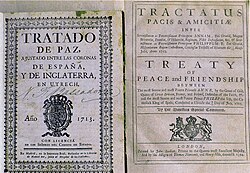
The Treaty of Utrecht confirmed British claims to the territory later associated with Rupert's Land and removed Louis XIV and his subjects from it.
Image source: Peace of Utrecht
1763
% complete
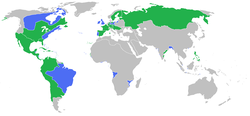
The Treaty of Paris confirmed George III's dispossession of nearly all of Louis XV's North American colonies, further establishing the imperial context for the Red River region.
Image source: Treaty of Paris (1763)
1800 - 1899
% complete
More anglophone Protestants began settling in the Red River region from Ontario during the nineteenth century, adding to the colony's linguistic and religious tensions.
Image source: Red River Colony
1800 - 1899
% complete
In the early nineteenth century, families associated with the Red River communities developed farming traditions, with European husbands in the St. Marie context described by the source.
1868
% complete
The British Rupert's Land Act of 1868 authorized the transfer of Rupert's Land, creating the legal basis for its subsequent acquisition by Canada.
Image source: Rupert's Land Act 1868
1869 - 1870
% complete
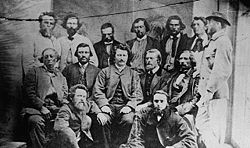
The Red River Rebellion, also called the Red River Resistance or First Riel Rebellion, developed into the sequence of events surrounding Métis opposition to Canada's expansion into the Red River Colony.
Image source: Red River Rebellion
1869 - 1870
% complete
The Red River crisis became the first major crisis faced by Canada's new federal government after Confederation in 1867.
1869
% complete
In 1869, the Government of Canada bought Rupert's Land from the Hudson's Bay Company as part of the process of expanding the Dominion westward.
Image source: Rupert's Land
1869 - 1870
% complete
Louis Riel and his followers established a provisional government at the Red River Colony in the early stages of creating what would become Manitoba.
Jul 1869
% complete
Tensions increased after McDougall ordered a survey of the settlement. By July 1869, the Métis had become more suspicious of the Canadian government's intentions.
Aug 20, 1869
% complete
A survey party headed by Colonel John Stoughton Dennis arrived at Fort Garry on August 20, 1869, to begin surveying the settlement.
Sep 28, 1869
% complete
Canada appointed the English-speaking and notoriously francophobic William McDougall as designate of the lieutenant governor of the North-West Territories, anticipating the formal transfer.
Oct 1869
% complete
After the survey disruption, Riel felt strong enough to initiate the breach of October 1869, marking a decisive escalation in the resistance.
Oct 11, 1869
% complete
On October 11, 1869, Louis Riel and other Métis disrupted the survey's work, openly challenging the process by which Canada was preparing to assume control.
Image source: Louis Riel
Dec 1869
% complete
Around the middle of December 1869, Riel presented a convention with a list of fourteen rights as a condition for the colony's union with Canada.
Jan 5, 1870
% complete
Delegates met with Riel on January 5, 1870, but the meeting reached no conclusions.
Mar 4, 1870
% complete
Thomas Scott was executed by a firing squad on March 4, 1870, an act that intensified the political crisis surrounding Riel's provisional government.
Image source: Thomas Scott (Manitoba politician)
1869 - 1870
% complete
The sequence from the 1869 resistance and provisional government to the 1870 Manitoba Act established the political path by which the Red River Colony became Manitoba.
May 12, 1870
% complete
The settlement of the Red River crisis formed the basis for the Manitoba Act, passed on May 12, 1870.
Image source: Manitoba Act, 1870
May 12, 1870
% complete
On May 12, 1870, the Métis were given 200,000 hectares of land that would make up the province of Manitoba.
Jul 15, 1870
% complete
The Manitoba Act admitted Manitoba to the Canadian Confederation on July 15, 1870, transforming the former Red River Colony into a province.
Aug 1870
% complete
Riel peacefully withdrew from Fort Garry in August 1870 before troops sent by Canada could arrive.
1875 - 1880
% complete
In 1875, Louis Riel was formally exiled from Canada for five years as a consequence of the political aftermath of the Red River Rebellion.
1885
% complete
Louis Riel returned to Canada in 1885, fifteen years after the Red River crisis and after his formal exile.
1885
% complete
In 1885, Riel led the ill-fated North-West Rebellion, a later uprising distinct from the Red River Rebellion.
Image source: North-West Rebellion
1885
% complete
The North-West Rebellion ended with Riel's capture and execution, completing the later tragic chapter of his political career.
2020
% complete
Frances Koncan's 2020 play Women of the Fur Trade is set in a fort in Red River and features three women discussing the events around them.
Image source: Women of the Fur Trade
Or browse the full history timeline directory, with more than 2,000 topics.
This Red River Rebellion timeline was generated with the help of AI, using information found on the internet.
We work hard to keep these timelines accurate, but mistakes do get through. If you spot one, email us at [email protected] and we'll fix it for future visitors.
Generate yours with AI or build it from scratch, for free.

Export your timeline, add your own events, edit or remove AI-generated events, and much more
No credit card required.
Cancel anytime.
Cancel anytime.
You can create an unlimited number of timelines with up to 10 events on each one, customize how they look, export them to PDF, PNG, PowerPoint, CSV, and Excel, and share them with a link. Paid plans raise the event limit and add features like spreadsheet imports and collaborators.
Yes. You can cancel your subscription from your account page at any time, and you will not be charged again. Your subscription stays active for the rest of the period you already paid for.
Yes. We will email you a reminder before the annual renewal, and we will also email you a receipt.
Yes. You can email us within 15 days of any payment, and we will issue you a full refund.
Check out our pricing docs or send us an email anytime: [email protected].