
-
Use Cases
-
Resources
-
Pricing
1780
% complete
In 1780, Daniel Shays resigned from the army without receiving his pay. He returned home and found himself in court for nonpayment of debts, an experience that connected his personal circumstances to the broader economic tensions in Massachusetts.
Image source: Daniel Shays
1783
% complete
When the Revolutionary War ended in 1783, Massachusetts merchants' European business partners refused to extend lines of credit. They instead demanded payment in hard currency, despite the country-wide shortage of such currency.
Image source: Shays' Rebellion
1782
% complete
In 1782, Job Shattuck of Groton, Massachusetts, organized residents to physically prevent tax collectors from performing their duties. The action was an early protest against the state government.
Feb 3, 1783
% complete
On February 3, 1783, a larger-scale protest took place in Uxbridge, Massachusetts, near the Rhode Island border. A mob seized property confiscated by a constable and returned it to its owners.
1786
% complete
Matters were resolved without violence in Rhode Island after the country party gained control of the legislature in 1786. The legislature enacted measures requiring merchants to trade debt instruments for devalued currency.
1786
% complete
In August 1786, the Massachusetts legislature adjourned without considering the many petitions sent to Boston by rural communities. The failure to address these petitions helped turn rural protest into direct action.
Aug 1786
% complete
Protests in rural Massachusetts escalated into direct action in August 1786. The unrest reflected opposition to taxes, debt collection, and the policies of the state government.
1785
% complete
Governor John Hancock resigned in early 1785, citing health reasons. Some observers suggested that he anticipated trouble arising from the state's growing economic and political tensions.
Image source: John Hancock
1785
% complete
By early 1785, many influential merchants and political leaders had already agreed that the United States needed a stronger central government. Their position later shaped responses to the Massachusetts disturbances and debates over constitutional reform.
Sep 11, 1786 - Sep 14, 1786
% complete
Shortly after Shays's Rebellion broke out, delegates from five states met in Annapolis, Maryland, from September 11 to 14, 1786. They concluded that vigorous steps were needed to reform the federal government.
Sep 14, 1786
% complete
The Annapolis delegates disbanded because the meeting lacked full representation and authority. They called for a convention of all the states to meet in Philadelphia in May 1787.
Oct 31, 1786
% complete
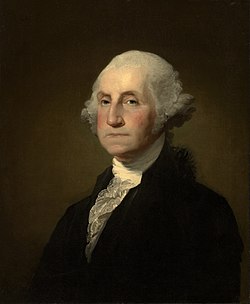
George Washington had been calling for constitutional reform for many years. In a letter to Henry Lee dated October 31, 1786, he discussed employing influence to appease the tumults in Massachusetts.
Image source: George Washington
1787
% complete
In early 1787, John Jay wrote that the rural disturbances and the central government's inability to fund troops in response made the inefficiency of the federal government increasingly manifest.
Image source: John Jay
1787
% complete
In the gubernatorial election of 1787, John Hancock received few votes from the rural parts of Massachusetts and was trounced by John Hancock. The result reflected the political divisions surrounding the rebellion.
Jan 30, 1787
% complete
In a letter to James Madison dated January 30, 1787, Thomas Jefferson argued that occasional rebellion serves to preserve freedoms. His comment contrasted with calls for stronger authority in response to the Massachusetts unrest.
Image source: Thomas Jefferson
Nov 13, 1787
% complete
In a letter to William Stephens Smith dated November 13, 1787, Jefferson wrote that the tree of liberty must be refreshed from time to time with the blood of patriots and tyrants, calling it its natural manure.
1788
% complete
Massachusetts Federalists, including Henry Knox, actively courted swing votes during the debates leading up to the state's ratifying convention in 1788.
Feb 6, 1788
% complete
When the vote was taken on February 6, 1788, representatives of rural communities involved in the rebellion voted against ratification by a wide margin.
Feb 6, 1788
% complete
A coalition of merchants, urban elites, and market-town leaders carried the ratification vote in Massachusetts. The state ratified the Constitution by a vote of 187 to 168.
1786 - 1787
% complete
The fighting associated with Shays' Rebellion took place in areas around Springfield during 1786 and 1787. Springfield became a central point in the confrontation between the protesters and Massachusetts authorities.
1787
% complete
In 1787, the protesters marched on the federal Springfield Armory in an unsuccessful attempt to seize its weaponry and overthrow the government.
1787
% complete
During the 1786–1787 disturbances, Daniel Shays emerged as a leading figure among the protesters. His name became attached to the rebellion and its forces.
Jan 4, 1787
% complete
On January 4, 1787, Governor James Bowdoin proposed creating a privately funded militia army to confront the rebellion and restore state authority.
Feb 4, 1787
% complete
On the morning of February 4, 1787, General Benjamin Lincoln routed Shaysite forces at Petersham, Massachusetts. The action represented a major defeat for the rebel forces.
Feb 16, 1787
% complete
On February 16, 1787, the Massachusetts legislature passed the Disqualification Act. The measure was intended to prevent a legislative response by sympathizers of the rebels.
Dec 6, 1787
% complete
John Bly and Charles Rose were hanged on December 6, 1787, as part of the government's punitive response to the rebellion.
1788
% complete
Daniel Shays was pardoned in 1788. Afterward, he returned to Massachusetts from hiding in the Vermont woods.
1788
% complete
After returning from hiding in the Vermont woods, Daniel Shays later moved to the Conesus, New York, area. He died there poor and obscure in 1825.
1825
% complete
Daniel Shays died in 1825 in the Conesus, New York, area, poor and obscure after his role in the Massachusetts rebellion.
Or browse the full history timeline directory, with more than 2,000 topics.
This Shays' Rebellion timeline was generated with the help of AI, using information found on the internet.
We work hard to keep these timelines accurate, but mistakes do get through. If you spot one, email us at [email protected] and we'll fix it for future visitors.
Generate yours with AI or build it from scratch, for free.
Export your timeline, add your own events, edit or remove AI-generated events, and much more
No credit card required.
Cancel anytime.
Cancel anytime.
You can create an unlimited number of timelines with up to 10 events on each one, customize how they look, export them to PDF, PNG, PowerPoint, CSV, and Excel, and share them with a link. Paid plans raise the event limit and add features like spreadsheet imports and collaborators.
Yes. You can cancel your subscription from your account page at any time, and you will not be charged again. Your subscription stays active for the rest of the period you already paid for.
Yes. We will email you a reminder before the annual renewal, and we will also email you a receipt.
Yes. You can email us within 15 days of any payment, and we will issue you a full refund.
Check out our pricing docs or send us an email anytime: [email protected].