-
Use Cases
-
Resources
-
Pricing
1831
Reverend Charles Grandison Finney began allowing women to pray aloud in gatherings of men and women, challenging prevailing restrictions on women's public religious participation.
Image source: Charles Grandison Finney
1832
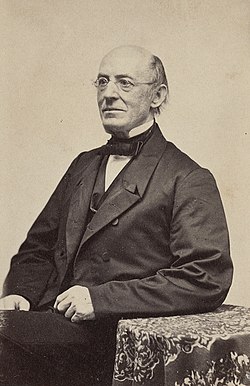
Beginning in 1832, abolitionist and journalist William Lloyd Garrison organized antislavery associations that encouraged women to participate fully, helping connect abolitionism with emerging women's rights activism.
1836
Ernestine Rose began lecturing to groups of women on the Science of Government, including the question of women's enfranchisement.
1839
Margaret Fuller began hosting conversations in Boston among women interested in discussing the great questions facing their sex. The gatherings were modeled on French salons.
Feb 1839
Mississippi enacted the first state law anywhere allowing married women to independently own and administer property. The statute was later expanded in 1846, 1857, 1868, 1880, and 1890.
1840
Lucretia Coffin Mott and Elizabeth Cady Stanton traveled to London with American abolitionists for the first World's Anti-Slavery Convention. A dispute over women's participation exposed the gender barriers within reform movements.
Image source: World Anti-Slavery Convention
1841
Sophia Ripley and her husband George Ripley founded Brook Farm in Massachusetts as an experiment in cooperative work in which men and women could work together and receive the same compensation.
Image source: Brook Farm
1841
Elizabeth Cady Stanton delivered her first public speech, on the temperance movement, before approximately 100 women in Seneca Falls.
Image source: Elizabeth Cady Stanton
1842
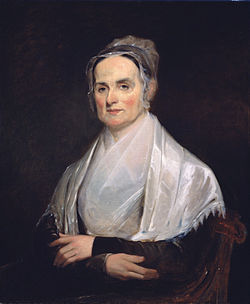
Lucretia Mott met Elizabeth Cady Stanton in Boston and again discussed the possibility of organizing a convention devoted to women's rights.
Image source: Lucretia Mott
1842
Thomas M'Clintock and Mary Ann M'Clintock became founding members of the Western New York Anti-Slavery Society and helped write its constitution.
Image source: American Anti-Slavery Society
1843
Margaret Fuller published The Great Lawsuit, calling on women to claim themselves as self-dependent and advancing an influential argument for women's intellectual and personal autonomy.
Image source: Margaret Fuller
1846
Women's groups led by Lucretia Mott and Paulina Wright Davis held public meetings in Philadelphia, providing an early forum for organized discussion of women's rights.
1847
After moving to Rochester, Frederick Douglass joined Amy and Isaac Post and the M'Clintocks in the Rochester-based chapter of the American Anti-Slavery Society.
Image source: Frederick Douglass
1847
A broad circle of abolitionists sympathetic to women's rights began discussing in 1847 the possibility of holding a convention wholly devoted to the rights of women.
1847
Before Stanton moved from Boston to Seneca Falls, she and Lucretia Mott talked once more about the possibility of holding a women's rights convention.
Image source: Seneca Falls Convention
Oct 1847
Lucy Stone gave her first public speech on women's rights, entitled The Province of Women, at her brother Bowman Stone's church in Gardner, Massachusetts.
Mar 1848
William Lloyd Garrison, the Motts, Abby Kelley Foster, Stephen Symonds Foster, and others hosted an Anti-Sabbath meeting in Boston to oppose laws applying only to Sunday and to seek more time away from labor.
Image source: William Lloyd Garrison
Mar 1848
Forty-four married women from western New York wrote to the Assembly, invoking the Declaration of Independence and arguing that government derives its just powers from the consent of the governed.
Apr 7, 1848
In response to a citizen's petition, the New York State Assembly passed the Married Woman's Property Act, allowing women to retain property brought into marriage and property acquired during it.
Image source: Married Women's Property Act 1870
Jun 1848
Approximately 200 Hicksites, including the Hunts and the M'Clintocks, formed the Yearly Meeting of Congregational Friends, also known as Progressive Friends, a more radical Quaker group.
Jun 2, 1848
Gerrit Smith was nominated in Rochester, New York, as the Liberty Party's presidential candidate. The party's reform politics formed part of the context surrounding the women's rights movement.
Image source: Gerrit Smith
1848
The convention's Declaration of Sentiments became, according to historian Judith Wellman, the single most important factor in spreading news of the women's rights movement around the country in 1848 and afterward.
1848
Lucretia and James Mott visited central and western New York for several reasons during the summer of 1848, bringing Mott into the immediate circle of activists preparing the Seneca Falls meeting.
Jul 1848
One of the M'Clintock women selected the 1776 Declaration of Independence as the model for the declaration the organizers intended to present at their women's rights convention.
Jul 9, 1848
After Quaker worship on Sunday, Lucretia Coffin Mott joined Mary Ann M'Clintock, Martha Coffin Wright, Elizabeth Cady Stanton, and Jane Hunt for tea at the Hunt home in Waterloo, where plans for the convention took shape.
Jul 19, 1848
On the hot, sunny morning of July 19, the organizing committee arrived shortly before ten o'clock at the Wesleyan Methodist Chapel and found a crowd outside and the church doors locked, an overlooked logistical detail.
Jul 19, 1848 - Jul 20, 1848
The Seneca Falls Convention was held in the Wesleyan Chapel in Seneca Falls, New York, over July 19–20, 1848. It became a foundational gathering of the United States women's rights movement.
Aug 1848
In August 1848, Lucretia Mott reflected on the two women's rights conventions in which she had participated that summer and judged them no greater than other projects and missions in which she had been involved.
1850 - 1861
National Women's Rights Conventions became annual events from 1850 until the outbreak of the American Civil War in 1861.
1850
The first in a series of annual National Women's Rights Conventions met in Worcester, Massachusetts, in 1850. Paulina Wright Davis later identified this meeting as the beginning of the national and international movement.
Image source: National Women's Rights Convention
1851
By the National Women's Rights Convention of 1851, women's right to vote had become a central tenet of the United States women's rights movement.
1870
Paulina Wright Davis authored The History of the National Woman's Rights Movement, a history of the antebellum movement approved by several involved suffragists, including Lucretia Mott and Elizabeth Cady Stanton.
1870
Davis's account gave the 1848 Seneca Falls meeting a relatively minor role and instead placed the beginning of the national and international women's rights movement at the 1850 Worcester convention.
1876
During the nation's centennial celebrations, Elizabeth Cady Stanton and Susan B. Anthony decided to write a more expansive history of the women's rights movement.
1881
Stanton and Anthony published the first volume of History of Woman Suffrage. The work emphasized their own roles, marginalized Lucy Stone's contribution, and treated the Worcester convention and earlier events selectively.
Image source: History of Woman Suffrage
1906 - 1920
After its prominent placement at Susan B. Anthony's funeral, the convention table was displayed on the stage at major suffrage meetings until 1920, although the grievance and resolution concerning woman suffrage were not written on it.
Mar 14, 1906
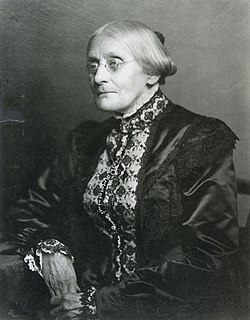
In keeping with Stanton's promotion of the table as an iconic relic, women's rights activists placed it at the head of the casket during Susan B. Anthony's funeral.
Image source: Susan B. Anthony
1920
Charlotte Woodward was the only one of the 100 Declaration of Sentiments signers still alive when the Nineteenth Amendment passed in 1920.
Image source: Nineteenth Amendment to the United States Constitution
1948
A stamp issued in 1948 commemorated the Seneca Falls Convention as part of a centennial celebration in Seneca Falls and featured Elizabeth Cady Stanton, Carrie Chapman Catt, and Lucretia Mott.
1980
The Women's Rights National Historical Park was established in 1980. It covers 6.83 acres in Seneca Falls and nearby Waterloo, New York.
1980
The Wesleyan Methodist Church and the M'Clintock House were listed on the National Register of Historic Places in 1980.
Image source: Women's Rights National Historical Park
1998
First Lady Hillary Clinton gave a speech in 1998 on the occasion of the 150th anniversary of the Seneca Falls Convention.
2015
The White House under President Barack Obama launched #FindtheSentiments in 2015 in an effort to locate an original copy of the Declaration of Sentiments.
Or browse the full history timeline directory, with more than 2,500 topics.
This Seneca Falls Convention timeline was generated with the help of AI, using information found on the internet.
We work hard to keep these timelines accurate, but mistakes do get through. If you spot one, email us at [email protected] and we'll fix it for future visitors.
Generate yours with AI or build it from scratch, for free.
Export your timeline, add your own events, edit or remove AI-generated events, and much more
No credit card required.
Cancel anytime.
Cancel anytime.
You can create an unlimited number of timelines with up to 10 events on each one, customize how they look, export them to PDF, PNG, PowerPoint, CSV, and Excel, and share them with a link. Paid plans raise the event limit and add features like spreadsheet imports and collaborators.
Yes. You can cancel your subscription from your account page at any time, and you will not be charged again. Your subscription stays active for the rest of the period you already paid for.
Yes. We will email you a reminder before the annual renewal, and we will also email you a receipt.
Yes. You can email us within 15 days of any payment, and we will issue you a full refund.
Check out our pricing docs or send us an email anytime: [email protected].