-
Use Cases
-
Resources
-
Pricing
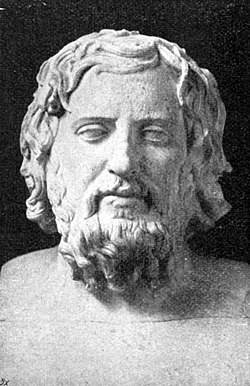
Socrates (c. 470–399 BCE) was an ancient Greek philosopher from Athens, widely regarded as one of the founders of Western philosophy. Known for his Socratic method of questioning, he left no writings of his own; his ideas survive through the works of his students Plato and Xenophon. He was tried and executed by Athens for impiety and corrupting the youth. More Less
399 BC
Socrates's religious nonconformity challenged the views of his times and his critique reshaped religious discourse for the coming centuries.
Image source: Socrates

100 AD - 300 AD
Interest in Socrates kept increasing until the third century AD, as ancient writers and philosophers continued to engage with his life, methods, and teachings.
1701 - 1800
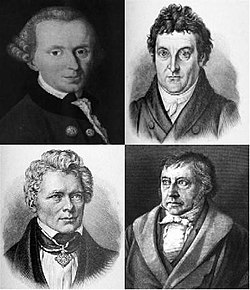
In the 18th century, German idealism revived philosophical interest in Socrates, mainly through Hegel's work.
Image source: German idealism
1945
For Popper, Socratic individualism, along with Athenian democracy, imply Popper's concept of the 'open society' as described in his The Open Society and Its Enemies (1945).
Image source: The Open Society and Its Enemies

1963
Arendt, in Eichmann in Jerusalem (1963), suggests that Socrates's constant questioning and self-reflection could prevent the banality of evil.
Image source: Eichmann in Jerusalem

1982
In 1982, the scholar of ancient philosophy Gregory Vlastos claimed that the Socratic method could not be used to establish the truth or falsehood of a proposition.
1818
In a seminal work titled 'The Worth of Socrates as a Philosopher' (1818), the philosopher Friedrich Schleiermacher attacked Xenophon's accounts; his attack was widely accepted.
Image source: Friedrich Schleiermacher

1900 - 1930
1940 - 1960
In the mid-twentieth century, philosophers such as Olof Gigon and Eugène Dupréel, based on Joel's arguments, proposed that the study of Socrates should focus on the various versions of his character and beliefs rather than aiming to reconstruct a historical Socrates.
1872
In his first book, The Birth of Tragedy (1872), Nietzsche held Socrates responsible for what he saw as the deterioration of ancient Greek civilization during the 4th century BC and after.
Image source: The Birth of Tragedy

This Socrates timeline was generated with the help of AI, using information found on the internet.
We work hard to keep these timelines accurate, but mistakes do get through. If you spot one, email us at [email protected] and we'll fix it for future visitors.
Generate yours with AI or build it from scratch, for free.