-
Use Cases
-
Resources
-
Pricing
100 BC
% complete
Rabbinical tradition attributes the Book of Wisdom (included within the Septuagint and recognized as part of a biblical canon by several churches) to Solomon, although this book was probably written in the 2nd century BCE.
Image source: Book of Wisdom
150
% complete
The Gnostic Apocalypse of Adam, which may date to the 1st or 2nd century, refers to a legend in which Solomon sends out an army of demons to seek a virgin who had fled from him, perhaps the earliest surviving mention of the later common tale that Solomon controlled demons and made them his slaves.
Image source: Apocalypse of Adam
950
% complete
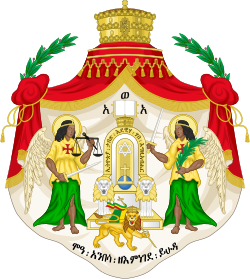
According to Ethiopian tradition, the son of Solomon and the Queen of Sheba became Menelik I, King of Axum, and founded a dynasty that would reign as the Jewish, then Christian, Empire of Ethiopia which lasted 2900 years until Haile Selassie was overthrown in 1974.
Image source: Menelik I
1270 - 1974
% complete
The claim to such a lineage and to possession of the Ark was an important source of legitimacy and prestige for the Ethiopian monarchy throughout the centuries and had important and lasting effects on Ethiopian culture.
Image source: Solomonic dynasty
1320
% complete
An Ethiopian account from the 14th century (Kebra Nagast) maintains that the Queen of Sheba had sexual relations with King Solomon and gave birth beside the Mai Bella stream in the province of Hamasien, Eritrea.
Image source: Kebra Nagast
1568
% complete
The Solomon Islands, a country and archipelago in Melanesia, were named for King Solomon by the Spanish navigator Álvaro de Mendaña, who became the first European to see the islands in 1568, believing they held the gold of Ophir.
Image source: Solomon Islands
50
% complete
Solomon is the subject of many later references and legends, most notably the Testament of Solomon, part of biblical apocrypha from the 1st century CE, which portrays him commanding demons to build the Temple.
1974
% complete
The dynasty founded by Menelik I, said to descend from Solomon and the Queen of Sheba, reigned as the Jewish, then Christian, Empire of Ethiopia for 2900 years until Emperor Haile Selassie was overthrown in 1974.
Image source: 1974 Ethiopian coup d'état
650
% complete
Thompson goes further than other minimalist scholars, arguing that Jerusalem became a city and capable of being a state capital only in the mid-7th century BCE.
1955 - 1960
% complete
Yigael Yadin's excavations at Hazor, Megiddo, Beit Shean and Gezer uncovered structures that he and others argued date from Solomon's reign, though others, such as Israel Finkelstein and Neil Silberman, argue they should be dated to the Omride period, more than a century later.
Image source: Yigael Yadin
94
% complete
The first-century Romano-Jewish scholar Josephus in Against Apion, citing Tyrian court records and Menander, gives a specific year during which King Hiram I of Tyre sent materials to Solomon for the construction of the Temple.
Image source: Against Apion
1998
% complete
Historical evidence of King Solomon other than the biblical accounts has been so minimal that some scholars, including Muhly (1998), have understood the period of his reign as a 'Dark Age.'
2000
% complete
Such minimalist positions have been criticized by other archaeologists and scholars, who argue that a united monarchy did exist in the 10th century BCE, while agreeing that the biblical account contains exaggerations.
Image source: Kingdom of Israel (united monarchy)
2001
% complete
Israel Finkelstein and Neil Silberman argue that structures Yadin dated to Solomon's reign should be dated to the Omride period, more than a century after Solomon. They accept David and Solomon were real inhabitants of Judah about the 10th century BCE but claim the earliest independent reference to Israel is about 890 BCE, and for Judah about 750 BCE.
Image source: Israel Finkelstein
2003
% complete
Possible evidence for the described wealth of Solomon and his kingdom was discovered in ancient silver hoards, which were found in Israel and Phoenicia and recognized for their importance in 2003.
Image source: Solomon
2010
% complete
Current consensus states that regardless of whether or not a man named Solomon truly reigned as king over the Judean hills in the tenth century BCE, the biblical description of his apparent empire's lavishness is almost surely an anachronistic exaggeration.
2013
% complete
The biblical passages that understand Tarshish as a source of King Solomon's great wealth in metals—especially silver, but also gold, tin and iron (Ezekiel 27)—were linked to archaeological evidence from silver hoards found in Phoenicia in 2013.
Image source: Tarshish
2014
% complete
In 2014, professor of anthropology James W. Hardin and colleagues studied bullae associated with an Iron Age IIA political entity typified by elite activities dated to the 10th century BCE, offering possible evidence related to Solomon's era.
2020
% complete
Seventeen years after the discovery of ancient flasks, traces of cinnamon were found in Phoenician clay flasks from three small sites in the Israeli coastal plain dating from the 10th century BCE.
2023
% complete
A 2023 textbook described three possibilities for the etymology of Solomon's name: 'compensation or a substitute,' 'the ruler of peace,' or based on the deified evening star Shalim.
750
% complete
Some scholars date developments to the mid-8th century BCE, placing a possible visit from the Queen of Sheba to Jerusalem around this time—some 250 years later than the timeframe traditionally given for king Solomon's reign.
Image source: Queen of Sheba
832
% complete
According to the Seder Olam Rabbah chronology, Solomon built the First Temple in Jerusalem in 832 BCE, during his reign over the united kingdom of Israel.
Image source: Solomon's Temple
900
% complete
The Seder Olam Rabbah holds that Solomon's reign was not in 1000 BCE, but rather in the ninth century BCE, during which time he built the First Temple in 832 BCE.
Image source: Seder Olam Rabbah
1700
% complete
In the third volume of Neal Stephenson's The Baroque Cycle, The System of the World, a mysterious member of the entourage of tsar Peter the Great, named 'Solomon Kohan,' appears in early 18th-century London.
Image source: The System of the World (novel)
1748
% complete
George Frideric Handel composed an oratorio entitled Solomon in 1748, celebrating the biblical king's wisdom, wealth, and the famous visit of the Queen of Sheba.
Image source: Solomon (Handel)
1885
% complete
In Rider Haggard's King Solomon's Mines (1885), the protagonists discover multiple settings said to have belonged to or to have been built at the request of King Solomon, such as 'Solomon's Great Road' and the mines themselves.
Image source: King Solomon's Mines
1975
% complete
Grateful Dead included a song called 'King Solomon's Marbles' on their 1975 album Blues for Allah, an instrumental piece referencing the legendary king.
Image source: Blues for Allah
1975
% complete
Popol Vuh released Das Hohelied Salomos in 1975, an album with texts from the Song of Solomon set to music by the German krautrock band.
1993
% complete
Kate Bush wrote a song called 'Song of Solomon' in 1993 for her album The Red Shoes, drawing on the biblical text associated with Solomon.
Image source: The Red Shoes (album)
1995
% complete
Solomon & Sheba (1995) was a Showtime television film directed by Robert M. Young, dramatizing the biblical story of King Solomon and the Queen of Sheba.
Image source: Solomon & Sheba (1995 film)
1995
% complete
Jazz singer Cassandra Wilson performs the self-penned 'Solomon Sang' on her 1995 Blue Note album New Moon Daughter.
Image source: New Moon Daughter
2004
% complete
In Neal Stephenson's three-volume The Baroque Cycle, 17th-century alchemists like Isaac Newton believe that Solomon created a kind of 'heavier' gold with mystical properties cached in the Solomon Islands, accidentally discovered by the crew of a wayward Spanish galleon.
Image source: The Baroque Cycle
2005
% complete
Estonian composer Toivo Tulev composed a piece for choir, soloists and chamber orchestra entitled Songs in 2005, drawing on texts connected to Solomon.
Image source: Toivo Tulev
2005
% complete
Jamaican dancehall rapper Sean Paul mentions King Solomon in his 2005 hit song 'We Be Burnin',' invoking the king's legendary wisdom and riches.
Image source: We Be Burnin'
2019 - 2100
% complete
Neal Stephenson's sequel to Reamde, 2019's Fall; or, Dodge in Hell, was also a surprise sequel to the Baroque Cycle novels and Cryptonomicon. In its mid- to late-21st-century span, Solomon Kohan has joined the faculty of Princeton University under the name Solly Pesador.
Image source: Fall; or, Dodge in Hell
2020
% complete
Naamah, a princess of Ammon (now in Jordan) who arrives in Jerusalem at age fourteen to marry King Solomon and tells of their life together, is the narrator of Aryeh Lev Stollman's novel Queen of Jerusalem, published in 2020 in Hebrew translation under the title Divrei Y'mai Naamah.
Or browse the full history timeline directory, with more than 2,000 topics.
This Solomon timeline was generated with the help of AI, using information found on the internet.
We work hard to keep these timelines accurate, but mistakes do get through. If you spot one, email us at [email protected] and we'll fix it for future visitors.
Generate yours with AI or build it from scratch, for free.
Export your timeline, add your own events, edit or remove AI-generated events, and much more
No credit card required.
Cancel anytime.
Cancel anytime.
You can create an unlimited number of timelines with up to 10 events on each one, customize how they look, export them to PDF, PNG, PowerPoint, CSV, and Excel, and share them with a link. Paid plans raise the event limit and add features like spreadsheet imports and collaborators.
Yes. You can cancel your subscription from your account page at any time, and you will not be charged again. Your subscription stays active for the rest of the period you already paid for.
Yes. We will email you a reminder before the annual renewal, and we will also email you a receipt.
Yes. You can email us within 15 days of any payment, and we will issue you a full refund.
Check out our pricing docs or send us an email anytime: [email protected].