-
Use Cases
-
Resources
-
Pricing
The Spanish Flu pandemic of 1918-1920 was one of the deadliest disease outbreaks in human history, infecting roughly one-third of the world's population and killing an estimated 50 million people. Caused by the H1N1 influenza A virus, it spread rapidly during World War I, occurring in three waves and disproportionately affecting young, healthy adults. More Less
1918 - 1920
% complete
Over the course of the pandemic, roughly one-third of the world's population—about 500 million people—was infected. Death toll estimates range from 17 million to as high as 100 million, making it one of the deadliest pandemics in human history.
Image source: Spanish flu
1918
% complete
The pandemic caused life expectancy in the United States to plummet by about 12 years in 1918, one of the sharpest single-year declines ever recorded. Most victims were previously healthy adults aged 20 to 40, an unusual pattern for influenza.
1918 - 1920
% complete
Although China experienced significant influenza activity, mortality rates were comparatively lower than in other regions, though reliable data is scarce. Some researchers have proposed northern China as a possible origin point of the pandemic virus.
Jun 1918 - Dec 1918
% complete
India suffered the greatest death toll of any country, with an estimated 12 to 18 million deaths. The pandemic disrupted agriculture and the economy, and its devastation fueled social unrest, contributing to the Indian independence movement's momentum.
Aug 1918 - 1919
% complete
Japan saw waves of infection affecting more than 20 million people, with estimates of deaths ranging from around 200,000 to over 400,000. The crisis prompted increased investment in public health infrastructure and medical research in Japan.
Sep 1918 - Nov 1918
% complete
The virus arrived in South Africa aboard troopships returning from Europe. Within about six weeks, roughly 300,000 South Africans died, about 6% of the population, with Black communities suffering disproportionately high mortality.
Sep 1918 - Dec 1918
% complete
The pandemic reached Brazil in September 1918, striking Rio de Janeiro especially hard and killing an estimated 300,000 Brazilians overall. President-elect Rodrigues Alves died of the flu before taking office, underscoring the disease's indiscriminate reach.
Oct 1918 - 1919
% complete
Remote Alaskan villages, particularly those of Alaska Native peoples, experienced catastrophic mortality rates due to isolation and lack of medical care. Entire villages were wiped out, with some communities losing the majority of their adult populations.
Nov 1918
% complete
Governor John Martin Poyer imposed a strict maritime quarantine on American Samoa upon learning of the outbreak in neighboring islands. As a result, American Samoa reported zero deaths from the Spanish flu, in stark contrast to Western Samoa's catastrophic losses.
Nov 1918 - 1920
% complete
Isolated communities with no prior exposure to influenza were devastated. In Western Samoa (now Samoa), about 22% of the population died within weeks after the virus arrived aboard the ship Talune, one of the deadliest documented mortality rates of the pandemic.
Nov 11, 1918
% complete
World War I ended with the Armistice of November 11, 1918. Celebratory crowds gathering in cities worldwide inadvertently accelerated the spread of influenza, causing case surges in the weeks following the armistice celebrations.
Image source: Armistice of 11 November 1918
Mar 4, 1918
% complete
The first known cases of the influenza that would become the Spanish flu were reported among soldiers at Camp Funston in Fort Riley, Kansas. Within weeks, hundreds of soldiers fell ill, and the virus spread with troops as the United States mobilized for World War I.
Mar 11, 1918
% complete
Just a week after the initial outbreak at Camp Funston, cases of the mysterious influenza appeared in Queens, New York, demonstrating how quickly the virus was moving through military installations and densely populated urban areas.
Apr 1918
% complete
As American Expeditionary Forces crossed the Atlantic to join the fighting in France, they carried the influenza virus with them. Crowded transport ships and trenches became ideal environments for transmission, seeding outbreaks across Western Europe.
Apr 1918 - May 1918
% complete
By late April 1918, the influenza had reached Brest, France, and soon spread to British and French troops on the Western Front and into civilian populations. The illness became known as the 'three-day fever' for its typically brief but debilitating course.
May 1918
% complete
Spain, a neutral country during World War I, did not censor its press, so newspapers there freely reported the epidemic's toll, including the illness of King Alfonso XIII. This gave the false impression that Spain was especially hard hit, and the pandemic became known as the 'Spanish flu.'
Jul 1918 - Aug 1918
% complete
The first wave of the pandemic, while highly contagious, was relatively mild, with most victims recovering within days. By midsummer 1918, case numbers declined significantly, leading many public health officials to believe the outbreak had passed.
Aug 1918 - Dec 1918
% complete
The second wave of the Spanish flu proved far more lethal than the first, killing healthy young adults in addition to the very young and old. It ravaged war-torn Europe, overwhelming hospitals already strained by World War I casualties.
Sep 1918
% complete
A far deadlier mutation of the virus appeared at Camp Devens near Boston in September 1918. Victims developed severe pneumonia, with some dying within hours of showing symptoms. The camp's physician described victims turning blue as their lungs filled with fluid.
Sep 28, 1918
% complete
Despite warnings from physicians, Philadelphia held a massive Liberty Loan parade attended by some 200,000 people. Within days, thousands of Philadelphians fell ill, and the city suffered one of the highest death rates of any American city, with over 12,000 deaths.
Oct 1918
% complete
October 1918 was the deadliest month of the pandemic in the United States, with approximately 195,000 Americans dying from influenza and its complications. Cities closed schools, theaters, churches, and businesses; some banned public gatherings entirely.
Jan 1919 - Apr 1919
% complete
A third wave of the pandemic swept through many parts of the world in early 1919. Though less deadly than the second wave, it still caused significant mortality before finally subsiding in the spring, marking the beginning of the end of the pandemic's acute phase.
Apr 3, 1919
% complete
While negotiating the Treaty of Versailles, President Woodrow Wilson contracted a severe case of influenza. Some historians believe the illness weakened him physically and mentally during critical negotiations, possibly influencing concessions he made to European allies.
Jan 1920 - Apr 1920
% complete
A final wave of the pandemic struck in early 1920, hitting areas such as New York City, Scandinavia, and some isolated regions that had largely escaped earlier waves. Mortality was lower than in previous waves, and the pandemic faded afterward.
1920 - 1930
% complete
In the years following the pandemic, countries like Norway analyzed their response data and found that coordinated interventions such as school closures and bans on public gatherings reduced peak mortality, informing future public health planning.
Apr 1920
% complete
By mid-1920, the Spanish flu pandemic had largely subsided. Why it ended remains unclear; one theory suggests the virus mutated toward less lethal forms, while another holds that so many people had been infected that herd immunity limited further spread.
1930
% complete
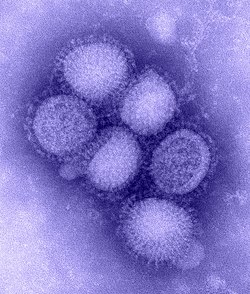
In 1930, scientists isolated swine influenza virus from pigs in the United States, finding it closely related to the 1918 pandemic strain. This discovery supported theories linking the Spanish flu to an H1N1 influenza A virus.
Image source: Influenza A virus subtype H1N1
1933
% complete
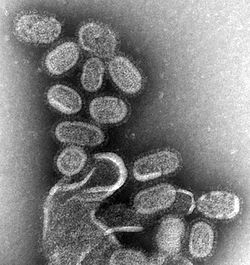
British scientists at the National Institute for Medical Research first isolated human influenza virus in 1933, fifteen years after the pandemic. This breakthrough enabled the development of vaccines and deeper understanding of influenza viruses.
Image source: Influenza
Or browse the full history timeline directory, with more than 2,000 topics.
This Spanish Flu Pandemic timeline was generated with the help of AI, using information found on the internet.
We work hard to keep these timelines accurate, but mistakes do get through. If you spot one, email us at [email protected] and we'll fix it for future visitors.
Generate yours with AI or build it from scratch, for free.
Export your timeline, add your own events, edit or remove AI-generated events, and much more
No credit card required.
Cancel anytime.
Cancel anytime.
You can create an unlimited number of timelines with up to 10 events on each one, customize how they look, export them to PDF, PNG, PowerPoint, CSV, and Excel, and share them with a link. Paid plans raise the event limit and add features like spreadsheet imports and collaborators.
Yes. You can cancel your subscription from your account page at any time, and you will not be charged again. Your subscription stays active for the rest of the period you already paid for.
Yes. We will email you a reminder before the annual renewal, and we will also email you a receipt.
Yes. You can email us within 15 days of any payment, and we will issue you a full refund.
Check out our pricing docs or send us an email anytime: [email protected].