-
Use Cases
-
Resources
-
Pricing
Stoicism is a Hellenistic philosophy founded in Athens around 301 BCE by Zeno of Citium. It teaches that virtue, reason, and acceptance of nature are the path to a tranquil life. Flourishing in Greece and later Rome through thinkers like Epictetus, Seneca, and Marcus Aurelius, Stoicism remains influential today in ethics and popular self-improvement. More Less
400 BCE
The Stoic tradition of logic originated in the late 4th century BCE in a different school of philosophy known as the Megarian school, whose dialectical methods were later absorbed and developed by the Stoics.
Image source: Megarian school

150 BCE
In the 2nd century BCE, Antipater of Tarsus is said to have introduced a simpler method involving the use of fewer themata in Stoic logic, although few details survive concerning this innovation.
1120
Propositional logic, which the ancient Stoics had developed to great sophistication, was redeveloped by Peter Abelard in the 12th century during the medieval revival of dialectic.
Image source: Peter Abelard

1847
Alongside George Boole, Augustus De Morgan's work in the middle of the 19th century marked the beginning of modern developments in logic that paralleled the propositional systems first explored by the Stoics.
Image source: Augustus De Morgan

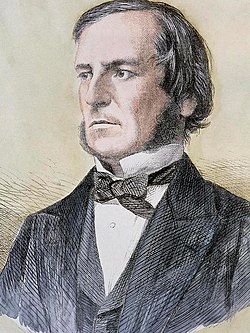
1847
Developments in modern logic that parallel Stoic logic began with George Boole, whose aim was to codify the relations studied much earlier by Chrysippus, albeit with greater abstraction and sophistication.
Image source: George Boole
1920
Knowledge about Stoic logic as a system was lost until the 20th century, when Polish logician Jan Łukasiewicz, familiar with the modern propositional calculus, began reappraising the ancient accounts of it.
Image source: Jan Łukasiewicz

1950
Building on Łukasiewicz's pioneering work, Benson Mates continued the 20th-century reappraisal of Stoic logic, demonstrating its sophistication as a genuine propositional calculus comparable to modern systems.
Image source: Benson Mates

300 BCE
Stoicism was founded in the ancient Agora of Athens by Zeno of Citium around 300 BCE. The school would go on to flourish throughout the Greco-Roman world for centuries, becoming one of the most influential philosophies of antiquity.
Image source: Zeno of Citium

300 BCE
The name Stoicism derives from the Stoa Poikile, or 'painted porch', a colonnade decorated with mythic and historical battle scenes on the north side of the Agora in Athens where Zeno of Citium and his followers gathered to discuss their ideas.
Image source: Stoa Poikile

300 BCE - 300 CE
Following its founding by Zeno, Stoicism flourished throughout the Greco-Roman world until the 3rd century CE, attracting adherents from all social classes, including slaves like Epictetus and emperors like Marcus Aurelius.
This Stoicism timeline was generated with the help of AI, using information found on the internet.
We work hard to keep these timelines accurate, but mistakes do get through. If you spot one, email us at [email protected] and we'll fix it for future visitors.
Generate yours with AI or build it from scratch, for free.