-
Use Cases
-
Resources
-
Pricing
Werner Heisenberg (1901–1976) was a German theoretical physicist and one of the key founders of quantum mechanics. He developed matrix mechanics in 1925 and introduced the uncertainty principle in 1927, fundamentally changing how science understands the behavior of subatomic particles. He was awarded the Nobel Prize in Physics in 1932 and led Germany's nuclear research program during World War II. More Less
Dec 5, 1901
Werner Karl Heisenberg was born in Würzburg, Bavaria, to August Heisenberg, a secondary school teacher of classical languages, and his wife Annie. He would grow up to become one of the most influential theoretical physicists of the twentieth century.
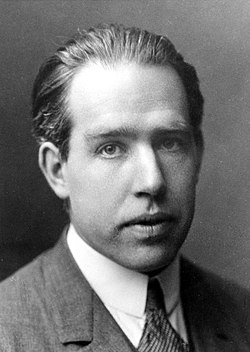
Image source: Werner Heisenberg
1910
The Heisenberg family relocated to Munich when August Heisenberg was appointed professor of Greek philology at the University of Munich, where Werner would later pursue his university studies.
1920
Heisenberg completed his secondary education at the Maximilians-Gymnasium in Munich, where he excelled in mathematics and science and also developed a strong interest in music.
1920
Heisenberg entered the University of Munich to study physics under Arnold Sommerfeld, one of the leading figures in the old quantum theory, joining a circle of exceptionally talented students including Wolfgang Pauli.
Image source: Arnold Sommerfeld
1922 - 1923
Heisenberg spent time at the University of Göttingen studying under Max Born, deepening his engagement with the mathematical problems of atomic theory and connecting with a major center of quantum research.
Image source: University of Göttingen

Jul 1923
Heisenberg received his doctorate from the University of Munich under Sommerfeld with a dissertation on the stability of laminar flow and turbulence, work that had lasting value in fluid dynamics.
1924 - 1925
Heisenberg completed his habilitation qualification at Göttingen, allowing him to teach at university level, while continuing his groundbreaking research on quantum theory.
Image source: Habilitation
1923 - 1925
After completing his doctorate, Heisenberg worked as Max Born's assistant at Göttingen, collaborating on problems of quantum mechanics and developing the mathematics of their joint research.
Image source: Max Born
1924
Heisenberg contributed important early papers on atomic spectra, including work on the anomalous Zeeman effect, which challenged classical models and pointed toward the need for a fundamentally new quantum mechanics.
Image source: Zeeman effect
Jun 1925 - Jul 1925
While recovering from hay fever on the island of Helgoland, Heisenberg formulated his 'umdeutung' (reinterpretation) paper, which abandoned electron orbits and described observables through arrays of numbers. This work became matrix mechanics, the first complete formulation of quantum mechanics.
Sep 1925 - Nov 1925
Together with Max Born and Pascual Jordan, Heisenberg published the 'three-man paper' that gave his new quantum theory rigorous mathematical form using matrices, establishing non-commuting quantities as central to physics.
1927
At only 25 years old, Heisenberg was appointed professor of theoretical physics at Leipzig University, where he built one of Europe's leading centers for quantum physics and mentored a generation of talented students.
Image source: Leipzig University
Feb 1927
As a lecturer at the Institute for Theoretical Physics in Copenhagen, Heisenberg worked closely with Niels Bohr, engaging in famous debates over the interpretation of quantum mechanics that shaped the Copenhagen interpretation.
Image source: Niels Bohr
Mar 1927
In a letter to Wolfgang Pauli and then a seminal paper, Heisenberg articulated the uncertainty principle, showing that position and momentum cannot both be known with arbitrary precision, a foundational insight into the limits of measurement in quantum physics.
Image source: Uncertainty principle
1932 - 1933
Following Chadwick's discovery of the neutron, Heisenberg proposed that atomic nuclei consist of protons and neutrons bound by exchange forces, introducing concepts that evolved into isospin and laying groundwork for nuclear physics.
Image source: Isospin
Nov 9, 1932
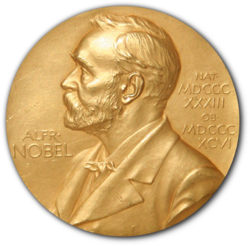
Heisenberg received the 1932 Nobel Prize in Physics (announced in 1933) for the creation of quantum mechanics, recognizing his role as the founder of the theory whose application led to the discovery of hydrogen's allotropic forms.
Image source: Nobel Prize in Physics
1936 - 1939
Proponents of the 'Deutsche Physik' movement attacked Heisenberg as an adherent of so-called 'Jewish physics' because of his relativity and quantum theory work and his associations with Jewish scientists, even subjecting him to an SS investigation before intervention by Himmler cleared him.
Image source: Deutsche Physik
Sep 1939 - May 1945
Shortly after the outbreak of World War II, Heisenberg joined the Army Weapons Bureau's Uranium Club, the German effort to investigate nuclear fission for energy and potential weapons applications, becoming its leading theoretical physicist.
Image source: German nuclear program during World War II
Sep 1941
Heisenberg traveled to German-occupied Copenhagen to meet with Niels Bohr. The content and purpose of their private conversation remain controversial, inspiring Michael Frayn's play Copenhagen and debate over whether Heisenberg sought warnings, collaboration, or moral guidance.
1943 - Apr 1945
As Allied bombing disrupted Berlin research, Heisenberg's group moved its experimental reactor work to a rock cellar in Haigerloch, constructing a subcritical pile of uranium cubes and heavy water shortly before the war's end.
Image source: Haigerloch
May 1945
British and American intelligence captured Heisenberg and nine other German scientists as part of Operation Alsos, interning them at Farm Hall near Cambridge, England, where secret recordings revealed their reactions to the atomic bombings of Hiroshima and Nagasaki.
Image source: Operation Epsilon
Aug 6, 1945
Upon hearing of Hiroshima, the interned scientists, including Heisenberg, were stunned by the success of the American bomb; secretly recorded transcripts showed Heisenberg initially doubting reports before analyzing how it must have been achieved.
Jan 1946
After months of internment in England, Heisenberg and his colleagues were released and returned to Germany, where he soon resumed scientific leadership roles in the rebuilding of German physics.
1946
Heisenberg became director of the reconstituted Kaiser Wilhelm Institute for Physics, renamed the Max Planck Institute for Physics, based first in Göttingen and helping restore West German physics to international standing.
Image source: Max Planck Institute for Physics
1950 - 1958
Heisenberg devoted much of his later research to a nonlinear unified field theory intended to describe all fundamental particles, presenting it publicly in 1958. Though ultimately unsuccessful, the program influenced subsequent work on high-energy particle theory.
Image source: History of quantum field theory
1953 - 1975
Heisenberg served as president of the Alexander von Humboldt Foundation for over two decades, fostering international scientific exchange and supporting foreign researchers working in Germany.
Image source: Alexander von Humboldt Foundation
Apr 12, 1957
Heisenberg joined seventeen other prominent German scientists in signing the Göttingen Declaration, warning the West German government against acquiring nuclear weapons and calling on the public to oppose such plans.
1958
The Max Planck Institute for Physics relocated from Göttingen to Munich, where Heisenberg continued as director until his retirement, supported the construction of new research facilities, and advocated for a large-scale accelerator project.
1969
Heisenberg released his autobiographical book 'Der Teil und das Ganze' ('Physics and Beyond'), recounting his conversations with colleagues like Bohr, Pauli, and Einstein and reflecting on the history of quantum mechanics and the ethics of science.
Feb 1, 1976
Werner Heisenberg died at his home in Munich after battling cancer, leaving behind a legacy as a principal architect of quantum mechanics and one of the defining physicists of the twentieth century.
Or browse the full history timeline directory, with more than 2,500 topics.
This Werner Heisenberg timeline was generated with the help of AI, using information found on the internet.
We work hard to keep these timelines accurate, but mistakes do get through. If you spot one, email us at [email protected] and we'll fix it for future visitors.
Generate yours with AI or build it from scratch, for free.
Export your timeline, add your own events, edit or remove AI-generated events, and much more
No credit card required.
Cancel anytime.
Cancel anytime.
You can create an unlimited number of timelines with up to 10 events on each one, customize how they look, export them to PDF, PNG, PowerPoint, CSV, and Excel, and share them with a link. Paid plans raise the event limit and add features like spreadsheet imports and collaborators.
Yes. You can cancel your subscription from your account page at any time, and you will not be charged again. Your subscription stays active for the rest of the period you already paid for.
Yes. We will email you a reminder before the annual renewal, and we will also email you a receipt.
Yes. You can email us within 15 days of any payment, and we will issue you a full refund.
Check out our pricing docs or send us an email anytime: [email protected].