-
Use Cases
-
Resources
-
Pricing
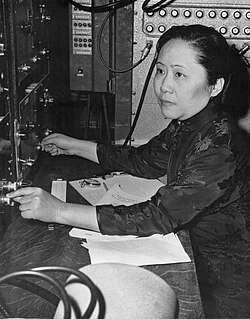
Chien-Shiung Wu (1912–1997) was a Chinese-American experimental physicist often called the 'First Lady of Physics.' She made major contributions to nuclear physics, most famously conducting the Wu experiment in 1956, which disproved the law of parity conservation and earned her colleagues the Nobel Prize. She also worked on the Manhattan Project and championed women in science. More Less
May 31, 1912
% complete
Chien-Shiung Wu was born in the town of Liuhe, Taicang, in Jiangsu province, China. She would grow up to become one of the most influential experimental physicists of the 20th century, making significant contributions to nuclear and particle physics.
1913
% complete
Wu's father participated in the 1913 Second Revolution while in Shanghai and moved to Liuhe after its failure, shaping the environment in which Wu was raised.
Image source: Second Revolution (Republic of China)
1923
% complete
At the age of 11, Wu left her hometown to attend the Suzhou Women's Normal School No. 2, beginning her formal education away from her family.
1929
% complete
Wu graduated at the top of her class and was admitted to National Central University in Nanjing, a major step in her academic career.
Image source: National Central University
1930 - 1934
% complete
Wu studied at National Central University from 1930 to 1934, initially majoring in mathematics before transferring to physics, where she found her true calling.
Aug 1936
% complete
Wu embarked for the United States with her friend Dong Ruo-Fen, a chemist from Taicang, on the SS President Hoover, beginning her scientific career in America.
Image source: SS President Hoover
May 30, 1942
% complete
Wu married Luke Yuan at the home of Robert Millikan, Yuan's academic supervisor and President of Caltech, marking an important personal milestone.
Image source: Luke Chia-Liu Yuan
1947
% complete
Wu gave birth to her son Vincent (袁緯承 Yuán Wěichéng), adding motherhood to her demanding scientific career.
1949
% complete
By the end of the Chinese civil war in 1949, Wu's husband Yuan joined Brookhaven National Laboratory, and the family bought another home on Long Island.
Image source: Brookhaven National Laboratory
1954
% complete
Wu became a naturalized United States citizen in 1954, cementing her new life in America while maintaining deep ties to China.
Image source: Naturalization
1958 - 1959
% complete
Wu suffered personal losses as her older brother died in 1958, followed by her father the next year, and her mother later in 1962.
Image source: Chien-Shiung Wu
1965
% complete
Wu saw her uncle Wu Zhou-Zhi and younger brother Wu Chien-Hao on an emotional trip to Hong Kong, reconnecting with family separated by political circumstances.
Image source: Hong Kong
1973
% complete
After the 1972 Nixon visit improved relations between the US and China, Wu visited China again in 1973. She had nearly visited in 1956 but stayed in America to finish her famous parity violation experiment.
Image source: China
Feb 16, 1997
% complete
Wu died after suffering a stroke on February 16, 1997, in New York City, leaving behind an extraordinary legacy in experimental physics and as a trailblazer for women in science.
1936 - 1940
% complete
At Berkeley, Wu worked under Ernest Lawrence, who would win the Nobel Prize for Physics in 1939 for his invention of the cyclotron particle accelerator. Lawrence described Wu as 'the most talented female experimental physicist he had ever known.'
Image source: Ernest Lawrence
1940
% complete
Wu presented her PhD thesis, which had two separate parts presented in very neat fashion. Her advisor Emilio Segrè recognized her brilliance and compared her to Marie Curie, saying she was more 'worldly, elegant, and witty.'
Image source: Emilio Segrè
Jun 1940
% complete
Wu completed her PhD at Berkeley in June 1940 and was elected to Phi Beta Kappa, the prestigious US academic honor society.
Image source: Phi Beta Kappa
Aug 1945
% complete
After the end of the war in August 1945, Wu accepted a position as associate research professor at Columbia University, where she would remain for the rest of her career.
1949
% complete
Enrico Fermi had published his theory of beta decay in 1934, but Alvarez's experiment had produced conflicting results. In 1949, Wu completely established Fermi's theory, showing how beta decay works in creating electrons, neutrinos, and positrons.
Image source: Beta decay
Nov 1949
% complete
In November 1949, Wu experimented with the conclusions of the Einstein–Podolsky–Rosen thought experiment, which had called quantum entanglement 'spooky action at a distance.'
Image source: Einstein–Podolsky–Rosen paradox
1952
% complete
Wu was named associate professor in 1952, making her the first woman to become a tenured physics professor in Columbia University history.
1958
% complete
Wu quickly rose through the ranks to become a full professor in 1958, further establishing her leadership at Columbia University.
Image source: Columbia University
Dec 1962
% complete
In December 1962, Wu experimentally demonstrated a universal form and more accurate version of Fermi's old beta decay model, confirming the CVC hypothesis of Richard Feynman and Murray Gell-Mann on the road to the Standard Model.
Image source: Four-current
Jan 26, 1963
% complete
Wu's discovery confirming the conserved vector current hypothesis was formally presented at the Hilton hotel on January 26, 1963.
1966
% complete
Wu co-authored a textbook with Steven Moszkowski entitled 'Beta Decay', the first comprehensive study on the subject. It quickly became the standard reference and remains so into the 21st century.
Image source: Beta decay
1973
% complete
Wu was named the first Michael I. Pupin Professor of Physics at Columbia University in 1973, a distinguished named chair recognizing her achievements.
Image source: Mihajlo Pupin
1981
% complete
Wu retired in 1981 and became a professor emerita at Columbia, concluding a remarkable career though remaining a respected figure in physics.
Mar 1944
% complete
In March 1944, Wu joined the Manhattan Project's Substitute Alloy Materials (SAM) Laboratories at Columbia University, contributing to wartime atomic research.
Image source: Manhattan Project
Sep 1944
% complete
In September 1944, Manhattan District Engineer Colonel Kenneth Nichols contacted Wu for her expertise, drawing on her knowledge of radioactive isotopes.
Image source: Kenneth Nichols
Sep 1944
% complete
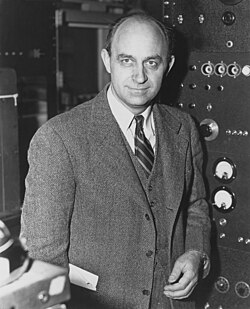
When Enrico Fermi faced problems with reactor xenon poisoning, Segrè remembered Wu's 1940 PhD thesis on radioactive isotopes of Xe and told Fermi to 'ask Ms. Wu,' helping solve a critical issue in plutonium production.
Image source: Enrico Fermi
Nov 1944
% complete
Wary of giving information to other nations during the arms race, Wu waited several months before submitting a complete study with Segrè in November 1944, published months before the atomic bombs were used the next year.
Image source: Gaseous diffusion
1945
% complete
Wu appeared on the magazine cover as the woman of the year in 1945 for her crucial role in the Manhattan Project, part of a list representing each woman of the year from 1920 to 2019.
Image source: Time (magazine)
1957
% complete
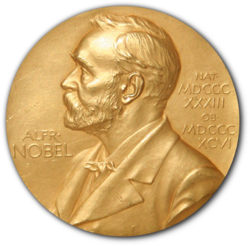
Tsung-Dao Lee and Chen-Ning Yang were awarded the Nobel Prize for Physics in 1957 for their theoretical work that Wu's famous experiment verified. Wu herself received 23 nominations from 18 different physicists between 1958 and 1974 but never won; Jack Steinberger called the omission the biggest mistake of the Nobel committee.
Image source: Nobel Prize in Physics
1959 - 1960
% complete
Wu protested the imprisonment in Taiwan of the in-laws of physicist Kerson Huang in 1959 and of journalist Lei Chen in 1960, showing her commitment to human rights.
Image source: Lei Chen
1962
% complete
Having distanced herself from the destructive outcome of the Manhattan Project, Wu recommended to Taiwanese president Chiang Kai-shek that Taiwan should never build nuclear weapons.
Image source: Chiang Kai-shek
1964
% complete
In 1964, Wu spoke out against gender discrimination at a symposium at MIT, becoming a prominent voice for women in science.
Image source: Massachusetts Institute of Technology
1975
% complete
Department chairman Serber discovered Wu had much lower pay than male colleagues, which she had never reported since she only cared about the research. He adjusted her salary to match her male counterparts.
1975
% complete
Wu became the first female president of the American Physical Society and met with President Gerald Ford to request creation of an advisory scientific body. Ford granted this, signing into law the Office of Science and Technology Policy.
Image source: American Physical Society
1978
% complete
Wu's crucial role in the parity violation discovery was publicly honored when she was awarded the inaugural Wolf Prize in Physics in 1978, long overdue recognition for her contributions.
Image source: Wolf Prize in Physics
1989
% complete
Wu continued advocating for human rights, protesting the crackdown in China that followed the Tiananmen Square massacre of 1989.
Image source: 1989 Tiananmen Square protests and massacre
1990
% complete
Wu received the Science for Peace prize from the Ettore Majorana Centre for Scientific Culture in Erice, Italy, honoring both her vast scientific activity in understanding weak forces and her promotion of women in science. She was also honored as honorary professor at a university in 1990.
Image source: Ettore Majorana Foundation and Centre for Scientific Culture
Or browse the full history timeline directory, with more than 2,000 topics.
This Chien-Shiung Wu timeline was generated with the help of AI, using information found on the internet.
We work hard to keep these timelines accurate, but mistakes do get through. If you spot one, email us at [email protected] and we'll fix it for future visitors.
Generate yours with AI or build it from scratch, for free.
Export your timeline, add your own events, edit or remove AI-generated events, and much more
No credit card required.
Cancel anytime.
Cancel anytime.
You can create an unlimited number of timelines with up to 10 events on each one, customize how they look, export them to PDF, PNG, PowerPoint, CSV, and Excel, and share them with a link. Paid plans raise the event limit and add features like spreadsheet imports and collaborators.
Yes. You can cancel your subscription from your account page at any time, and you will not be charged again. Your subscription stays active for the rest of the period you already paid for.
Yes. We will email you a reminder before the annual renewal, and we will also email you a receipt.
Yes. You can email us within 15 days of any payment, and we will issue you a full refund.
Check out our pricing docs or send us an email anytime: [email protected].