-
Use Cases
-
Resources
-
Pricing
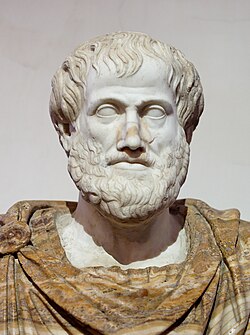
Aristotle (384–322 BCE) was an ancient Greek philosopher and polymath, a student of Plato and tutor of Alexander the Great. He founded the Lyceum in Athens and made foundational contributions to logic, ethics, metaphysics, biology, politics, and poetics, shaping Western intellectual tradition for over two millennia. More Less
350 BC
% complete
Aristotle described the hectocotyl arm of cephalopods, used in sexual reproduction. His account was widely disbelieved by later naturalists until it was confirmed in the 19th century.
Image source: Hectocotylus
335 BC
% complete
With the Prior Analytics, Aristotle is credited with the earliest systematic study of logic, establishing a conception of the discipline that would dominate Western thought for millennia.
Image source: Prior Analytics
335 BC
% complete
Aristotle's conception of logic, laid out in works such as the Prior Analytics, remained the dominant form of Western logic until advances in mathematical logic in the 19th century.
Image source: History of logic

1800 - 1899
% complete
Aristotle's influence on the field of logic continued well into the 19th century, when new developments in mathematical logic finally began to supersede his system.
1850 - 1899
% complete
Aristotle's description of the hectocotyl arm of cephalopods had been widely disbelieved for centuries, but it was vindicated by scientific observation in the 19th century.
1854
% complete
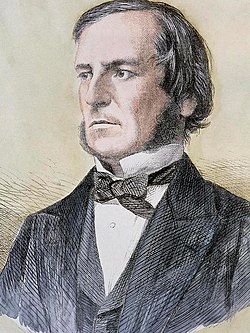
In his 1854 book The Laws of Thought, the English mathematician George Boole fully accepted Aristotle's logic but decided 'to go under, over, and beyond' it with his system of algebraic logic.
Image source: George Boole
60 BC - 1 BC
% complete
All surviving works of Aristotle transmitted through medieval manuscripts are the technical philosophical treatises from within his school, compiled in the 1st century BC by Andronicus of Rhodes out of smaller, separate works into the larger cohesive works known today.
30 BC
% complete
The peripatetic commentary tradition on Aristotle's works began with Boethus of Sidon in the 1st century BC, launching a long tradition of philosophical engagement with his texts.
200
% complete
The peripatetic commentary tradition reached its peak at the end of the 2nd century AD with Alexander of Aphrodisias, who was appointed to the official Imperial chair of Aristotelian philosophy established by Marcus Aurelius; many of his commentaries still survive.
Image source: Alexander of Aphrodisias
500 - 599
% complete
Philoponus, a student of Ammonius, was one of the first Byzantine Christians to comment extensively on Aristotle, bringing Christian perspectives to Aristotelian philosophy.
Image source: John Philoponus
510
% complete
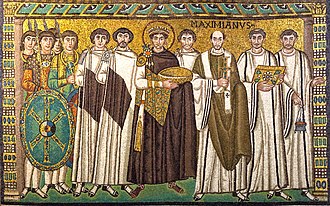
Boethius made a Latin translation of Aristotle's Organon, which served for centuries as virtually the only access to Aristotle's thought in the early medieval Latin West.
Image source: Organon
570 - 599
% complete
Elias and David, students of Olympiodorus, were among the first Byzantine Christians to comment extensively on Aristotle's works, continuing the Alexandrian commentary tradition.
600 - 1100
% complete
With the loss of the study of ancient Greek in the early medieval Latin West, Aristotle was practically unknown there from about AD 600 to about 1100, except through the Latin translation of the Organon made by Boethius.
Image source: Aristotelianism
600 - 632
% complete
In the early seventh century, Stephen of Alexandria brought the study of Plato and Aristotle from Alexandria to Constantinople, extending Byzantine engagement with ancient philosophy.
1100 - 1160
% complete
After a hiatus of several centuries, formal commentary on Aristotle by Eustratius and Michael of Ephesus reappeared in the late eleventh and early twelfth centuries.
1100 - 1150
% complete
The revival of formal Aristotelian commentary by Eustratius and Michael of Ephesus in the late eleventh and early twelfth centuries was apparently sponsored by Anna Comnena.
Image source: Anna Komnene
1120 - 1199
% complete
In the twelfth and thirteenth centuries, interest in Aristotle revived and Latin Christians had translations of his works made, transforming medieval European philosophy.
1130 - 1199
% complete
Among the translators of the twelfth-century revival was James of Venice, who translated Aristotle's works from the original Greek into Latin.
1140 - 1187
% complete
As part of the twelfth-century translation movement, Gerard of Cremona produced Latin translations of Aristotle's works from Arabic translations, helping reintroduce Aristotelian thought to the West.
Image source: Gerard of Cremona
1260 - 1286
% complete
In the thirteenth century, William of Moerbeke translated Aristotle's works directly from the original Greek, providing Latin Christians with more accurate access to his texts.
1500 - 1899
% complete
Aristotle has been depicted by major artists including Lucas Cranach the Elder, Justus van Gent, Raphael, Paolo Veronese, Jusepe de Ribera, Rembrandt, and Francesco Hayez over the centuries.
Image source: Poetics (Aristotle)
1511
% complete
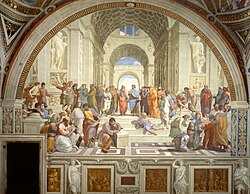
Raphael was among the major artists who depicted Aristotle, most famously alongside Plato in the School of Athens, cementing his image in Renaissance art.
Image source: The School of Athens
1653
% complete
Rembrandt was among the major artists across the centuries to depict Aristotle, contributing to the philosopher's enduring presence in European art.
Image source: Aristotle with a Bust of Homer
1882
% complete
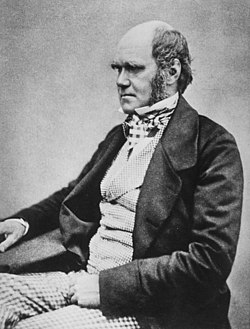
In an 1882 letter, Darwin wrote that 'Linnaeus and Cuvier have been my two gods, though in very different ways, but they were mere schoolboys to old Aristotle,' expressing deep admiration for Aristotle's biological work.
Image source: Charles Darwin
1900 - 1999
% complete
Twentieth-century scholarship held that, in certain passages, Aristotle had misinterpreted Plato's teachings, revising earlier assessments of their philosophical relationship.
Image source: Aristotle
1900 - 1999
% complete
Scholar Taneli Kukkonen writes that 'in the best 20th-century scholarship Aristotle comes alive as a thinker wrestling with the full weight of the Greek philosophical tradition,' citing evidence of an exceptionally forceful mind.
1900 - 1999
% complete
The scholar Jonathan Barnes wrote that 'an account of Aristotle's intellectual afterlife would be little less than a history of European thought,' underscoring his enduring significance.
1985
% complete
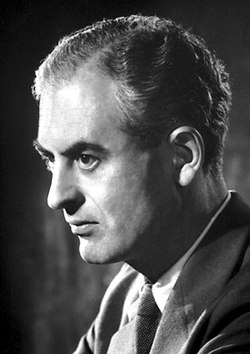
In 1985, the biologist Peter Medawar stated in 'pure seventeenth century' tones that Aristotle had assembled 'a strange and generally speaking rather tiresome farrago of hearsay, imperfect observation, wishful thinking and credulity amounting to downright gullibility.'
Image source: Peter Medawar
1988
% complete
The asteroid (6123) Aristoteles in the main asteroid belt bears the classical form of Aristotle's name, reflecting his lasting fame more than two millennia after his death.
Image source: Aristotle
Or browse the full history timeline directory, with more than 2,000 topics.
This Aristotle timeline was generated with the help of AI, using information found on the internet.
We work hard to keep these timelines accurate, but mistakes do get through. If you spot one, email us at [email protected] and we'll fix it for future visitors.
Generate yours with AI or build it from scratch, for free.
Export your timeline, add your own events, edit or remove AI-generated events, and much more
No credit card required.
Cancel anytime.
Cancel anytime.
You can create an unlimited number of timelines with up to 10 events on each one, customize how they look, export them to PDF, PNG, PowerPoint, CSV, and Excel, and share them with a link. Paid plans raise the event limit and add features like spreadsheet imports and collaborators.
Yes. You can cancel your subscription from your account page at any time, and you will not be charged again. Your subscription stays active for the rest of the period you already paid for.
Yes. We will email you a reminder before the annual renewal, and we will also email you a receipt.
Yes. You can email us within 15 days of any payment, and we will issue you a full refund.
Check out our pricing docs or send us an email anytime: [email protected].