-
Use Cases
-
Resources
-
Pricing
Benjamin Harrison (1833–1901) was the 23rd President of the United States, serving from 1889 to 1893. A Republican from Indiana and grandson of President William Henry Harrison, his administration is known for economic legislation like the Sherman Antitrust Act, the McKinley Tariff, and the Sherman Silver Purchase Act, as well as modernizing the U.S. Navy and pursuing an active foreign policy. More Less
Aug 20, 1833
% complete
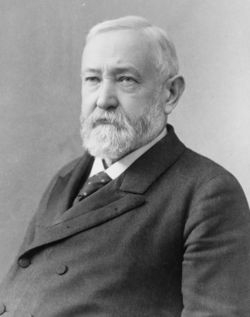
Benjamin Harrison was born on August 20, 1833, in North Bend, Ohio, into a prominent political family. He was the grandson of William Henry Harrison, the ninth president of the United States, and the great-grandson of Virginia governor Benjamin Harrison V, a signer of the Declaration of Independence.
Image source: Benjamin Harrison
1847 - 1850
% complete
Harrison spent three years at Farmers' College near Cincinnati, Ohio, where he met his future wife Caroline Lavinia Scott, the daughter of the school's principal. He developed a strong interest in academics and debate during this period.
Image source: Ohio Military Institute
1850
% complete
Harrison transferred to Miami University in Oxford, Ohio, where he excelled academically, joined the Phi Delta Theta fraternity, and honed his skills in debate and public speaking. He graduated fourth in his class in 1852.
Image source: Miami University
1852
% complete
Benjamin Harrison graduated from Miami University in 1852 with distinction. His education prepared him for a career in law and politics, and he left the university with a reputation as a skilled orator.
Oct 20, 1853
% complete
Harrison married Caroline Lavinia Scott on October 20, 1853. The couple would have three children: Russell, Mary, and a daughter who died shortly after birth. Caroline became a beloved First Lady known for her work in historic preservation and education.
Image source: Caroline Harrison
1854
% complete
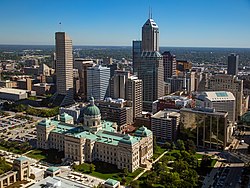
After studying law under attorney Harvey King, Harrison passed the bar examination in 1854. He soon moved to Indianapolis, Indiana, where he established a successful law practice and began building political connections.
1857 - 1861
% complete
Harrison served as reporter for the Supreme Court of Indiana from 1860 to 1861 and earlier held local positions that raised his profile. His early legal and civic roles helped establish him within Indiana's Republican Party circles.
Image source: Indianapolis
1860 - 1861
% complete
Harrison was elected reporter of decisions for the Supreme Court of Indiana, a position that provided steady income and allowed him to publish court decisions while continuing his private law practice.
Image source: Indiana Supreme Court
Aug 22, 1862
% complete
During the American Civil War, Harrison helped raise the 70th Indiana Infantry Regiment and was commissioned its colonel. He led the regiment with distinction, earning a reputation for discipline and bravery.
Image source: 70th Indiana Infantry Regiment
May 1864 - Sep 1864
% complete
Harrison commanded the 70th Indiana in General William Tecumseh Sherman's Atlanta Campaign, fighting at battles including Resaca, Cassville, New Hope Church, Lost Mountain, Kennesaw Mountain, Marietta, Peachtree Creek, and Atlanta. His leadership earned praise from superiors.
Image source: Atlanta campaign
Mar 2, 1865
% complete
In recognition of his wartime service, Harrison was promoted to brevet brigadier general of volunteers in March 1865. He mustered out of the army later that year and returned to his law practice in Indianapolis.
Image source: Brevet
1876
% complete
Harrison made his first major bid for elective office as the Republican candidate for governor of Indiana in 1876. Though he lost to Democrat James D. Williams, his energetic campaign enhanced his standing in the party.
Image source: 1876 Indiana gubernatorial election
Mar 4, 1881 - Mar 3, 1887
% complete
The Indiana legislature elected Harrison to the United States Senate, where he served one term from 1881 to 1887. He championed civil service reform, education funding for the South, veterans' pensions, and protective tariffs, becoming a respected voice in national affairs.
Image source: United States Senate
Jun 19, 1888
% complete
At the 1888 Republican National Convention in Indianapolis, Harrison was nominated for president on the eighth ballot, with Levi P. Morton as his running mate. His reputation for integrity and his war record made him an appealing candidate.
Image source: 1888 Republican National Convention
Nov 6, 1888
% complete
Harrison defeated incumbent Grover Cleveland in the 1888 election, winning the Electoral College 233 to 168 despite losing the popular vote by about 90,000 ballots. Tariff policy dominated the campaign, and Harrison's victory gave Republicans control of both the White House and Congress.
Image source: 1888 United States presidential election
Mar 4, 1889
% complete
Benjamin Harrison was inaugurated as the 23rd president of the United States on March 4, 1889. In his inaugural address, he called for tariff revision, civil service reform, and care for veterans, setting an ambitious agenda for his administration.
Image source: Inauguration of Benjamin Harrison
Nov 2, 1889 - Jul 3, 1890
% complete
More states joined the Union during Harrison's term than during any presidency since George Washington: North Dakota, South Dakota, Montana, and Washington in 1889, followed by Idaho and Wyoming in 1890, expanding the nation across the northern West.
Image source: List of U.S. states by date of admission to the Union
1890 - 1893
% complete
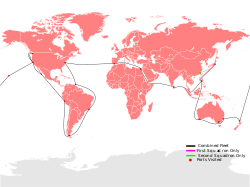
Under Secretary of the Navy Benjamin Tracy, Harrison's administration oversaw a major modernization of the U.S. Navy, authorizing new steel battleships and cruisers that transformed America into a significant naval power.
Image source: Great White Fleet
Apr 1890
% complete
Harrison's administration hosted the first International Conference of American States in Washington, D.C., promoting hemispheric cooperation and leading to the creation of what became the Pan American Union, a precursor to the Organization of American States.
Image source: First International Conference of American States
Jul 2, 1890
% complete
Harrison signed the Sherman Antitrust Act, the first federal legislation aimed at limiting monopolies and restraining trade combinations deemed harmful to competition. It became a foundational tool of federal economic regulation.
Image source: Sherman Antitrust Act
Oct 1, 1890
% complete
The McKinley Tariff, signed by Harrison, raised import duties to record levels to protect American industry. The unpopular tariff contributed to Republican losses in the 1890 midterm elections and became a central issue of the 1892 campaign.
Image source: McKinley Tariff
Dec 29, 1890
% complete
U.S. Army troops killed hundreds of Lakota Sioux at Wounded Knee Creek in South Dakota, the last major armed conflict of the American Indian Wars. The tragedy occurred amid tensions surrounding the Ghost Dance movement during Harrison's administration.
Image source: Wounded Knee Massacre
Mar 3, 1891
% complete
Harrison signed the Forest Reserve Act, empowering presidents to set aside public lands as forest reserves. Under this authority, Harrison protected over 13 million acres, laying groundwork for America's national forest system and conservation policy.
Image source: General Revision Act
May 1891
% complete
During Harrison's presidency, electric lighting was installed in the White House. Harrison and his wife were reportedly wary of the new technology and often left the lights on rather than touch the switches, symbolizing the era's rapid technological change.
Image source: White House
Oct 25, 1892
% complete
First Lady Caroline Harrison died of tuberculosis on October 25, 1892, just days before the presidential election. Her death devastated Harrison, who suspended campaigning during the final weeks of the race.
Nov 8, 1892
% complete
Harrison sought re-election in 1892 but was defeated by former president Grover Cleveland, who thus became the only president to serve non-consecutive terms. The campaign was shadowed by the death of First Lady Caroline Harrison weeks before the vote.
Image source: 1892 United States presidential election
May 1893 - 1897
% complete
Just months after Harrison left office, the Panic of 1893 triggered a severe economic depression marked by bank failures, railroad bankruptcies, and high unemployment, testing the policies of his successor Grover Cleveland.
Image source: Panic of 1893
Apr 6, 1896
% complete
Four years after Caroline's death, Harrison married Mary Scott Lord Dimmick, his late wife's niece and former secretary. The marriage, which produced a daughter named Elizabeth, strained relations with his adult children.
Image source: Mary Dimmick Harrison
1897
% complete
Harrison published 'This Country of Ours,' a collection of essays on government and politics reflecting on his public service. He also lectured widely and taught law at Stanford University briefly after leaving office.
Image source: Ours (song)
1899 - 1900
% complete
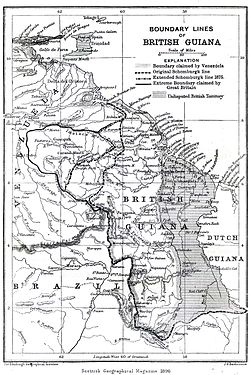
Harrison represented Venezuela in arbitration before an international tribunal in Paris concerning its boundary dispute with British Guiana. His successful advocacy secured a favorable outcome for Venezuela and showcased his legal talents on the world stage.
Image source: Venezuelan crisis of 1895
Mar 13, 1901
% complete
Benjamin Harrison died at his home in Indianapolis on March 13, 1901, after a long illness. He was buried beside his first wife Caroline in Crown Hill Cemetery, remembered as a dignified leader who expanded American influence abroad and strengthened federal institutions.
Image source: Richard Benjamin Harrison
Or browse the full history timeline directory, with more than 2,000 topics.
This Benjamin Harrison timeline was generated with the help of AI, using information found on the internet.
We work hard to keep these timelines accurate, but mistakes do get through. If you spot one, email us at [email protected] and we'll fix it for future visitors.
Generate yours with AI or build it from scratch, for free.
Export your timeline, add your own events, edit or remove AI-generated events, and much more
No credit card required.
Cancel anytime.
Cancel anytime.
You can create an unlimited number of timelines with up to 10 events on each one, customize how they look, export them to PDF, PNG, PowerPoint, CSV, and Excel, and share them with a link. Paid plans raise the event limit and add features like spreadsheet imports and collaborators.
Yes. You can cancel your subscription from your account page at any time, and you will not be charged again. Your subscription stays active for the rest of the period you already paid for.
Yes. We will email you a reminder before the annual renewal, and we will also email you a receipt.
Yes. You can email us within 15 days of any payment, and we will issue you a full refund.
Check out our pricing docs or send us an email anytime: [email protected].