-
Use Cases
-
Resources
-
Pricing
Dorothy Crowfoot Hodgkin (1910–1994) was a pioneering British chemist renowned for her groundbreaking work in X-ray crystallography. She determined the three-dimensional structures of vital biomolecules including penicillin, vitamin B12, and insulin. In 1964, she became the third woman to win the Nobel Prize in Chemistry for her work on vitamin B12, and she was a mentor to many scientists, including future Prime Minister Margaret Thatcher. More Less
May 12, 1910
% complete
Dorothy Mary Crowfoot was born in Cairo, Egypt, to John Winter Crowfoot, who worked for the country's Ministry of Education, and his wife Grace Mary (née Hood), known to friends and family as Molly. She would grow up to become one of the most important chemists of the twentieth century.
Image source: Dorothy Hodgkin
1914
% complete
In 1914, Hodgkin's mother left her (age 4) and her two younger sisters Joan (age 2) and Elisabeth (age 7 months) with their Crowfoot grandparents near Worthing, England, and returned to her husband in Egypt.
1921
% complete
In 1921, Hodgkin's father entered her in the Sir John Leman Grammar School in Beccles, England, where she was one of only two girls allowed to study chemistry.
1923
% complete
In 1923, Dorothy and her sister studied pebbles that they had found in nearby streams using a portable mineral analysis kit, an early sign of her scientific curiosity. Around this time their parents moved south to Sudan, where until 1926 her father was in charge of education and archaeology.
1926
% complete
On his retirement from the Sudan Civil Service, her father took the post of Director of the British School of Archaeology in Jerusalem, where he and her mother remained until 1935.
1928
% complete
In 1928, Hodgkin joined her parents at the archaeological site of Jerash, in present-day Jordan, where she documented the patterns of mosaics from multiple Byzantine-era Churches dated to the 5th–6th centuries.
Image source: Jerash
1928
% complete
At age 18, Hodgkin entered Somerville College, Oxford, where she studied chemistry. She graduated in 1932 with a first-class honours degree, becoming the third woman at the institution to achieve this distinction.
Image source: Somerville College, Oxford
1934
% complete
In 1934, at the age of 24, Dorothy began experiencing pain in her hands causing them to become swollen and distorted, the onset of the rheumatoid arthritis that would affect her for the rest of her life.
Image source: Rheumatoid arthritis
1937
% complete
In 1937, Dorothy Crowfoot married Thomas Lionel Hodgkin, an historian's son, who was then teaching an adult-education class in mining and industrial communities in the north of England after he resigned from the Colonial Office.
1938 - 1946
% complete
The couple had three children: Luke (born 1938, died October 2020), Elizabeth (born 1941), and Toby (born 1946).
1933
% complete
In 1933, Hodgkin was awarded a research fellowship by Somerville College, and in 1934 she moved back to Oxford, beginning her long association with the university's crystallography research.
1934
% complete
Hodgkin's decades-long effort to determine the structure of insulin began in 1934, when she was offered a small sample of crystalline insulin by Robert Robinson. Her dream of unlocking its structure would take 35 years to realize.
Image source: Insulin
1937
% complete
Hodgkin's PhD was awarded in 1937 for research on X-ray crystallography and the chemistry of sterols, cementing her expertise in the technique that would define her career.
Image source: Doctor of Philosophy
1945
% complete
In 1945, working with C.H. Carlisle and others including biochemist Barbara Low, Hodgkin solved the structure of penicillin, demonstrating, contrary to scientific opinion at the time, that it contains a β-lactam ring. The work was not published until 1949.
Image source: Penicillin
1948
% complete
In 1948, Hodgkin first encountered vitamin B12, one of the most structurally complex vitamins known, and created new crystals of it. By 1945 she had already succeeded in identifying structures describing the arrangement of atoms in three dimensions; B12 would become her next great triumph.
Image source: Vitamin B12
1949
% complete
Hodgkin published as 'Dorothy Crowfoot' until 1949, when she was persuaded by Hans Clarke's secretary to use her married name on a chapter she contributed to The Chemistry of Penicillin.
Apr 1953
% complete
In April 1953, together with Sydney Brenner, Jack Dunitz, Leslie Orgel, and Beryl M. Oughton, Hodgkin participated in gatherings following the announcement of the structure of DNA, part of the vibrant scientific community at Oxford.
Image source: Sydney Brenner
1955 - 1956
% complete
The final structure of vitamin B12, for which Hodgkin was later awarded the Nobel Prize, was published in 1955 and 1956, revealing the intricate three-dimensional arrangement of one of nature's most complex molecules.
1955 - 1956
% complete
Hodgkin became a reader at Oxford in 1955 and was given a fully modern laboratory the following year, greatly expanding her research capabilities.
Image source: University of Oxford
1960 - 1970
% complete
In 1960, Hodgkin was appointed the Royal Society's Wolfson Research Professor, a position she held until 1970, providing her with dedicated support for her crystallographic research.
Image source: Royal Society
1969
% complete
Hodgkin's dream of unlocking the structure of insulin was finally realized in 1969 when she worked with her team of young, international scientists to uncover the structure for the first time, completing 35 years of work begun in 1934.
1972 - 1975
% complete
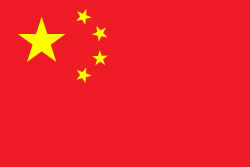
During 1972–1975, Hodgkin served as President of the International Union of Crystallography. During this period she was unable to persuade the Chinese authorities to permit the country's scientists to become members of the Union and attend its meetings.
1977 - 1983
% complete
Hodgkin stepped down from her Somerville tutorial post in 1977 and was a fellow of Wolfson College, Oxford, from 1977 to 1983, having held the Somerville fellowship and tutorship in chemistry since 1936.
Image source: Wolfson College, Oxford
1953
% complete
Because of Hodgkin's political activities, and her husband's association with the Communist Party, she was banned from entering the US in 1953 and subsequently not allowed to visit the country except by CIA waiver.
1959
% complete
Hodgkin's first visit to China was in 1959. Over the next quarter century she travelled there seven more times, the last visit coming a year before her death.
Image source: China
1971
% complete
Particularly memorable among her visits was the trip to China in 1971, after the Chinese group themselves independently solved the structure of insulin — later than Hodgkin's team but to a higher resolution.
1976 - 1988
% complete
In 1976, Hodgkin became president of the Pugwash Conference, serving longer than any who preceded or succeeded her in this post. She stepped down in 1988, the year after the Intermediate-Range Nuclear Forces Treaty imposed a global ban on short- and long-range nuclear weapons systems.
Image source: Pugwash Conferences on Science and World Affairs
1987
% complete
In 1987, Hodgkin accepted the Lenin Peace Prize from the Soviet government under Mikhail Gorbachev in recognition of her work for peace and disarmament. Also that year, due to distance, she decided not to attend the Congress of the International Union of Crystallography in Australia.
Image source: Lenin Peace Prize
1989
% complete
Following the overthrow of Ceausescu during the Romanian Revolution of 1989, it was revealed that Elena Ceausescu had neither finished secondary school nor attended university — a scandal connected to Hodgkin, who had been associated with the fraudulent awarding of a doctorate to Ceausescu.
Image source: Elena Ceaușescu
1993
% complete
Despite increasing frailty, Hodgkin astounded close friends and family by going to Beijing for the 1993 Congress of the International Union of Crystallography, where she was welcomed by all.
1964
% complete
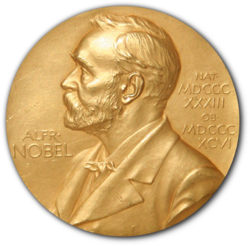
Hodgkin received the 1964 Nobel Prize in Chemistry for her determinations by X-ray techniques of the structures of important biochemical substances, making her the third woman to win the prize in Chemistry and the only British woman scientist to have been awarded a Nobel Prize in any of the three sciences it recognizes.
Image source: Nobel Prize in Chemistry
1965
% complete
In 1965, Hodgkin was appointed to the Order of Merit, one of Britain's highest honours, recognizing her extraordinary contributions to science.
Image source: Order of Merit
1966
% complete
In 1966, Hodgkin was awarded Iota Sigma Pi National Honorary Member status for her significant contribution to chemistry.
Image source: Iota Sigma Pi
1970 - 1988
% complete
Hodgkin served as Chancellor of the University of Bristol from 1970 to 1988, a ceremonial leadership role reflecting her stature in British academia.
Image source: University of Bristol
1970
% complete
In 1970, Hodgkin gained EMBO Membership, joining the European Molecular Biology Organization in recognition of her contributions to molecular biology.
Image source: European Molecular Biology Organization
1976
% complete
In 1976, Hodgkin became the first woman to receive the prestigious Copley Medal, the Royal Society's oldest and most distinguished award for outstanding achievements in scientific research.
Image source: Copley Medal
1978
% complete
In 1978, Graham Sutherland made preliminary sketches for a portrait of Dorothy Crowfoot Hodgkin, and she was also given an honorary Degree of Science from the University of Bath.
Image source: Graham Sutherland
Mar 25, 1982
% complete
Accepted by the president of the society on 25 March 1982, the portrait of Hodgkin was the first portrait of a woman Fellow to be included in the Society's collection. That same year, her husband Thomas Hodgkin died in Greece on 25 March 1982, and she also received the Lomonosov Medal of the Soviet Academy of Sciences.
1983
% complete
In 1983, Hodgkin received the Austrian Decoration for Science and Art in recognition of her distinguished scientific career.
Image source: Austrian Decoration for Science and Art
Jul 29, 1994
% complete
Hodgkin died on 29 July 1994 after a stroke, at her husband's home in the village of Ilmington, near Shipston-on-Stour, Warwickshire, leaving behind a legacy as a pioneer of X-ray crystallography.
Aug 1996
% complete
Hodgkin was one of five 'Women of Achievement' selected for a set of British commemorative stamps issued in August 1996, two years after her death.
Image source: Royal Mail
1999
% complete
Since 1999, the Oxford International Women's Festival has presented the annual Dorothy Hodgkin Memorial Lecture, usually in March, in honour of Hodgkin's work.
Image source: Dorothy Hodgkin
2010
% complete
During the 350th anniversary of the founding of the Royal Society in 2010, Hodgkin was the only woman in a set of stamps celebrating ten of the Society's most illustrious members, alongside Isaac Newton, Edward Jenner, Joseph Lister, Benjamin Franklin, Charles Babbage, Robert Boyle, Ernest Rutherford, Nicholas Shackleton and Alfred Russel Wallace.
2012
% complete
In 2012, Hodgkin was featured in the BBC Radio 4 series The New Elizabethans, broadcast to mark the Diamond Jubilee of Queen Elizabeth II, honouring her among the most significant figures of Elizabeth II's reign.
2015
% complete
In 2015, Hodgkin's 1949 paper The X-ray Crystallographic Investigation of the Structure of Penicillin was honoured by a Citation for Chemical Breakthrough Award from the Division of History of Chemistry of the American Chemical Society, presented to the University of Oxford.
Image source: American Chemical Society
2022
% complete
In 2022, the Department of Biochemistry in Oxford renamed its much expanded building after Hodgkin, calling it the 'Dorothy Crowfoot Hodgkin Building', a lasting tribute to her scientific legacy.
Image source: Department of Biochemistry, University of Oxford
Or browse the full history timeline directory, with more than 2,000 topics.
This Dorothy Hodgkin timeline was generated with the help of AI, using information found on the internet.
We work hard to keep these timelines accurate, but mistakes do get through. If you spot one, email us at [email protected] and we'll fix it for future visitors.
Generate yours with AI or build it from scratch, for free.
Export your timeline, add your own events, edit or remove AI-generated events, and much more
No credit card required.
Cancel anytime.
Cancel anytime.
You can create an unlimited number of timelines with up to 10 events on each one, customize how they look, export them to PDF, PNG, PowerPoint, CSV, and Excel, and share them with a link. Paid plans raise the event limit and add features like spreadsheet imports and collaborators.
Yes. You can cancel your subscription from your account page at any time, and you will not be charged again. Your subscription stays active for the rest of the period you already paid for.
Yes. We will email you a reminder before the annual renewal, and we will also email you a receipt.
Yes. You can email us within 15 days of any payment, and we will issue you a full refund.
Check out our pricing docs or send us an email anytime: [email protected].